Aprovechar el impulso de España para sostener el crecimiento y la convergencia de ingresos

Por Aida Caldera, Claudia Ramírez y Dimitris Mavridis, OCDE

Versión en inglés

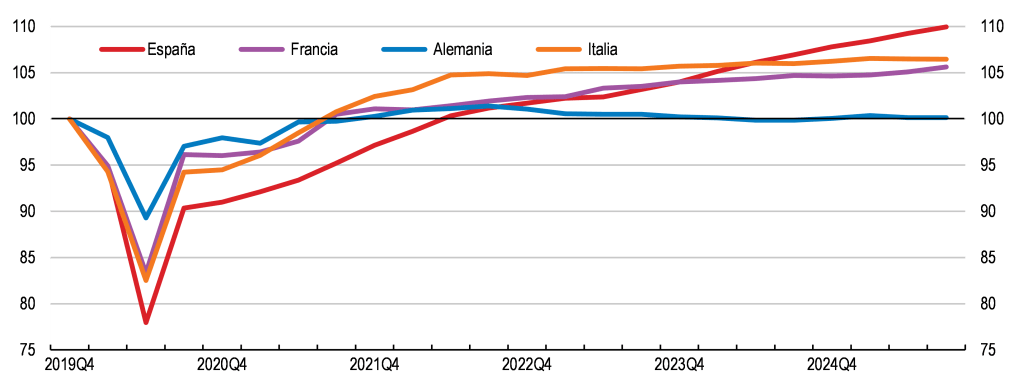
Desde la pandemia, la economía española ha crecido de manera firme y más rápido que muchos de sus pares europeos (Gráfico 1). El crecimiento se ha visto respaldado por una fuerte inversión, principalmente pública, el aumento de las exportaciones de servicios y una rápida expansión de la fuerza laboral ya que muchos inmigrantes, principalmente procedentes de América Latina, se han integrado rápidamente en el mercado laboral. El empleo está creciendo en todos los sectores, mientras que el desempleo ha descendido de alrededor del 15% en 2021 al 10,5% en septiembre de 2025, aunque sigue siendo el más alto de la Unión Europea. Los contratos temporales, que durante mucho tiempo han sido el punto débil de España, han descendido de más del 25% a aproximadamente el 16% en los tres años posteriores a la reforma del mercado laboral de 2021.

Más allá de estos encabezados alentadores, un desafío en materia de productividad amenaza con debilitar la prosperidad a largo plazo de España, como se destaca en el recientemente publicado Estudio Económico de España de 2025. El crecimiento sostenido y la convergencia de los ingresos con otros países similares de la OCDE dependen de la aceleración del crecimiento de la productividad y del aprovechamiento de los recursos sin explotar.

Gráfico 1. El crecimiento del PIB ha superado recientemente al de otros países europeos

Producto interior bruto, volumen, datos ajustados por estacionalidad y efecto calendario, índice 2019T4 = 100
Fuente: Eurostat.

Le reto de la productividad

España está creando empleo a un ritmo más rápido que la mayor parte de Europa, y la productividad por trabajador ha crecido desde 2022, especialmente en los sectores del comercio, el transporte y la hostelería. A pesar de esta mejora, el PIB por hora trabajada en España seguía estando un 7% por debajo de la media de la UE en 2024 (Gráfico 2, Panel A). Este déficit de productividad no se limita a un solo sector rezagado, sino que afecta tanto a las actividades comercializables como a las no comercializables, así como a empresas de todos los tamaños.

El crecimiento del PIB se mantendrá sólido, con un 2,9% en 2025, un 2,2% en 2026 y un 1,8% en 2027, a medida que se normalice la expansión del turismo y se moderen los flujos migratorios. Para mantener este impulso de crecimiento y acelerar la convergencia de los ingresos, será fundamental reforzar el crecimiento de la productividad.

La oportunidad de las pymes

Las pequeñas y medianas empresas son el centro del desafío de productividad de España, y son igual de importantes para superarlo. Las pymes son el 99% de todas las empresas españolas y emplean a casi dos tercios de la fuerza laboral, lo que las coloca en el centro del motor económico del país. Sin embargo, comparado con pares de otros países, las pymes españolas tienden a ser más pequeñas, crecer más lentamente y operan a niveles de productividad significativamente más bajos que los países con mejor rendimiento de la OCDE (Gráfico 2, Panel B). Estas diferencias reflejan las mayores restricciones financieras a las que se enfrentan las pymes, sus menores índices de innovación y las desproporcionadas cargas normativas y de cumplimiento que este grupo de empresas soportan en comparación con las pymes de muchas otras economías europeas.

Consciente de estos retos, España ha puesto en marcha una ambiciosa agenda para las pymes respaldada por el Plan de Recuperación, Transformación y Resiliencia, que destina alrededor del 40% de los fondos en subvenciones al emprendimiento, la digitalización y la internacionalización. Sin embargo, aún se puede hacer más para liberar el potencial de las pymes:

  • Mejorar el acceso a la financiación mediante el fortalecimiento de los canales de financiación basados en el mercado y la conexión de las pequeñas empresas con los participantes en los mercados de capitales, al tiempo que se sensibiliza a las pequeñas empresas sobre las opciones de financiación no bancaria disponibles.
  • Simplificar la regulación y los procedimientos administrativos que más afectan a las empresas más pequeñas, incluyendo la introducción gradual de umbrales regulatorios que provocan aumentos repentinos en los costes de cumplimiento cuando las empresas crecen.
  • Simplificar los procedimientos de solicitud y reembolso de las ayudas públicas a la I+D, entre otras cosas mediante la creación de una plataforma digital única.
  • Cerrar las brechas de competencias mediante ofertas de formación más accesibles, procedimientos simplificados y una mayor divulgación, de modo que las pymes puedan invertir sistemáticamente en la mejora de las competencias y el reciclaje profesional de su personal.

Cuando se combinan, estas iniciativas pueden ayudar a las empresas más pequeñas a desarrollar todo su potencial. Incluso modestas ganancias de productividad en miles de pymes se traducirían en efectos agregados considerables y una convergencia sostenida de los ingresos.

Gráfico 2. A pesar de mejoras recientes, la productividad laboral se mantiene por debajo del promedio europeo

Nota: En el panel B, los cinco países con mejores resultados para las grandes empresas excluyen a Irlanda y Noruega, donde la productividad laboral supera los 416 000 USD en 2023.
Fuente: Estadísticas de niveles de productividad de la OCDE; Estadísticas estructurales de empresas de la OCDE.

Aprovechar el potencial de trabajadores mayores y migrantes

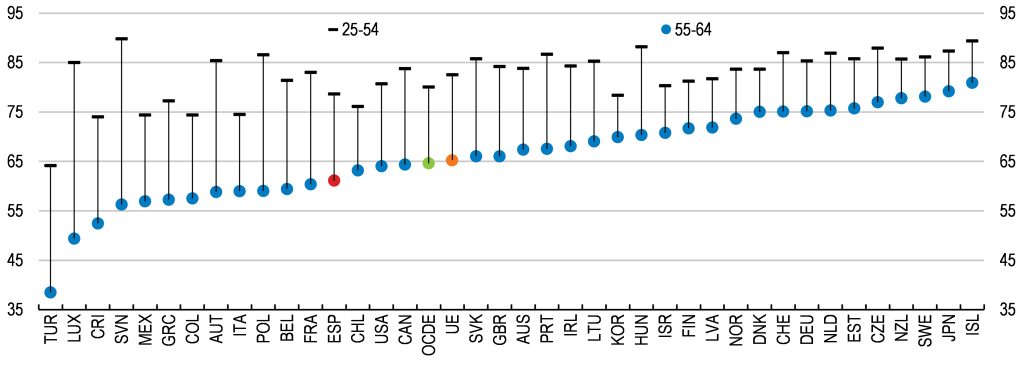
La urgencia del reto de la productividad en España se hace aún más evidente cuando se tiene en cuenta la demografía. El envejecimiento de la población y las bajas tasas de empleo entre los trabajadores de más edad (Gráfico 3) pueden reducir la oferta de mano de obra, ralentizar el crecimiento potencial y aumentar las presiones fiscales, a pesar de los vientos favorables que ha supuesto el aumento de la migración en los últimos años. España se enfrenta a una de las transiciones demográficas más pronunciadas de la OCDE, con un aumento previsto de la tasa de dependencia de las personas mayores de alrededor de 41 puntos porcentuales entre 2024 y 2054. Sin embargo, estos retos encierran un potencial sin explotar que puede convertirse en beneficio si se adoptan medidas decididas:

  • Reformar las ayudas por desempleo no contributivas para mayores de 52 años, que actualmente funcionan como una jubilación anticipada de facto. Esto puede abordarse limitando la duración, restringiendo la acumulación de pensiones únicamente a la fase de seguro de desempleo, introduciendo la comprobación de recursos económicos y reforzando los requisitos de activación.
  • Prolongar la vida laboral alineando más estrechamente los incentivos de jubilación con la mayor esperanza de vida, al tiempo que se mejoran las condiciones de trabajo y las opciones de formación para los trabajadores de más edad, por ejemplo, mediante bonos de formación individuales cofinanciados con los empleadores.
  • Aprovechar mejor la migración. Los trabajadores nacidos en el extranjero ya representan una gran parte de la creación de empleo reciente, pero muchos están sobrecalificados para sus puestos de trabajo. Simplificar y agilizar el reconocimiento de títulos y hacer que los canales de migración respondan mejor a las necesidades del mercado laboral aumentaría tanto la eficiencia como la equidad.

Gráfico 3. Elevar las tasas de empleo de los trabajadores mayores es crucial para abordar el reto demográfico de España

Tasas de Empleo por edades, %, 2024
Fuente: Estadísticas de la OCDE sobre la población activa.

El resultado final

El crecimiento económico reciente de España ha sido sólido. Para mantener este impulso, es necesario cambiar el enfoque de la creación de empleo al crecimiento sostenido de la productividad. Las prioridades políticas deben seguir empoderando a las pymes mediante una mejor financiación y una menor burocracia, activar a los desempleados de más edad, prolongar la vida laboral y aprovechar el talento de los inmigrantes. España tiene ahora una oportunidad para impulsar las reformas. Las decisiones que se tomen en esta fase determinarán si la resiliencia actual se convierte en la convergencia del futuro.

Referencias:

OECD (2025), OECD Economic Surveys: Spain 2025, OECD Publishing, Paris, https://doi.org/10.1787/abc5c435-en.


Leveraging Spain’s momentum to sustain growth and income convergence

By Aida Caldera, Claudia Ramírez and Dimitris Mavridis, OECD

Spanish version

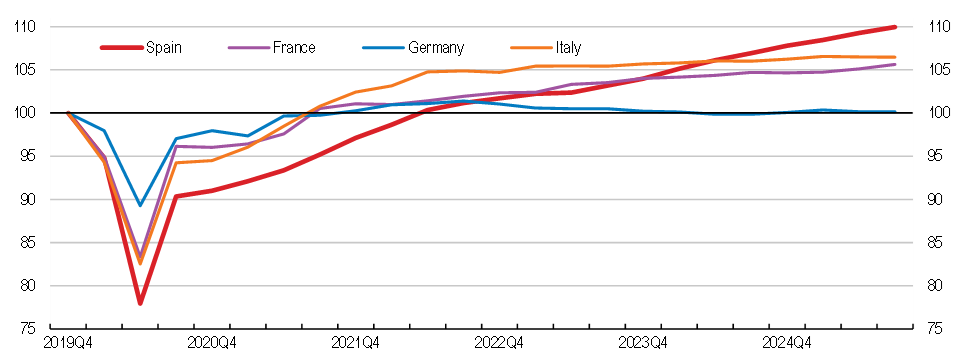
Since the pandemic, Spain’s economy has grown robustly and faster than most peer countries in the Euro Area (Figure 1). Growth has been supported by strong investment, particularly public investment, rising exports in services and a rapid expansion of the labour force, as many migrants, mainly from Latin America, have integrated quickly into work. Employment is growing across sectors, while unemployment dropped from around 15% in 2021 to 10.5% in September 2025, although it remains the highest in the European Union. Temporary contracts—long Spain’s vulnerability— have fallen from over 25% to roughly 16% in the three years after the 2021 labour market reform.

Beneath these encouraging headlines a productivity challenge threatens to undermine Spain’s long-term prosperity, as highlighted in the recently released 2025 Economic Survey of Spain. Sustained growth and income convergence with other OECD peers depend on accelerating productivity growth and harnessing untapped resources.

Figure 1. GDP growth has surpassed European peers recently

Gross domestic product, volume, seasonally and calendar adjusted data, index 2019Q4 = 100

Source: Eurostat.

Spain is creating jobs faster than most of Europe, and productivity per worker has grown since 2022, notably in  commerce, transport, and hospitality. Despite this improvement, GDP per hour worked in Spain was still 7% below the EU average in 2024 (Figure 2, Panel A). This productivity shortfall isn’t confined to one lagging sector—it affects tradable and non-tradable activities alike, as well as firms of all sizes.

GDP growth will remain robust at 2.9% in 2025, 2.2% in 2026 and 1.8% in 2027, as the expansion of tourism normalizes, and immigration flows moderate. To sustain this growth momentum, and accelerate income convergence, strengthening productivity growth will be key.

The SME opportunity

Small and medium-sized enterprises lie at the centre of Spain’s productivity challenge, and they are equally central to overcoming it. SMEs make up 99% of all Spanish firms and employ nearly two-thirds of the workforce, placing them at the centre of the country’s economic engine. Yet, compared with their counterparts in peer countries, Spanish SMEs tend to be smaller, grow more slowly, and operate at significantly lower productivity levels than OECD top performers (Figure 2, Panel B). These gaps reflect the tighter financing constraints SMEs face, their lower rates of innovation, and the disproportionate regulatory and compliance burdens they bear relative to SMEs in many other European economies.

Aware of these challenges, Spain has launched an ambitious SME agenda backed by the Recovery, Transformation and Resilience Plan, which allocates about 40% of the funds in grants to entrepreneurship, digitalisation, and internationalisation. Yet, more can be done to unlock SME potential:

  • Improving access to finance by strengthening market-based funding channels and connecting small firms with capital market participants, while raising awareness among smaller businesses of available non-bank financing options.
  • Streamlining regulation and administrative procedures costs that weigh heaviest on smaller firms, including phasing-in regulatory thresholds that lead to sudden increases in compliance costs when firms grow.
  • Simplifying application and reimbursement procedures for R&D public support, including by creating a “one-stop-shop” digital platform.
  • Closing skills gaps through more accessible training offers, simplified procedures and better outreach so SMEs can systematically invest in workforce upskilling and reskilling.

When combined, these initiatives can help smaller firms realize their full potential. Even modest productivity gains across thousands of SMEs would translate into sizeable aggregate effects and sustained income convergence.

Figure 2. Despite recent improvements, labour productivity remains below EU

Note: In Panel B, 5 best performers for large firms excludes Ireland and Norway where labour productivity exceeds 416,000 USD in 2023.
Source: OECD Productivity levels Statistics; OECD Structural Business Statistics.

Harnessing the potential of older workers and migrants

The urgency of Spain’s productivity challenge becomes even clearer when demographics enter the picture. An ageing population and low employment rates among older workers (Figure 3) risk reducing labour supply, slowing potential growth, and increasing fiscal pressures, despite supportive tailwinds from rising migration in recent years. Spain faces one of the steepest demographic transitions in the OECD, with the old-age dependency ratio projected to rise by about 41 percentage points between 2024 and 2054. Yet, within these challenges lies untapped potential that can be turned into gains if bold responses are undertaken:

  • Reforming non‑contributory unemployment assistance for over‑52s, which currently acts as a de facto early retirement. This can be addressed by limiting duration, restricting pension accrual to the unemployment insurance phase only, introducing means‑testing and strengthening activation requirements.​
  • Extending working lives by aligning pension incentives more closely with longer life expectancy, while improving working‑conditions and training options for older workers—for example via individual training vouchers co‑funded with employers.​
  • Making better use of migration: foreign‑born workers already represent a large share of recent job creation, but many are overqualified for their jobs. Simplifying and speeding up degree recognition and making migration channels more responsive to labour‑market needs would raise both efficiency and equity.

Figure 3. Raising employment at older ages is central to meet Spain’s demographic challenges

Employment rates by age, %, 2024

Source: OECD Labour force statistics.

The bottom line

Spain’s recent economic performance has been strong. Maintaining this momentum requires shifting gears from job creation to sustained productivity growth. Policy priorities should continue to empower SMEs through better finance and less red tape, activate the older unemployed, extend working lives, and unlock migrant talent. Spain now has a window of opportunity to push ahead with reforms. The choices made in this phase will determine whether today’s resilience becomes tomorrow’s convergence.

References:

OECD (2025), OECD Economic Surveys: Spain 2025, OECD Publishing, Paris, https://doi.org/10.1787/abc5c435-en.


Promover un crecimiento más fuerte y sostenible para todos en España

Also available in English

Por Bertrand Pluyaud y Adolfo Rodríguez-Vargas, Departamento de Economía, OCDE

Antes de la pandemia de COVID-19, la economía española experimentó un período de crecimiento económico sostenido y más equilibrado, menos dependiente del sector de la construcción, y con un sistema financiero más saludable. La pandemia y la guerra de agresión de Rusia contra Ucrania fueron golpes sucesivos que requirieron un fuerte apoyo gubernamental para proteger a las empresas y los hogares, como se señala en el Estudio Económico de España 2023. La producción se ha recuperado a su nivel anterior a la pandemia, y el crecimiento se ha mantenido desde el segundo semestre de 2022 y se espera que siga siendo sólido en 2024.

La recuperación de la pandemia ha sido constante tras la gran caída del PIB en 2020

Producto Interno Bruto, Volumen, base 2019Q4 = 100


Made with Flourish

España también ha introducido varias reformas importantes para abordar problemas de larga data en el mercado laboral, promover el crecimiento empresarial y la innovación, garantizar la sostenibilidad de las pensiones e impulsar la formación profesional. Sin embargo, persisten debilidades estructurales que lastran el potencial de crecimiento de España. El Estudio Económico de 2023 analiza las opciones de política para abordar estas cuestiones en cuatro ámbitos.

Abordar los desafíos fiscales

La acción del gobierno fue decisiva para la recuperación, pero costosa. La deuda pública, que ya era elevada antes de la pandemia, ha aumentado 13 puntos porcentuales del PIB desde 2019.  Es necesario un saneamiento presupuestario sostenido para mantener la deuda en una senda descendente y dejar espacio para el gasto relacionado con el envejecimiento y partidas que fomentan el crecimiento, como la educación y la transición ecológica. Esta consolidación debería basarse tanto en la movilización de ingresos adicionales como en la mejora de la eficiencia del gasto.

El aumento de la recaudación tributaria relativamente baja debe incluir la ampliación gradual de la base imponible del impuesto sobre el valor añadido y el aumento de los impuestos relacionados con el medio ambiente, pero también la reducción de la elusión fiscal y la mejora de la recaudación fiscal. Las revisiones del gasto deben seguir utilizándose para definir las prioridades de gasto que fomentan el crecimiento, y la evaluación de las políticas públicas debe convertirse en la norma.

La deuda pública sigue siendo elevada

Deuda pública, definición de Maastricht, % del PIB


Made with Flourish

Fuente: Eurostat.

Aumentar la productividad

La baja inversión en investigación y desarrollo, el gasto público ineficiente en educación y capacitación y un acervo insuficiente de capital en TIC han lastrado el crecimiento de la productividad, que en la última década ha promediado el 0,6% anual en comparación con el 0,9% de la OCDE. La proporción de empresas innovadoras también es comparativamente baja. Todo esto pesa sobre el crecimiento potencial, que con el rápido envejecimiento de la población se espera que se mantenga bajo.

Promover la colaboración y la transferencia de conocimientos entre empresas y universidades, fomentar el emprendimiento, reducir las barreras regulatorias y mejorar la regulación puede aumentar la innovación y el crecimiento empresarial. Continuar con la aplicación efectiva de las inversiones y reformas en el marco del Plan Nacional de Recuperación, Transformación y Resiliencia debe seguir siendo una prioridad, ya que puede ayudar a superar las deficiencias estructurales e impulsar la productividad.

Promover oportunidades para todas las personas en España

A pesar de las recientes mejoras, las desigualdades de ingresos siguen siendo significativas. La pobreza es alta en comparación con la OCDE, y España tiene la tasa de pobreza infantil más alta de Europa Occidental, con un 22%. Esto hace que sea urgente garantizar que la asistencia pública sea suficiente y llegue a quienes más la necesitan. El estudio recomienda mejorar la focalización de las prestaciones sociales, en particular hacia las familias pobres con hijos, impulsar la utilización del Ingreso Mínimo Vital y reducir las cargas administrativas para los usuarios.

Los jóvenes en España se enfrentan a una difícil transición hacia una vida adulta independiente, productiva y feliz. El riesgo de pobreza entre ellos es particularmente alto, aunque ha disminuido. Es por eso que el tema especial de este estudio es cómo puede España aumentar las oportunidades para sus jóvenes.

Los resultados educativos y del mercado laboral han mejorado, pero muchos jóvenes siguen dejando el sistema educativo con bajos niveles de educación o competencias, y la integración de los jóvenes en el mercado laboral sigue siendo difícil. La proporción de contratos temporales ha disminuido tras la reforma del mercado laboral de 2021, pero sigue siendo elevada. El estudio recomienda formar a los profesores para que identifiquen y ayuden a los estudiantes en situación de riesgo y mantener el apoyo a los estudiantes para que se matriculen en la formación profesional, en particular fomentando la participación de las pymes en la oferta de plazas. Además, para facilitar la transición del estudio al trabajo, recomienda una mayor participación de los empleadores en el diseño de los planes de estudios universitarios y mejorar el acceso a la financiación para los jóvenes empresarios.

La vivienda es una preocupación acuciante para muchas personas en España, especialmente para los jóvenes. Para aumentar la oferta de viviendas, la encuesta recomienda ampliar el muy bajo parque de viviendas de alquiler social y relajar los estrictos controles de alquiler.

Los jóvenes afrontan un alto riesgo de pobreza

Riesgo de pobreza o exclusión social, %


Made with Flourish

Note: OECD Europe includes European OECD countries and excludes Türkiye.
Fuente: INE.

Abordar los desafíos ambientales

España ha avanzado en la lucha contra el cambio climático, ya que el gasto en protección del medio ambiente ha aumentado y las energías renovables están cada vez más presentes en la matriz energética. Para seguir reduciendo su dependencia de los combustibles fósiles, España debe acelerar el cambio hacia un transporte más ecológico, mejorar el almacenamiento y las interconexiones a la red eléctrica, y seguir impulsando las energías renovables.

También se necesita un régimen fiscal más amigable con el medio ambiente, ya que los ingresos por impuestos medioambientales como porcentaje del PIB son bajos en comparación con la mayoría de los países europeos de la OCDE. La base para los impuestos medioambientales puede ampliarse, en particular mediante la eliminación gradual de las exenciones y el aumento gradual del tipo impositivo sobre las emisiones, al tiempo que se compensa parcial y temporalmente a los más vulnerables.

La sequía persistente en algunas regiones ha reducido la disponibilidad de agua, y la intensa producción agrícola ha afectado a la calidad del agua. Estos problemas podrían abordarse mediante un riego más eficiente, la reutilización y el reciclaje de las aguas, y un uso más sensato de los fertilizantes.

Mejorar la disponibilidad y la calidad del agua es urgente

Estaciones de agua subterránea con estándares de calidad deficientes, %


Made with Flourish

Nota: Estaciones de agua subterránea que no cumplen con el estándar de agua potable bajo la Directiva sobre Nitratos de la UE.
Fuente: Agencia Europea de Medio Ambiente (EEA).

La acción del Gobierno ayudó a España a superar dos grandes golpes sucesivos. Las políticas públicas basadas en la evidencia también pueden ayudar a resolver las debilidades estructurales de larga data de España para aumentar el crecimiento y el bienestar de todas las personas en el país.

Referencias

OECD (2023), OECD Economic Surveys: Spain 2023, OECD Publishing, Paris,  https://doi.org/10.1787/5b50cc51-en  


Promoting stronger and more sustainable growth for all people across Spain

También disponible en español

By Bertrand Pluyaud and Adolfo Rodríguez-Vargas, OECD Economics Department

Before the COVID-19 pandemic, the Spanish economy experienced a period of sustained and more balanced economic growth, less dependent on the construction sector, and with a healthier financial system. The pandemic and Russia’s war of aggression against Ukraine were successive shocks that required strong government support to protect businesses and households, as noted in the 2023 Economic Survey of Spain. Output has recovered to its pre-pandemic level, and growth has held up well since the second half of 2022 and it is expected to remain solid in 2024.

The recovery from the pandemic has been steady following the large fall of GDP in 2020

Gross Domestic Product, Volume, base 2019Q4 = 100


Made with Flourish

Spain has also introduced several major reforms to address longstanding labour market issues, promote business growth and innovation, ensure pensions’ sustainability, and boost vocational education. However, structural weaknesses remain that weigh down Spain’s growth potential. The 2023 Economic Survey discusses policy options to tackle these issues in four areas.

Addressing fiscal challenges

Government action was decisive for the recovery, but it was costly. Public debt, which was already high before the pandemic, has increased by 13 percent points of GDP since 2019.  Sustained fiscal consolidation is required to keep debt on a downward path and to make room for ageing-related spending and growth-enhancing items, like education and green transition. This consolidation should rely on both mobilising additional revenues and on enhancing spending efficiency.

Increasing the relatively low tax intake should encompass gradually broadening the value added tax base and raising environment-related taxes, but also reducing tax avoidance and enhancing tax collection. Spending reviews should continue to be used to define growth-enhancing spending priorities, and evaluation of public policies should become the norm.

Public debt remains high

Public debt, Maastricht definition, % of GDP


Made with Flourish

Source: Eurostat.

Raising productivity

Low investment in R&D, inefficient public spending on education and training, and an insufficient stock of ICT capital have dragged down productivity growth, which in the last decade has averaged 0.6% per year compared to 0.9% for the OECD. The share of innovative companies is also comparatively low. All this weighs on potential growth, which with rapid population ageing is expected to weaken even more.

Promoting collaboration and knowledge transfer between businesses and universities, fostering entrepreneurship,  reducing regulatory barriers, and improving regulation can increase innovation and business growth. Continuing with an effective implementation of the investment and reforms under the national Recovery, Transformation and Resilience Plan should remain a priority, as it can help overcome structural deficiencies and boost productivity.

Promoting opportunities for all people across Spain

Despite recent improvements, income inequalities remain significant. Poverty is high compared to the OECD, and Spain has the highest child poverty rate in Western Europe, at 22%. This makes it urgent ensuring that public assistance is sufficient and reaches those who need it more. The survey recommends improving the targeting of social benefits, particularly towards poor families with children, boosting the take-up of the minimum income guarantee, and reducing administrative burdens for users.

Young people in Spain face a challenging transition to an independent, productive, and happy adult life. The risk of poverty among them is particularly high, although it has fallen. That is why the special topic of this survey is how can Spain increase opportunities for its young.

Educational and labour market outcomes have improved, but many young people still leave the education system with low education levels or skills, and youth labour-market integration remains difficult. The share of temporary contracts has decreased after the 2021 labour market reform, but it is still high. The survey recommends training teachers to identify and assist students at risk and maintaining support for students to enrol in vocational education, including by fostering the participation of SMEs to offer places. Furthermore, to ease school-to-work transitions it encourages greater employer involvement in the design of university curricula, and improving access to financing for young entrepreneurs.

Housing is a pressing concern for many people in Spain, especially the young. To increase housing supply, the survey recommends expanding the very low stock of social rental housing and relaxing stringent rent controls.

Young people face high poverty risks

Risk of poverty or social exclusion, %


Made with Flourish

Note: OECD Europe includes European OECD countries and excludes Türkiye.
Source: INE.

Addressing environmental challenges

Spain has made progress in the fight against climate change, as environmental protection expenditure has increased and renewable energies are becoming more prevalent in the energy mix. To keep reducing its dependence on fossil fuels, Spain should accelerate the shift towards greener transportation, improve storage and grid interconnections, and continue promoting renewable energies.

A more environment-friendly tax regime is also needed, as environmental tax revenue as a share of GDP is low compared to most OECD European countries. The base for environment-related taxation can be broadened, including by phasing out exemptions and gradually increasing the tax rate on emissions, while compensating partially and temporarily the most vulnerable.

Persistent drought in some regions has lowered water availability, and intense agriculture production has affected water quality. These problems could be addressed through more efficient irrigation, reuse and recycling of waters, and a more sensible use of fertilizers.

Improving water availability and quality is urgent

Groundwater stations with poor quality standards, %


Made with Flourish

Note: Groundwater stations failing to meet the drinking water standard under the EU Nitrates Directive
Source: European Environment Agency (EEA).

Government action helped Spain to overcome two major successive shocks. Evidence-based public policies can also help to solve Spain’s longstanding structural weaknesses to increase growth and raise wellbeing for all people across Spain.

References

OECD (2023), OECD Economic Surveys: Spain 2023, OECD Publishing, Paris,  https://doi.org/10.1787/5b50cc51-en  


Enhancing digital diffusion for higher productivity growth in Spain

By Aida Caldera Sánchez, Müge Adalet McGowan and Yosuke Jin

Digitalisation is transforming the Spanish economy, changing the way firms operate, with positive implications for productivity. However, these changes are not evenly shared between high and low productivity firms, or small and large firms (Figure 1), which can help explain why aggregate productivity gains from digitalisation have been modest in Spain so far. Hence, Spain still has considerable scope to reap the benefits of the adoption of digital technologies and, perhaps more importantly, their effective use to produce new business models and products, as discussed in the 2021 Economic Survey of Spain (OECD, 2021; Jin, 2021).

Figure 1. The adoption of digital technologies varies with firm size
Percentage of firms which adopt each technology, 2019

Note: “Small firms” stands for small enterprises with 10-49 employees, while “Large firms” stands for large enterprises with 250 employees and more.
Source: OECD, ICT Access and Usage by Businesses (database).

The pandemic has shown the benefits of a more digitalised economy (e-commerce, teleworking) and accelerated the pace of digital adoption, with the extent of teleworking and digital sales increasing in Spain during the last year.  The Spanish Recovery, Resilience and Transformation Plan allocates 29% of funds to digitalisation, which will help Spain achieve its ambitious objectives laid out in its national digital strategy, “Digital Spain 2025”. In this context of the increasing importance of digitalisation in Spain, the Survey analyses the challenges and opportunities that digitalisation offers through three types of policies.

First, good communications infrastructure is a prerequisite to adopt and use digital technologies. This is an area where Spain ranks relatively well in international perspective, with a high share of fibre in total fixed broadband subscriptions and a relatively widespread internet usage. The coverage of fibre networks in rural areas is also well above that in other European countries (46% vs. 21%). Nonetheless, the digital divide between urban and rural areas in Spain remains, even if it has narrowed recently. Barriers to “rights of way” – permission to install necessary equipment – are high in some regions and municipalities, and should be reduced to lower deployment costs.

Second, there are complementary factors that are key to take full advantage of digitalisation. These include organisational capital and managerial skills, R&D and digital skills. There are important gaps in these areas in Spain. For example, business investment in intangible assets and R&D are relatively low.  To boost innovation and reap the full benefits of digitalisation, the Survey recommends boosting partnerships between the public and the private sector, for example by enhancing the role of Technology Centres to increase cooperation between research institutes and SMEs, which need to innovate and use digital technologies more.

There is also ample room to develop ICT skills, especially for low-educated and older people (Figure 2). Reducing the mismatch between the skills employers need and the qualifications of jobseekers should be a priority. This would help in particular low productivity firms and low-skilled people, making the benefits of digitalisation shared by all. Targeting training to those with lower digital skills and shifting financial incentives for lifelong training at least partially to training programmes chosen by individuals rather than employers would help achieve these outcomes.

Figure 2. There is room to develop digital skills
Percentage of respondents claiming to have basic digital skills, 2019

Source: Eurostat, Digital skills (database).

Finally, policies, which raise competitive pressures and sharpen incentives to better use digital technologies and better access to finance, can also enhance the diffusion of digital technologies. For example, the Survey recommends fostering the implementation of the Markey Unity Law to reduce regulatory differences across regions and facilitate the growth and entry of new firms and this way encourage the adoption of new technologies. It also recommends strengthening targeted support to new and high-potential firms through public guarantee schemes. In addition to these policies, which facilitate the entry and expansion of innovative firms, it is also important to ensure the efficient exit of non-viable firms and restructuring of viable firms in temporary distress. An effective insolvency regime can help reduce the barriers and costs of firm restructuring or exit and facilitates technological experimentation. In this context, promoting out-of-court insolvency proceedings, especially for SMEs, is key.

References:

Jin, Y. (2021), “Enhancing digital diffusion for higher productivity growth in Spain”, OECD Economics Department Working Papers, No. 1673, OECD Publishing, Paris.

OECD (2021), OECD Economic Surveys: Spain 2021, OECD Publishing, Paris, https://doi.org/10.1787/79e92d88-en.


Spain: Fostering the recovery

By Müge Adalet McGowan, OECD Economics Department

Economic policies reacted in a timely manner to the crisis, which hit the Spanish economy hard, with a 10.8% fall in GDP in 2020. Policy support, including short-time work schemes and loan guarantees, changed in line with the evolution of pandemic. With vaccination accelerating and containment measures easing, recovery is on the horizon. However, outlook remains uncertain due to the speed of vaccination, the recovery of tourism, unwinding of the sizeable households savings accumulated during the lockdown and the use of Next Generation EU funds. The latest OECD Economic Survey of Spain highlights that support should be continued until the recovery is firmly underway, but become more targeted to the most impacted sectors and viable firms.

Structural reforms are key to a durable and inclusive recovery

The crisis has exacerbated pre-existing challenges, such as high unemployment and inequalities, with the pandemic hitting disproportionately hard young, low-skilled, and temporary workers. Improving the efficiency of active labour market policies will be an important tool to reskill and enhance the employability of displaced workers. For example, the use of tools for the profiling of specific individual needs can allow interventions at an earlier stage, and tailor services more closely to individuals. Ensuring training opportunities for workers on short-time work schemes is also key to facilitate reallocation. An important challenge of Spanish labour markets is the widespread use of temporary contracts. While temporary employment can help impacted sectors in the near term, labour market duality should be lowered in the medium-term. Simplifying the menu of contracts and streamlining existing hiring incentives should be prioritised.

The Recovery, Resilience and Transformation Plan outlines to use the EU funds to advance the structural transformation of the Spanish economy to a more digitalised, inclusive and sustainable economy. Swift absorption of the funds can support the near-term recovery, but effective implementation and reforms are needed to enhance long-term growth. Given the high level of decentralisation in Spain, coordination across different levels of government will be key, together with a good governance system to strike the right balance between fast absorption and high accountability, by ensuring transparent procedures and criteria for investments.

Once the recovery is firmly under way, medium-term fiscal challenges should be addressed

Significant policy support has increased the public debt to GDP to 120% in 2020. Furthermore, the ageing-related spending pressures present before the pandemic will continue. Adequate and socially acceptable measures should be taken to ensure the long-term financial sustainability of the pension system. The Survey recommends linking the retirement age to life expectancy and further increasing the effective retirement age by disincentivising early retirement. New incentives to extend working lives, for example by increasing the number of required contribution periods to gain a full pension, could also be introduced. These reforms should be accompanied by measures to re-skill older workers, such as digital and ICT skills.

Boosting digital diffusion will raise productivity growth and help firms’ recovery from the crisis

The pandemic has shown the benefits of a more digitalised economy (e-commerce, teleworking) and accelerated the pace of digital adoption, which can help boost growth through productivity gains. Spain has one of the best digital infrastructures in the EU, but there is considerable scope to reap the benefits of the adoption of digital technologies and their effective use to produce new business models and products.

There is a mismatch between the skills employers need and the qualifications of jobseekers, which is expected to grow in the future in Spain. There is not only room to improve digital skills, especially those with low-education, but also the digital adoption of technologies by firms, especially SMEs. Only 20% of firms use e-sales and cloud computing services in Spain (Figure 1). Efforts to remove barriers to low productivity firms, improving their access to capital and incentivising them to boost their underlying capabilities, including intangible capital and the skills of workers, would increase firms’ incentives and capabilities to make the most out of new technologies. These issues are covered in the Survey’s in-depth chapter on digitalisation.

Figure 1. The adoption of digital technologies has scope to increase

Percentage of firms which adopt each technology, 2019

References:

Government of Spain (2021), The Recovery, Transformation and Resilience Plan of the Spanish Economy, Madrid.

OECD (2021), OECD Economic Surveys: Spain 2021, OECD Publishing, Paris, https://doi.org/10.1787/79e92d88-en.


Sustaining growth to benefit all in Spain

By David Law, Spain desk, OECD Economics Department

Spain 150xSpain continues to recover from the economic crisis with strong growth and falling unemployment, as highlighted in the latest OECD Economic Survey of Spain (OECD, 2018). If the recovery is to be sustained, it is vital that the benefits of economic growth are shared as high rates of income and wealth inequality can harm economic growth and productivity, and limit productive investment opportunities.

Income inequality is relatively high in Spain (Figure 1) and it increased during the crisis, as employment fell significantly and income disparity grew. The risk of being in poverty now varies greatly across regions and the rate of child poverty is particularly high, at 22% in 2015, which is well above the OECD average of 13%. The risk of poverty is especially high for children living in migrant and single parent families. With some positive developments in the labour market since 2015, income inequality and poverty rates are likely to have improved somewhat, however, these issues are expected to remain a concern for some time.

Inequality spain blog1 2018

Wealth inequality in Spain appears relatively low in international perspective, reflecting high rates of home ownership. However, as is the case in other countries, wealth inequality is higher than income inequality with the top 10% of households holding close to half of all wealth, compared to around one fifth for the bottom 60% of households. Wealth inequality seems likely to rise over time, given changes in the distribution of income and recent labour market trends. Indeed, new work undertaken by the OECD using household survey data shows that wealth inequality already increased between 2011 and 2014 in Spain, and that the income and wealth mobility of households exhibit a degree of persistence, which can exacerbate inequalities (Martinez-Toledano et al., forthcoming).

The tax and transfer system in Spain could do more to tackle inequality. Low-income households receive less cash transfers than higher-income ones, with those in the bottom 20% of the income distribution receiving only around 55% of the average payment across all families, compared to the top 20% receiving over 60% more than the average family (Figure 2). Better targeting of transfers, so more is received by those who need them the most, would reduce inequality. Additionally, the 2018 OECD Economic Survey of Spain notes the burden the tax system places on labour taxation and recommends that regressive reduced value-added tax rates be abolished and that the tax allowances granted for inheritance taxes for the most wealthy are reconsidered.

Inequality spain blog2 2018

Reducing inequality in the long-run will also require sustained improvement in labour market outcomes. For instance, in 2017, unemployment among the young was 38.6%, long term unemployment as a share of the labour force was 7.7% and 27% of workers were on temporary contracts. The 2018 OECD Economic Survey of Spain makes a number of recommendations in this regard. For example, the Survey recommends increasing spending on training and job search assistance, the introduction of a profiling tool to adapt active labour market programmes to the needs of individual workers, and measures to boost the labour market participation of women, such as extending the provision of early childhood education. The Survey also discusses the role that targeted reductions in social security contributions could play in improving labour market outcomes for low wage workers and the benefits of greater use of firm-level collective agreements, and recommends continuing efforts to fight against the abuse of temporary contracts to reduce labour market duality.

References

OECD (2018), OECD Economic Surveys: Spain 2018, OECD Publishing, Paris. https://doi.org/10.1787/eco_surveys-esp-2018-en.

Martínez-Toledano, C., D. Law, D. Haugh and M. Adalet McGowan (forthcoming), “The Business Cycle and Wealth and Income Mobility in Spain”, OECD Economics Department Working Papers, forthcoming.


Reducing regional disparities for inclusive growth

By Müge Adalet McGowan, Spain desk, OECD Economics Department

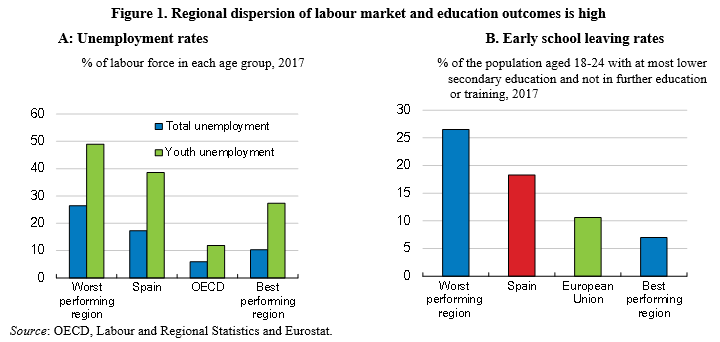
Spain 150xEnsuring the benefits of growth are spread widely requires a strong focus on greater convergence of regions in terms of income and well-being. The GDP per capita in the best performing region was around double that in the worst performing region in 2016. Income inequality and poverty rates are also high, with regional differences.

High regional dispersion in education and job outcomes, compounded by low inter-regional mobility, emerge as key drivers of regional inequalities in income and well-being (Figure 1). At the same time, productivity growth has stagnated in Spain (Figure 2). Barriers to achieving a truly single market limit productivity growth of regions, including the most advanced. Hence, the 2018 OECD Economic Survey of Spain highlights that a dual approach of enhancing both the productive and employment capacities of lagging regions is needed (OECD, 2018). Reducing regional disparities will also depend on effective coordination and sharing of best practices across regions.

Spain 2018 fig 1 main

Stronger coordination between employment and social services is key to providing effective transitions between social support schemes and employment, given the multiple barriers that the unemployed might face (Fernandez et al., 2018). Improving coordination to provide integrated support for jobseekers via a single point of contact for social and employment services and assistance would improve the effectiveness of such policies.

Lack of full portability of social and housing rights across regions, due to prior residency requirements, contributes to low labour mobility. The 2018 OECD Economic Survey of Spain recommends ensuring full portability of these benefits across regions, by providing temporary assistance either by the region of origin or the central government.

Increasing the quality of education would improve the employability of the labour force in lagging regions and should be complemented with policies to raise job quality in regions with low-skilled jobs. For example, providing individualised support to students at the risk of failing at an early stage has contributed to lower early school leaving rates in some regions. Increasing the adaptability of workers, via lifelong learning policies better targeting the participation of low-qualified adults, would improve the matching of skills to labour market needs.

Reducing regional regulatory differences is key to achieving a truly single market and firm growth. The 2018 OECD Economic Survey of Spain recommends strengthening the implementation of Market Unity Law through enhanced cooperation and coordination across different levels of government and the assessment of the compliance of new legislation at all levels of government with the principles of the Market Unity Law. Removing the remaining barriers in some professional services would also improve competition and boost productivity.

References:

OECD (2018), OECD Economic Surveys: Spain 2018, OECD Publishing, Paris. https://doi.org/10.1787/eco_surveys-esp-2018-en.

Fernandez, R., et al. (2018), “Faces of Joblessness in Spain: A People-centred perspective on employment barriers and policies”, OECD Social, Employment and Migration Working Papers, No. 207, OECD Publishing, Paris, https://doi.org/10.1787/6149118d-en.


Reducing poverty durably is a key challenge in Spain

By Yosuke Jin, Spain Desk, Country Studies Branch, OECD Economics Department

Poverty has risen in Spain in the wake of the crisis (Figure 1), mainly due to lack of quality jobs that provide enough hours of paid work to support decent incomes (OECD, 2017). The risk of poverty is concentrated on jobless households and households with only temporary workers (OECD, 2015). As employment has grown strongly over the past three years, poverty is likely to have declined. However, the level of poverty is also likely to remain high as the unemployment rate still stands at around 19% and a quarter of those who are employed are on temporary jobs. The risk of poverty is particularly intensified among jobless households with children.

pov incr during crisis esp

The tax and transfer system could do more to relieve poverty. Total social spending as a percentage of GDP is higher in Spain than the OECD average. However, social benefits are poorly targeted with relatively well-off households benefiting more than the poor. Cash transfers are particularly low at the bottom 20% of the income distribution (Figure 2), as less than half of the unemployed are covered by unemployment benefits and minimum-income safety nets are weak (OECD, 2017).

esp 2 transfers for poor

A substantial number of unemployed people have exhausted their unemployment benefits as their unemployment spell gets longer or are not entitled to them at all. This is particularly the case for those who separate from temporary contracts due to very short contribution periods in the social security system. The 2017 OECD Economic Survey on Spain recommends extending the coverage of the standard unemployment benefit by reducing its minimum required contribution period, in line with many other EU countries (OECD, 2017).

The minimum income support provided by safety nets is weak and its coverage is very limited. Social protection in Spain consists not only of the unemployment insurance system managed by the central government, but also of minimum income support schemes run by the central and regional authorities. Only 1.5% of households received minimum income support in 2014 from the regional schemes. The Renta Minima de Insercion (RMI) is the most common income support scheme for those who are not eligible for unemployment benefits, aimed at alleviating poverty by means of cash benefits for basic living needs. For those who do receive the RMI, the benefit amount is low compared with similar social assistance in other OECD countries, in particular for those with children due to weak top-ups for children. The Economic Survey recommends increasing the amount and coverage of the regional minimum income support programmes, in particular, for families with children (OECD, 2017).

While improving the coverage of social protection, the benefits should be strictly conditional on active job search. This would not only provide immediate income support but also allow benefit recipients to stay connected to the labour market, as long as relevant employment support measures are put in place. From this perspective, the Economic Survey also discusses the importance of improving the efficiency of public employment services by: employing profiling tools and specialisation of counsellors; increasing resources and staff-to-job seeker ratios; and improving co-ordination to provide integrated support for jobseekers via a single point of contact for social and employment services and assistance (OECD, 2017).

References

OECD (2015), In It Together: Why Less Inequality Benefits All, OECD Publishing, Paris.

OECD (2017), OECD Economic Surveys: Spain 2017, OECD Publishing, Paris.


Fiscal policy in the euro area: in the current juncture, don’t apply sanctions


By Alvaro Pina, Head of European Union and Euro Area Desk, Country Studies Branch, OECD Economics Department

Tomorrow the European Commission will assess again the fiscal situation of Portugal and Spain, and decide whether to recommend to the Council that the Excessive Deficit Procedure be stepped up for those countries, exposing them to various sanctions. This momentous decision can have major consequences for the countries concerned, but also wider implications. It sets a landmark in the application of the Stability and Growth Pact rules, and therefore begs the question of how best those rules should be applied, especially in the current juncture of weak growth in Europe. In turn, this question hinges on what fiscal policies should do to support the recovery more. The recent OECD Survey of the Euro Area provides analysis on what should be done.

Growth has picked up gradually over the past two years, but demand is still weak and unemployment remains very high in several countries, including Portugal and Spain. In the euro area as a whole, support to the recovery has essentially come from monetary policy, with little or no fiscal help. After three years (2011-13) of strong and widespread fiscal consolidation, fiscal policy has turned broadly neutral (Figure 1), but it needs to go further in supporting demand as monetary policy alone cannot do everything. Budget support should mainly come from countries with fiscal space. Those without, like Portugal and Spain, should nonetheless avoid a return to austerity.

Desney1 euro are fisc stance

To maximise growth impacts and make them lasting, budget support should be targeted. Post-crisis consolidation often led to increases in labour taxes and large reductions in public investment (Figure 2), making public finances less growth-friendly. Policy levers to improve the composition and efficiency of public spending and taxes remain largely at national level, and progress on this front across the euro area has been insufficient. But European sanctions could make matters worse. For instance, they would likely imply a suspension (even if only temporary) of structural funds to the countries concerned, putting further downward pressure on public investment.

Desney2 change in public investmen

In the current juncture, sanctions would be an economic mistake. In the absence of temporary fiscal expansion by countries with enough space, sanctions will somewhat tilt the euro area fiscal stance towards austerity, the opposite of what is needed. Further, they risk inducing further cuts to investment, thus hampering potential growth. Not to mention rekindling political tensions and animosities, again the opposite of what is needed. In a word: don’t.

See also:

OECD (2016), OECD Economic Surveys: Euro Area 2016, OECD Publishing, Paris.