The Foundations for Growth and Competitiveness

Builder working on foundations

OECD economies are facing new growth opportunities but also challenges. Taking the most out of these opportunities while addressing the challenges will be key to revitalise productivity and secure higher living standards for future generations.

by Stefano Scarpetta, OECD Chief Economist and G20/G7 Finance Deputy


Across the OECD and beyond, the foundations of economic growth are under strain. Over the past two decades, labour productivity growth has slowed markedly in most countries. This slowdown reflects a combination of structural bottlenecks: subdued business investment, declining firm dynamism, slowing technology diffusion and a weakening pace of human capital accumulation. While employment growth has been resilient, many countries are facing significant population ageing, which will affect the potential for labour to sustain growth.

At the same time, rapid advances in artificial intelligence and digital technologies offer the potential of a new wave of sustained productivity gains. Whether new technologies translate into sustained productivity gains will depend crucially on structural policy settings.

This first edition of Foundations for Growth and Competitiveness arrives at a pivotal moment. Structural reform momentum has slowed across many OECD countries but there is heightened need for countries to remain competitive and resilient in a global landscape characterised by unprecedented structural transformations and geopolitical and trade shocks. To help countries meet these challenges, the report offers practical tools for policy makers, including a comprehensive online data platform to identify structural policy bottlenecks and tailored reform priorities for 48 countries developed through an iterative dialogue with national authorities.

Sustainable prosperity rests on strong enabling conditions: high-quality human capital, sound institutions,
effective governance, reliable infrastructure, affordable and secure energy supply and macroeconomic stability. Across countries, strengthening skills systems and lifelong learning emerges as one of the most frequent reform priorities in this report also to promote an effective adoption of digital and in particular AI tools. As artificial intelligence and digitalisation reshape production and the way businesses work, workforce adaptability becomes a decisive competitive advantage. Countries that strengthen vocational education, expand access to lifelong learning and deepen links between universities and labour markets will be better placed to adapt to evolving business needs.

Institutional quality and efficient regulatory processes are equally critical. Predictable, transparent and well-designed regulatory frameworks foster trust and reduce uncertainty. Strong institutions improve the allocation of resources and underpin market incentives. In an era of heightened geopolitical and economic uncertainty, macroeconomic stability and sound fiscal frameworks remain essential anchors.

Yet enabling conditions alone are not sufficient. Markets must also function efficiently to promote economic
dynamism, technological diffusion and business investment. But when these forces are weakening, policies that strengthen competition and reduce regulatory barriers become more important. Accordingly, improving product market regulation and insolvency regimes is another central reform priority identified across countries. Recommendations also emerge in the tax space, given that poorly designed tax systems can distort incentives and discourage investment.

Labour mobility and participation also remain central to competitiveness and for enhancing access to quality jobs for workers. Reducing barriers to participation – particularly for women, older workers and underrepresented groups – while strengthening work incentives, employability and expanding access to affordable childcare can raise both equity and efficiency. Housing policies that facilitate mobility and tax systems that broaden the base while limiting distortions can further enhance allocative efficiency.

With strong foundations and effective market incentives in place, governments can more successfully guide economic activity toward strategic priorities. Innovation policy, energy security and the clean energy transition are areas where well-designed, targeted interventions can address market failures and support long-term growth. Public support for research and development, when combined with strong human capital and competitive markets, can unlock private investment. Energy market reforms that reduce entry barriers and encourage investment in renewables can strengthen both resilience and competitiveness.

A central message of this edition is that structural reforms are most powerful when they are coherent and complementary. Product market reforms enhance the impact of human capital-augmenting policies. Sound fiscal frameworks reinforce confidence and enable reform to endure. Policy complementarities are particularly important in the context of major technological and demographic transformations.

While the long-term benefits of reform are well documented, the political feasibility of reforms often hinges on near-term effects on policies. By providing examples of how some reforms affect economic performance in the short run, this edition provides food for thought in designing and implementing reform packages that are both economically effective and have strong and broad support. Understanding transitional effects, anticipating distributional impacts and deploying complementary measures can help sustain reform momentum.

Structural reforms also play a crucial role in strengthening fiscal sustainability. At a time of elevated public
debt and rising spending pressures, growth-enhancing reforms offer a path to improving debt dynamics without relying exclusively on fiscal consolidation. By broadening tax bases, improving government efficiency and boosting economic dynamism, reforms can reinforce both resilience and long-term prosperity.

Ultimately, competitiveness is not a zero-sum concept. Economies that strengthen their domestic foundations contribute to a more dynamic and resilient global economy. The objective is not simply faster growth, but growth that is durable, innovation-driven and aligned with environmental sustainability and social cohesion.

The OECD economies are facing new growth opportunities but also challenges. Taking the most out of these opportunities while addressing the challenges will be key to revitalise productivity and secure higher living standards for future generations.

The foundations of growth must now be rebuilt deliberately and decisively.

Editorial from the OECD Foundations for Growth and Competitiveness

References:

OECD (2026), Foundations for Growth and Competitiveness 2026, OECD Publishing, Paris, https://doi.org/10.1787/40a7532f-en.


Navigating demographic headwinds in Croatia

Croatia’s economy has experienced robust and resilient GDP growth and improved living standards over the past decade. Yet a rapidly shrinking and ageing population threatens future growth and fiscal sustainability. Advancing pension, health care and labour market reforms will be essential to extend working lives, improve healthy ageing and raise labour force participation.

By Federica De Pace and Oliver Roehn, OECD Economics Department


In the past decade, Croatia’s economy has experienced strong and resilient GDP growth, outpacing OECD and euro area averages. Wide-ranging structural reforms as well as the integration into the EU, euro and Schengen areas all helped boost living standards. However, Croatia’s population is shrinking and ageing rapidly, a combination that bodes ill for future economic growth and public finances. According to UN projections, the working age population will decline by about 25% between 2024 and 2050 (Figure 1). Moreover, for every ten working-age Croatians, there are about four people older than 65 today; by 2050 there will be nearly six. A smaller workforce will drag down growth. According to the OECD Long-Term Economic Model, GDP growth is projected to fall from over 3% per year on average in the last decade to 0.5% by 2050. At the same time, spending on pensions, health care and long-term care will come under increasing pressure.

According to the 2026 Economic Survey of Croatia, addressing demographic challenges requires pension, health care, and labour market reforms to extend working lives, bring more people into the labour force, improve the health of the ageing population, and enhance the efficiency of public spending.

Average pensions of the current generation of pensioners are low, mainly due to short contribution periods. In 2024 the expected duration of working life was just 34.8 years, compared with an EU average of 37.2 years. Short working lives and hence pension contribution periods help explain why relative poverty among older people is nearly twice the OECD average. A recent pension reform aims to increase pension incomes, but comes at a significant fiscal cost. Further tightening early retirement options and increasing the retirement age in line with gains in life expectancy would prolong working lives and help improve pension income without jeopardising the sustainability of the pension system.

Health outcomes also need to improve to enable longer working lives. A higher share of adults aged 65 and over than in most OECD countries report long-standing limitations in their daily activities due to health problems. Improving health outcomes in a cost-effective way requires stronger prevention policies and higher taxes on unhealthy products, more accessible primary care, and higher quality and efficiency of hospital care, including by centralising complex care in specialised facilities.

Population ageing will strain the long-term care system. Today, care relies heavily on informal family caregivers—mainly women—creating significant physical and emotional burdens and limiting their labour-market participation. As care needs grow, this model will become unsustainable. Reforms are needed to expand the formal long-term-care workforce, by improving working conditions and formalising work contracts. Spending on long-term care must rise to improve access and quality of care. Insurance-based models, like those in Germany, Japan, the Netherlands, and Slovenia, can be a solution to ensure adequate funding. Better integration of health and social services would make long-term care more efficient and sustainable.

Bringing younger and older people into the labour force is essential to mitigate the impact of ageing (Figure 2). Stronger work-based learning in vocational education could ease school-to-work transitions. Expanding affordable childcare and formal long-term care would lift employment among women. Among older workers, disability and poor health are major barriers. The employment gap for people with disabilities—36 percentage points in 2024, more than double the EU average—suggests that earlier intervention and broader access to professional rehabilitation are needed. Removing age limits on rehabilitation and linking disability benefits to participation in rehabilitation, would help retain more workers.

Well-designed immigration policy can help ease skills shortages. Croatia has recently seen higher immigration, reversing decades of net emigration, as living standards improved and entry procedures were streamlined. To maximise the gains, however, more efforts are needed to better align migrants’ skills with current and future labour-market needs. Regular assessments and forecasts of skills shortages, more favourable permit conditions for workers in high-demand occupations, and stronger integration services, would improve the country’s ability to attract and retain the workers it needs the most.

References:

OECD (2025), OECD Economic Surveys: Croatia 2026, OECD Publishing, Paris, https://doi.org/10.1787/b52e3ac0-en


Strengthening Romania’s competitiveness

Romania has made remarkable progress in converging toward OECD income levels over the past two decades, supported by deeper integration into global markets, substantial capital inflows, and wide‑ranging economic reforms.

by Katja Schmidt, OECD Economics Department


Romania has made remarkable progress in converging toward OECD income levels over the past two decades, supported by deeper integration into global markets, substantial capital inflows, and wide‑ranging economic reforms.

These forces have driven strong productivity gains (Figure 1), bringing labour productivity close to the OECD average. Yet significant untapped potential remains. Further boosting the productivity of domestic firms and integrating them more deeply into global markets would raise the domestic value‑added content of production and help the country move up the value chain. At the same time, realigning wage dynamics more closely with productivity growth – which wages have outpaced in recent years – will be essential to safeguard competitiveness and support sustained improvements in living standards.

The new 2026 OECD Economic Survey of Romania highlights four key priorities to increase the integration of domestic firms into global markets while supporting broader productivity gains:

  • Strengthening innovation capacities and digital intensity among domestic firms
  • Promoting human capital development and skills
  • Improving the business environment and market efficiency
  • Fostering infrastructure development.

The innovation gap remains wide compared with both OECD and regional peers. Domestic firms continue to exhibit low rates of product, service, and process innovation, as well as limited R&D investment (Figure 2). Closing this gap requires measures to strengthen firms’ innovation capacities – for example, by simplifying access to R&D tax incentives and raising awareness of their availability. Innovation among SMEs could be further supported by making R&D tax incentives more effective, including through refundability so that any credit exceeding the tax liability is paid out in cash, and by establishing well‑defined public-private project opportunities that encourage SME participation in R&D. In parallel, improving firms’ access to finance and advancing financial deepening – including through more developed capital markets – will be essential to enable productivity‑enhancing investment, foster innovation, and support firm growth and scaling.

Romania’s digital infrastructure has improved significantly: access to high‑speed broadband is now approaching levels seen in the best‑performing OECD countries. However, digital intensity and the use of digital technologies by firms remain low. This reflects relatively low digital skills in the wider population, which should be strengthened as a priority. Awareness of and access to digital advisory and support schemes could also be improved. Ireland’s Grow Digital portal provides a useful example of good practice, consolidating support programmes, training and funding information, and a self‑assessment tool to help firms identify their digital needs.

Figure 2. Romania’s R&D spending is very low

Gross domestic expenditure on R&D, 2024 or latest available

Note: OECD CEEC is the non-weighted average of Czechia, Hungary, Poland, Slovak Republic, and Slovenia.
Source: OECD Main Science and Technology Indicators database.

The economy’s productive capacity depends critically on the availability of advanced skills. As Romania moves up the value chain, demand for technical, digital, and managerial competencies is set to rise. Yet the country starts from a challenging position, with a high share of adults with low educational attainment, persistently elevated early‑school‑leaving rates, and comparatively weak learning outcomes. Addressing these gaps requires broad‑based reforms, as recognised in the 2023 education reform. Romania should focus resources on key priorities and ensure effective delivery – modernising curricula, strengthening teacher capacity, and investing in school infrastructure, particularly in disadvantaged areas. These efforts must be supported by sustainable and adequate financing, alongside a stronger focus on lifelong learning and continuous skills upgrading.

Fostering a dynamic, growth‑oriented business environment requires a regulatory framework that supports entrepreneurship, competition, and firm expansion. While Romania has made progress in improving the regulatory environment and market efficiency, further steps are needed. Starting and operating a business remains more burdensome than in top‑performing OECD countries, despite ongoing simplification efforts. Priority should be given to accelerating the implementation of the streamlined single industrial licensing procedure and strengthening the insolvency framework – including by improving the efficiency of court procedures and expanding the use of digital tools in insolvency cases. Further improvements in the efficiency and accessibility of public procurement processes are also required

Finally, the Survey highlights opportunities to further strengthen transport infrastructure, including by improving network connections, ensuring more efficient transport pricing, and enhancing road maintenance. Promoting alternative low‑emission transport modes and improving governance in the transport sector will also be essential to support sustainable mobility and improve overall system performance.

Visit the OECD’s Romania Economic Snapshot page for further information.

References:

OECD (2026), OECD Economic Surveys: Romania 2026, https://doi.org/10.1787/4844067e-en, OECD Publishing, Paris.


Aprovechar el impulso de España para sostener el crecimiento y la convergencia de ingresos

Por Aida Caldera, Claudia Ramírez y Dimitris Mavridis, OCDE

Versión en inglés

Desde la pandemia, la economía española ha crecido de manera firme y más rápido que muchos de sus pares europeos (Gráfico 1). El crecimiento se ha visto respaldado por una fuerte inversión, principalmente pública, el aumento de las exportaciones de servicios y una rápida expansión de la fuerza laboral ya que muchos inmigrantes, principalmente procedentes de América Latina, se han integrado rápidamente en el mercado laboral. El empleo está creciendo en todos los sectores, mientras que el desempleo ha descendido de alrededor del 15% en 2021 al 10,5% en septiembre de 2025, aunque sigue siendo el más alto de la Unión Europea. Los contratos temporales, que durante mucho tiempo han sido el punto débil de España, han descendido de más del 25% a aproximadamente el 16% en los tres años posteriores a la reforma del mercado laboral de 2021.

Más allá de estos encabezados alentadores, un desafío en materia de productividad amenaza con debilitar la prosperidad a largo plazo de España, como se destaca en el recientemente publicado Estudio Económico de España de 2025. El crecimiento sostenido y la convergencia de los ingresos con otros países similares de la OCDE dependen de la aceleración del crecimiento de la productividad y del aprovechamiento de los recursos sin explotar.

Gráfico 1. El crecimiento del PIB ha superado recientemente al de otros países europeos

Producto interior bruto, volumen, datos ajustados por estacionalidad y efecto calendario, índice 2019T4 = 100

Fuente: Eurostat.

Le reto de la productividad

España está creando empleo a un ritmo más rápido que la mayor parte de Europa, y la productividad por trabajador ha crecido desde 2022, especialmente en los sectores del comercio, el transporte y la hostelería. A pesar de esta mejora, el PIB por hora trabajada en España seguía estando un 7% por debajo de la media de la UE en 2024 (Gráfico 2, Panel A). Este déficit de productividad no se limita a un solo sector rezagado, sino que afecta tanto a las actividades comercializables como a las no comercializables, así como a empresas de todos los tamaños.

El crecimiento del PIB se mantendrá sólido, con un 2,9% en 2025, un 2,2% en 2026 y un 1,8% en 2027, a medida que se normalice la expansión del turismo y se moderen los flujos migratorios. Para mantener este impulso de crecimiento y acelerar la convergencia de los ingresos, será fundamental reforzar el crecimiento de la productividad.

La oportunidad de las pymes

Las pequeñas y medianas empresas son el centro del desafío de productividad de España, y son igual de importantes para superarlo. Las pymes son el 99% de todas las empresas españolas y emplean a casi dos tercios de la fuerza laboral, lo que las coloca en el centro del motor económico del país. Sin embargo, comparado con pares de otros países, las pymes españolas tienden a ser más pequeñas, crecer más lentamente y operan a niveles de productividad significativamente más bajos que los países con mejor rendimiento de la OCDE (Gráfico 2, Panel B). Estas diferencias reflejan las mayores restricciones financieras a las que se enfrentan las pymes, sus menores índices de innovación y las desproporcionadas cargas normativas y de cumplimiento que este grupo de empresas soportan en comparación con las pymes de muchas otras economías europeas.

Consciente de estos retos, España ha puesto en marcha una ambiciosa agenda para las pymes respaldada por el Plan de Recuperación, Transformación y Resiliencia, que destina alrededor del 40% de los fondos en subvenciones al emprendimiento, la digitalización y la internacionalización. Sin embargo, aún se puede hacer más para liberar el potencial de las pymes:

  • Mejorar el acceso a la financiación mediante el fortalecimiento de los canales de financiación basados en el mercado y la conexión de las pequeñas empresas con los participantes en los mercados de capitales, al tiempo que se sensibiliza a las pequeñas empresas sobre las opciones de financiación no bancaria disponibles.
  • Simplificar la regulación y los procedimientos administrativos que más afectan a las empresas más pequeñas, incluyendo la introducción gradual de umbrales regulatorios que provocan aumentos repentinos en los costes de cumplimiento cuando las empresas crecen.
  • Simplificar los procedimientos de solicitud y reembolso de las ayudas públicas a la I+D, entre otras cosas mediante la creación de una plataforma digital única.
  • Cerrar las brechas de competencias mediante ofertas de formación más accesibles, procedimientos simplificados y una mayor divulgación, de modo que las pymes puedan invertir sistemáticamente en la mejora de las competencias y el reciclaje profesional de su personal.

Cuando se combinan, estas iniciativas pueden ayudar a las empresas más pequeñas a desarrollar todo su potencial. Incluso modestas ganancias de productividad en miles de pymes se traducirían en efectos agregados considerables y una convergencia sostenida de los ingresos.

Gráfico 2. A pesar de mejoras recientes, la productividad laboral se mantiene por debajo del promedio europeo

Nota: En el panel B, los cinco países con mejores resultados para las grandes empresas excluyen a Irlanda y Noruega, donde la productividad laboral supera los 416 000 USD en 2023.
Fuente: Estadísticas de niveles de productividad de la OCDE; Estadísticas estructurales de empresas de la OCDE.

Aprovechar el potencial de trabajadores mayores y migrantes

La urgencia del reto de la productividad en España se hace aún más evidente cuando se tiene en cuenta la demografía. El envejecimiento de la población y las bajas tasas de empleo entre los trabajadores de más edad (Gráfico 3) pueden reducir la oferta de mano de obra, ralentizar el crecimiento potencial y aumentar las presiones fiscales, a pesar de los vientos favorables que ha supuesto el aumento de la migración en los últimos años. España se enfrenta a una de las transiciones demográficas más pronunciadas de la OCDE, con un aumento previsto de la tasa de dependencia de las personas mayores de alrededor de 41 puntos porcentuales entre 2024 y 2054. Sin embargo, estos retos encierran un potencial sin explotar que puede convertirse en beneficio si se adoptan medidas decididas:

  • Reformar las ayudas por desempleo no contributivas para mayores de 52 años, que actualmente funcionan como una jubilación anticipada de facto. Esto puede abordarse limitando la duración, restringiendo la acumulación de pensiones únicamente a la fase de seguro de desempleo, introduciendo la comprobación de recursos económicos y reforzando los requisitos de activación.
  • Prolongar la vida laboral alineando más estrechamente los incentivos de jubilación con la mayor esperanza de vida, al tiempo que se mejoran las condiciones de trabajo y las opciones de formación para los trabajadores de más edad, por ejemplo, mediante bonos de formación individuales cofinanciados con los empleadores.
  • Aprovechar mejor la migración. Los trabajadores nacidos en el extranjero ya representan una gran parte de la creación de empleo reciente, pero muchos están sobrecalificados para sus puestos de trabajo. Simplificar y agilizar el reconocimiento de títulos y hacer que los canales de migración respondan mejor a las necesidades del mercado laboral aumentaría tanto la eficiencia como la equidad.

Gráfico 3. Elevar las tasas de empleo de los trabajadores mayores es crucial para abordar el reto demográfico de España

Tasas de Empleo por edades, %, 2024

Fuente: Estadísticas de la OCDE sobre la población activa.

El resultado final

El crecimiento económico reciente de España ha sido sólido. Para mantener este impulso, es necesario cambiar el enfoque de la creación de empleo al crecimiento sostenido de la productividad. Las prioridades políticas deben seguir empoderando a las pymes mediante una mejor financiación y una menor burocracia, activar a los desempleados de más edad, prolongar la vida laboral y aprovechar el talento de los inmigrantes. España tiene ahora una oportunidad para impulsar las reformas. Las decisiones que se tomen en esta fase determinarán si la resiliencia actual se convierte en la convergencia del futuro.

Referencias:

OECD (2025), OECD Economic Surveys: Spain 2025, OECD Publishing, Paris, https://doi.org/10.1787/abc5c435-en.


Leveraging Spain’s momentum to sustain growth and income convergence

By Aida Caldera, Claudia Ramírez and Dimitris Mavridis, OECD

Spanish version

Since the pandemic, Spain’s economy has grown robustly and faster than most peer countries in the Euro Area (Figure 1). Growth has been supported by strong investment, particularly public investment, rising exports in services and a rapid expansion of the labour force, as many migrants, mainly from Latin America, have integrated quickly into work. Employment is growing across sectors, while unemployment dropped from around 15% in 2021 to 10.5% in September 2025, although it remains the highest in the European Union. Temporary contracts—long Spain’s vulnerability— have fallen from over 25% to roughly 16% in the three years after the 2021 labour market reform.

Beneath these encouraging headlines a productivity challenge threatens to undermine Spain’s long-term prosperity, as highlighted in the recently released 2025 Economic Survey of Spain. Sustained growth and income convergence with other OECD peers depend on accelerating productivity growth and harnessing untapped resources.

Figure 1. GDP growth has surpassed European peers recently

Gross domestic product, volume, seasonally and calendar adjusted data, index 2019Q4 = 100

Source: Eurostat.

Spain is creating jobs faster than most of Europe, and productivity per worker has grown since 2022, notably in  commerce, transport, and hospitality. Despite this improvement, GDP per hour worked in Spain was still 7% below the EU average in 2024 (Figure 2, Panel A). This productivity shortfall isn’t confined to one lagging sector—it affects tradable and non-tradable activities alike, as well as firms of all sizes.

GDP growth will remain robust at 2.9% in 2025, 2.2% in 2026 and 1.8% in 2027, as the expansion of tourism normalizes, and immigration flows moderate. To sustain this growth momentum, and accelerate income convergence, strengthening productivity growth will be key.

The SME opportunity

Small and medium-sized enterprises lie at the centre of Spain’s productivity challenge, and they are equally central to overcoming it. SMEs make up 99% of all Spanish firms and employ nearly two-thirds of the workforce, placing them at the centre of the country’s economic engine. Yet, compared with their counterparts in peer countries, Spanish SMEs tend to be smaller, grow more slowly, and operate at significantly lower productivity levels than OECD top performers (Figure 2, Panel B). These gaps reflect the tighter financing constraints SMEs face, their lower rates of innovation, and the disproportionate regulatory and compliance burdens they bear relative to SMEs in many other European economies.

Aware of these challenges, Spain has launched an ambitious SME agenda backed by the Recovery, Transformation and Resilience Plan, which allocates about 40% of the funds in grants to entrepreneurship, digitalisation, and internationalisation. Yet, more can be done to unlock SME potential:

  • Improving access to finance by strengthening market-based funding channels and connecting small firms with capital market participants, while raising awareness among smaller businesses of available non-bank financing options.
  • Streamlining regulation and administrative procedures costs that weigh heaviest on smaller firms, including phasing-in regulatory thresholds that lead to sudden increases in compliance costs when firms grow.
  • Simplifying application and reimbursement procedures for R&D public support, including by creating a “one-stop-shop” digital platform.
  • Closing skills gaps through more accessible training offers, simplified procedures and better outreach so SMEs can systematically invest in workforce upskilling and reskilling.

When combined, these initiatives can help smaller firms realize their full potential. Even modest productivity gains across thousands of SMEs would translate into sizeable aggregate effects and sustained income convergence.

Figure 2. Despite recent improvements, labour productivity remains below EU

Note: In Panel B, 5 best performers for large firms excludes Ireland and Norway where labour productivity exceeds 416,000 USD in 2023.
Source: OECD Productivity levels Statistics; OECD Structural Business Statistics.

Harnessing the potential of older workers and migrants

The urgency of Spain’s productivity challenge becomes even clearer when demographics enter the picture. An ageing population and low employment rates among older workers (Figure 3) risk reducing labour supply, slowing potential growth, and increasing fiscal pressures, despite supportive tailwinds from rising migration in recent years. Spain faces one of the steepest demographic transitions in the OECD, with the old-age dependency ratio projected to rise by about 41 percentage points between 2024 and 2054. Yet, within these challenges lies untapped potential that can be turned into gains if bold responses are undertaken:

  • Reforming non‑contributory unemployment assistance for over‑52s, which currently acts as a de facto early retirement. This can be addressed by limiting duration, restricting pension accrual to the unemployment insurance phase only, introducing means‑testing and strengthening activation requirements.​
  • Extending working lives by aligning pension incentives more closely with longer life expectancy, while improving working‑conditions and training options for older workers—for example via individual training vouchers co‑funded with employers.​
  • Making better use of migration: foreign‑born workers already represent a large share of recent job creation, but many are overqualified for their jobs. Simplifying and speeding up degree recognition and making migration channels more responsive to labour‑market needs would raise both efficiency and equity.

Figure 3. Raising employment at older ages is central to meet Spain’s demographic challenges

Employment rates by age, %, 2024

Source: OECD Labour force statistics.

The bottom line

Spain’s recent economic performance has been strong. Maintaining this momentum requires shifting gears from job creation to sustained productivity growth. Policy priorities should continue to empower SMEs through better finance and less red tape, activate the older unemployed, extend working lives, and unlock migrant talent. Spain now has a window of opportunity to push ahead with reforms. The choices made in this phase will determine whether today’s resilience becomes tomorrow’s convergence.

References:

OECD (2025), OECD Economic Surveys: Spain 2025, OECD Publishing, Paris, https://doi.org/10.1787/abc5c435-en.


Time for a regulatory reset? Clearing the path for productivity and dynamism

By Dan Andrews, Joana Duran-Franch and Sébastien Turban, OECD Economics Department.

Over recent years, governments across the OECD have expressed concerns that “red tape” is hampering economic activity. Concerns that have been supported by the recent OECD Simplifying for Success survey, in which business organisations report that regulatory requirements and compliance now stand as the most significant challenge for firms, ahead of difficulties in finding workers with the right skills, tax pressures, or geopolitical instability. And crucially, firms perceive that the regulatory burden is mounting over time.

The latest OECD Economic Outlook, in its thematic chapter Time for a Regulatory Reset? (OECD, 2025a), confirms that this is more than a feeling – and that it matters for growth. Labour productivity growth has slowed across most OECD countries since the late 1990s, due to weak business investment (OECD, 2025b) and diminished economic dynamism, which reflects the declining likelihood of new firms to enter and scale-up, workers to change jobs and scarce resources to be reallocated towards more productive firms (Figure 1). Some of this is due to benign forces such as ageing populations or the rise of firm-specific human capital in an intangible-driven economy. But growing regulatory frictions are also part of the story.

Figure 1. Productivity and economic dynamism have slowed down in the last 20 years

Note: In Panel B, the figure reports the average of within-country–industry cumulative changes in percentage points relative to 2004. Estimates are based on data for 12 countries (Austria, Belgium, Finland, France, Germany, Italy, Hungary, Portugal, Slovenia, Spain, Türkiye and the United Kingdom) over the period 2004–2022.
Source: OECD Economic Outlook 118 database; Calvino, F., C. Criscuolo and R. Verlhac (2020); Cho, W. et al. (2024); and OECD calculations.

While regulation is essential, the way we regulate matters for growth and dynamism

Regulations are indispensable for correcting market failures, protecting health and safety, safeguarding the environment and addressing distributional concerns. The question is whether these objectives can be met with fewer distortions and lower compliance costs – freeing up talent and capital for innovation and growth. And there is good reason to believe they can.

The growing regulatory environment has absorbed scarce labour resources

A central contribution of the chapter is to develop a new task-based measure of the real resources used to comply with regulation, as in Trebbi and Zhang (2022) and Trebbi, Zhang and Simkovic (2023). The idea is simple: most jobs include some tasks that are linked to regulation compliance – completing forms, reporting, audits, inspections, ensuring legal or standards compliance, and so on. By identifying these tasks across occupations, we estimate the share of wages and employment devoted to regulatory compliance in OECD countries for which data are available.

These new measures show that resources devoted to regulatory compliance are significant and growing (Figure 2): In Europe, regulatory tasks accounted for an average of 3.9% of total employment in 2023, up from 3.7% in 2011. This share is higher than in Australia – where the increase has also been smaller over the same period – and notably higher than in the United States, where regulatory tasks account for 3.2% of total employment. In 2024, an estimated 4.2% of the US wage bill was spent on regulation-related tasks (up from 4.0% in 2012), equivalent to around USD 521 billion or 1.8% of GDP. But there is considerable variation across US states, ranging from 3.5% in Idaho to closer to 5% in some states such as New Jersey.   

Figure 2. The share of employment devoted to regulatory tasks has risen in selected OECD countries

A. Share of employment

B. Share of US state and territories’ wages spent on regulatory tasks in 2012 and 2023

Note: In Panel A, the index represents the employment-weighted sum of occupations’ regulation task intensity scores in the three regions. “Europe” refers to the average score of EU countries except Bulgaria, Malta, and Slovenia, and includes the United Kingdom (data available up to 2019), Iceland, Norway, and Switzerland. In Panel B, the index represents a similar, wage-weighted sum. The US unweighted average is in blue. The values for the District of Columbia are not displayed, for readability: the numbers were 7.8% in 2012 and 7.5% in 2023.
Source: Andrews, Turban and Tyros (forthcoming).

When more rules mean less dynamism

Using variation within US states over time, we find that higher regulatory compliance costs are linked to workers producing less per hour and to new businesses making up a smaller share of employment. In detail, long-difference regressions for US states over 2012–2023 show that the average increase in compliance costs is associated with roughly 0.5% lower labour productivity and a 0.4 percentage point drop in the employment share of young firms. The estimates also suggest the effects build up gradually over time. These results are consistent with a growing body of evidence linking regulatory accumulation to slower GDP and productivity growth in the United States, Europe and Australia (Coffey, McLaughlin and Peretto, 2020; Dawson and Seater, 2013; McLaughlin and Wong, 2024; Pellegrino and Zheng, 2023).

Calling for a regulatory reset: Smarter rules for stronger growth

Against this backdrop, the chapter outlines a plan for a “regulatory reset”. While the specific recommendations vary by country – as highlighted by Chapter 3 of the Economic Outlook and explained in a recent blogpost –  a clear common message emerges: this is not about deregulating across the board, but about regulating in a smarter, more dynamic way. The chapter identifies five priorities that governments can act on today:

  1. Simplify and manage regulations systematically. Use non-regulatory tools where appropriate and make regulatory governance more agile and evidence-based. A key step includes managing the stock of regulations through systematic reviews, which currently occur in fewer than one-third of OECD countries (OECD, 2020; OECD, 2025d). Increasing legal certainty and predictability is necessary too: frequent changes, complex drafting, and inconsistent enforcement remain among the top complaints from businesses in the OECD Simplifying for Success surveys.
  2. Make product and labour market regulations more dynamism-friendly. Pro-competitive product market regulation remains a powerful lever for growth, especially in services. Recent OECD evidence suggests that the slowdown in deregulation in network sectors – like energy, transport, and communications – explains up to one-sixth of the post-2005 productivity slowdown. At the same time, easing product market regulations in retail trade and professional services could boost labour productivity significantly. That said, not all regulation harms dynamism and targeted rules can actually enhance it, for example, by addressing the excessive use of non-compete clauses or tightening safeguards against excessive lobbying.
  3. Redesign housing regulation to promote affordability and mobility. Restrictive planning and rental regulations can depress residential construction, push up rents and house prices over time, and reduce labour mobility by locking in tenants. The chapter argues for simpler, more flexible land-use and spatial planning, with fewer barriers to densification and better co-ordination across levels of government, and a gradual phasing-out of strict rent controls.
  4. Regulatory frameworks should harness the productivity benefits of digitalisation and AI. Large-scale AI adoption relies on tangible infrastructure and intangible assets, both shaped by regulation – from data protection and consumer rules to competition and trade policy. The key regulatory challenge is striking the right balance: protecting data without stifling innovation, avoiding fragmented or overlapping rules that raise uncertainty and compliance costs, and ensuring competition and openness in AI markets.
  5. Confront regulatory barriers to energy abundance. As electrification accelerates and AI and data centres push up power demand, renewables have become some of the cheapest sources of new generation. Yet regulatory barriers are slowing investment and deployment (OECD, 2025c). Where these bottlenecks have been tackled – for example through emergency permitting reforms in parts of Europe – renewable deployment has accelerated markedly. The chapter argues for modernising energy regulation to align with decentralised, flexible systems and to make permitting, grid access and remuneration more transparent and predictable.

The bottom line: done well, a regulatory reset can revive economic dynamism and unlock productivity growth, while still delivering on societies’ environmental, social and safety objectives. We should not always regulate less, but we must regulate better.

References

Andrews, D., S. Turban and S. Tyros (forthcoming), “Regulatory compliance costs and productivity: new task-based evidence”, OECD Working Papers.

Calvino, F., C. Criscuolo and R. Verlhac (2020), “Declining business dynamism: Structural and policy determinants”, OECD Science, Technology and Industry Policy Papers, No. 94, OECD Publishing, Paris, https://doi.org/10.1787/77b92072-en

Cho, W. et al. (2024), “Diagnosis and policy action for sustainable and inclusive productivity growth”, OECD Science, Technology and Industry Working Papers, No. 2024/7, OECD Publishing, Paris, https://doi.org/10.1787/1668f250-en.

Coffey, B., P. McLaughlin and P. Peretto (2020), “The cumulative cost of regulations”, Review of Economic Dynamics, Vol. 38, pp. 1-21, https://doi.org/10.1016/j.red.2020.03.004.

Dawson, J. and J. Seater (2013), “Federal regulation and aggregate economic growth”, Journal of Economic Growth, Vol. 18/2, pp. 137-177, https://doi.org/10.1007/s10887-013-9088-y.

McLaughlin, P. and J. Wong (2024), “The Causal Effect of Regulations on Economic Growth: Evidence from the US States”, Mercatus Center Working Paper, https://www.mercatus.org/research/working-papers/causal-effect-regulations-economic-growth-evidence-us-states

OECD (2025), “Simplifying for success: Insights from OECD surveys”, Prepared for the OECD High-level Symposium: 17-18 November 2025, OECD%20S4S%20Symposium%20Brief_Simplifying%20for%20success_Insights%20from%20OECD%20surveys.pdf.

OECD (2025a), OECD Economic Outlook, Volume 2025 Issue 2: Resilient Growth but with Increasing Fragilities, OECD Publishing, Paris, https://doi.org/10.1787/9f653ca1-en.

OECD (2025b), OECD Economic Outlook, Volume 2025 Issue 1: Tackling Uncertainty, Reviving Growth, OECD Publishing, Paris, https://doi.org/10.1787/83363382-en.

OECD (2025c), Diagnostic Toolkit for Reducing Regulatory Barriers to Solar, Wind and Pumped Hydro Storage in European Union: Empowering Policymakers at National, Regional and Local Levels, OECD Publishing, Paris, https://doi.org/10.1787/15f4aed4-en.

OECD (2025d), OECD Regulatory Policy Outlook 2025, OECD Publishing, Paris, https://doi.org/10.1787/56b60e39-en

OECD (2020), Reviewing the Stock of Regulation, OECD Best Practice Principles for Regulatory Policy, OECD Publishing, Paris, https://doi.org/10.1787/1a8f33bc-en.

Pellegrino, B. and G. Zheng (2023), “Quantifying the Impact of Red Tape on Investment: A Survey Date Approach”, SSRN Electronic Journal, https://doi.org/10.2139/ssrn.4593370.

Trebbi, F. and M. Zhang (2022), The Cost of Regulatory Compliance in the United States, National Bureau of Economic Research, Cambridge, MA, https://doi.org/10.3386/w30691.

Trebbi, F., M. Zhang and M. Simkovic (2023), “The Cost of Regulatory Compliance in the United States”, SSRN Electronic Journal, https://doi.org/10.2139/ssrn.4331146


Un sector público más digital para una América Latina más productiva

Jens Arnold, Aida Caldera, Priscilla Fialho, Paula Garda, Alberto González Pandiella, Michael Koelle, Alessandro Maravalle, Dimitris Mavridis, Claudia Ramírez y Adolfo Rodriguez-Vargas, Departamento de Economía, OCDE

La última edición de las Perspectivas Económicas de la OCDE ofrece un diagnóstico realista pero esperanzador sobre las economías latinoamericanas. Aunque el entorno global sigue siendo complejo, marcado por tensiones comerciales y geopolíticas, la región tiene oportunidades claras para fortalecer el crecimiento económico a través de las reformas estructurales. Una de las más prometedoras: la transformación digital del sector público para simplificar trámites, reducir costos y mejorar la eficiencia regulatoria.

América Latina muestra resiliencia pero con desafíos persistentes

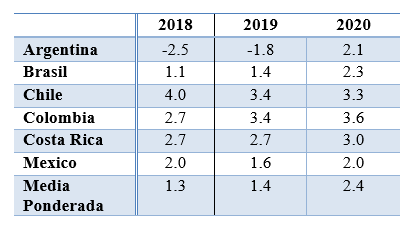
En línea con la evolución de la economía global, tras un crecimiento proyectado del 2.3% en 2025, se prevé una ligera desaceleración al 1.9% en 2026, antes de repuntar al 2.4% en 2027 en las  siete principales economías de la región. Factores como la consolidación fiscal en muchos países de la región, necesaria pero restrictiva, y una elevada incertidumbre política y económica seguirán afectando la demanda interna, la inversión y las exportaciones, principalmente en 2026.

Cuadro. Perspectivas económicas para los países de América Latina

Nota: América Latina 7 es la media ponderada por el PIB a valores de paridad del poder de compra de los 7 países en la tabla para el PIB. América Latina 6 es la media simple de los países incluidos en el cuadro para la inflación excluyendo a Argentina.
Fuente: OCDE Perspectivas Económicas No. 118, diciembre de 2025.

La inflación en los últimos meses ha sido más persistente de lo esperado. En la mayoría de los países se prevé que en 2025 la inflación se mantenga por encima de las metas de los bancos centrales, convergiendo gradualmente hacia las metas en 2026 y 2027. Excepciones son Perú, donde la inflación está controlada hace un año, Costa Rica, que mantiene una inflación negativa en 2025, y Argentina, en donde la elevada inflación seguirá reduciéndose gracias a una combinación de consolidación fiscal y política monetaria restrictiva. La mayoría de los países tendría que mantener una política monetaria prudente basada en datos y orientada a devolver la inflación a sus metas sin generar presiones innecesarias sobre la actividad. En este contexto, los bancos centrales deben mantenerse atentos a la evolución del comercio global, las condiciones financieras, las expectativas de inflación y la orientación de la política fiscal. Al mismo tiempo, será clave que la consolidación fiscal siga avanzando con medidas concretas y más ambiciosas, dada la elevada deuda pública y la necesidad de asegurar su sustentabilidad en un entorno externo incierto y con elevados costos de financiamiento.

Los riesgos económicos están sesgados a la baja:

  • Incertidumbre global derivada de tensiones comerciales y geopolíticas, junto con la incertidumbre política en algunos países de la región asociada al ciclo electoral u otros factores internos, podría afectar negativamente a la inversión y las exportaciones, con repercusiones adversas sobre el crecimiento económico.
  • Desviaciones fiscales podrían subir el coste del servicio de la deuda, socavar la confianza, frenar la inversión y generar presiones inflacionarias.
  • Persistencias inflacionarias limitarían el espacio para reducir las tasas de interés, afectando las condiciones financieras y desincentivando el consumo y la inversión.

Sin embargo, también hay riesgos al alza: una reducción de las barreras comerciales o redirección del comercio hacia la región y una menor incertidumbre geopolítica podrían fortalecer el consumo, la inversión y el consumo.

Aprovechar la revolución digital para avanzar hacia marcos regulatorios más simples y eficientes

El capítulo especial de las perspectivas económicas subraya la necesidad de avanzar hacia marcos regulatorios más simples y eficientes. En este contexto, la transformación digital del sector público emerge como una herramienta clave para facilitar esta simplificación regulatoria, reduciendo la carga administrativa y modernizando procesos normativos. Una implementación eficiente de la gobernanza digital representa una gran oportunidad para América Latina, tanto para mejorar la eficiencia del gasto público y la transparencia, como mejorar el crecimiento económico al impulsar la productividad de las empresas, históricamente baja. Un gobierno digital bien implementado permite:

  • Ofrecer servicios públicos más rápidos, sencillos e inclusivos.
  • Reducir costos administrativos y simplificar trámites gubernamentales, mejorando el entorno de negocios, lo que cual se puede traducir en ganancias significativas de eficiencia al reducir costos y tiempos de espera, ampliar la cobertura y fomentar la competitividad de las empresas. 
  • Fortalecer la transparencia y rendición de cuentas facilitando el acceso ciudadano a la información, la detección de irregularidades, contribuyendo a prevenir el fraude.

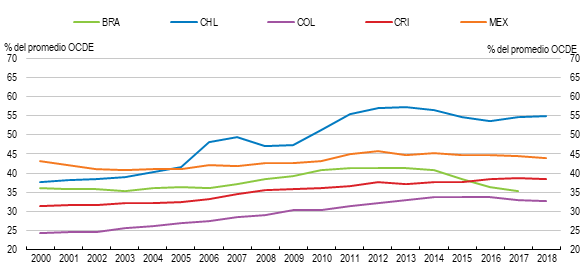
Los indicadores de la OCDE muestran que países como Colombia y Brasil lideran el gobierno digital en la región. Colombia ha avanzado significativamente con la puesta en marcha de plataformas en línea, aplicaciones móviles para trámites gubernamentales y datos abiertos, mientras que Brasil ha sido pionero en servicios como el voto electrónico, las declaraciones de impuestos digitales, y más recientemente la centralización del acceso a cientos de servicios y la identificación digital. No obstante, muchos otros países siguen rezagados (Figure 1).

¿Qué se necesita para una transformación digital exitosa del sector público?

Para lograr una transformación digital exitosa en el sector público, los gobiernos de América Latina aún enfrentan retos importantes y requieren redoblar esfuerzos para lograr:

  • Infraestructura digital robusta con cobertura suficiente y sistemas interoperables entre niveles de gobierno para garantizar que todos puedan acceder a los servicios digitales.
  • Coordinación efectiva entre gobiernos centrales y locales. En muchos países de la región, existe una gran brecha en el uso de herramientas digitales entre las instituciones públicas centrales y las locales.
  • Autoridad política clara para liderar la transformación.  El reciente impulso a la agenda digital en México, incluida la creación de la Agencia de Transformación Digital y Tecnológica, es un ejemplo destacado de cómo dotar de liderazgo institucional a estos procesos
  • Regulación ágil y flexible para tecnologías emergentes como la inteligencia artificial.
  • Confianza ciudadana. Garantizar la privacidad y la seguridad de los datos es esencial para que los ciudadanos confíen y utilicen los servicios públicos digitales, aprovechando así al máximo el potencial de la digitalización. Además, publicar datos en formatos reutilizables facilitaría el acceso a información pública completa y confiable, mientras que impulsar la colaboración entre gobiernos, sociedad civil, universidades y empresas, aceleraría la experimentación y mejoraría el impacto de la gobernanza digital.

Casos exitosos como el de Estonia demuestran que una gobernanza digital bien implementada puede generar ahorros al gobierno equivalentes al 2 % del PIB anual.

Digitalizar para transformar

La digitalización del sector público no solo mejora la eficiencia del gasto público. También genera beneficios que se extienden a toda la economía, al elevar la productividad, reducir cargas administrativas para ciudadanos y empresas, facilitar la formalización y mejorar el acceso a servicios esenciales, todos desafíos de larga data en la región. Pero para que la gobernanza digital tenga legitimidad y pueda realmente desplegar todo su potencial, es necesario que todos se conviertan en “ciudadanos digitales”. Esto implica centrarse en las necesidades reales de la población y crear las condiciones para que todos tengan acceso a conexión a internet, dispositivos adecuados y las habilidades necesarias para navegar con seguridad. La transformación digital debe ser ambiciosa. Solo así la región podrá aprovechar todo su potencial y construir un futuro más próspero.

Para más información:

OECD (2025), OECD Economic Outlook, Volume 2025 Issue 2, OECD Publishing, Paris, https://doi.org/10.1787/9f653ca1-en – Reporte completo en inglés con las proyecciones macroeconómicas, los principales desafíos estructurales e información detallada por país.

Perspectivas económicas de la OCDE para países de América Latina

Información detallada por país: Argentina Brasil Chile Colombia Costa Rica | México Perú


Making Reforms Happen in Latin America: Key Insights from the IMF–OECD High-Level Conference

Senior policymakers, ministers, academics and experts gathered in Montevideo on 17 and 18 November for the IMF–OECD High-Level Conference “Making Reforms Happen in Latin America”, an event dedicated to discussing how to advance reforms across the region.

The event highlighted both the region’s significant achievements and the structural challenges that continue to constrain growth.

Despite meaningful progress in poverty reduction, education access and macroeconomic stability, Latin America’s GDP growth has averaged only 2.3% since 2000 among OECD members and accession countries in the region—less than half the pace of emerging Asia.

Latin America’s growth underperformance largely reflects weak productivity. Strengthening productivity and unlocking private investment will require bold, sustained structural reforms, in line with  OECD’s Economic Surveys and the Foundations for Growth and Competitiveness framework. Main take-aways of the conference were:

Labour markets: reducing informality and strengthening skills

Discussions underscored that persistent labour market challenges—high informalitygender participation gaps, and skills mismatches—remain major barriers to inclusive growth.

Speakers highlighted the need to:

  • modernise social protection financing to strengthen formalisation incentives
  • reduce non-wage labour costs, particularly for low-income workers
  • improve active labour market policies
  • better align education and training with economic transformation

Examples such as Costa Rica’s efforts to increase the supply of relevant skills  to underpin its investment strategy illustrated how coordinated policies can support better jobs and productivity gains.

Tax systems: broader bases, stronger institutions

The tax session emphasised that Latin America requires tax systems that are fairer, broader-based, and more supportive of productivity and formalisation.

Key priorities included:

  • reducing inefficient tax expenditures, particularly in VAT
  • strengthening tax administration and state capacity
  • simplifying tax systems to improve compliance and investment climate

Brazil’s recent VAT reform showed how consensus-building and predictability can make ambitious changes feasible.

Competition and regulation: a foundation for productivity

Participants stressed the need to improve competition and regulatory quality, central pillars of the OECD’s Foundations for Growth and Competitiveness flagship.

Priority areas included:

  • simplifying business creation and licensing
  • advancing digital one-stop shops
  • strengthening governance of state-owned enterprises
  • opening markets to foster private investment

The political economy of reform: building trust and long-term commitments

Across several sessions—including contributions from Andrés Velasco, Mariano Tommasi and Omar Licandro—a key message emerged: many constraints to reform are political, not technical.

Speakers highlighted the importance of:

  • capable and credible institutions
  • clear long-term strategies
  • cooperation across ministries
  • strong communication that links reforms to improved public services

Reforms are more likely to endure when supported by broad coalitions and sustained political commitment.

A shared commitment to stronger, more inclusive growth

The OECD will continue working with governments across Latin America to support the design and implementation of reforms that strengthen productivity, competitiveness and social inclusion.

Related documents

IMF-OECD Event Webpage

Opening remarks by the Secretary General of the OECD


Monetary policy and productivity: Unpacking multifaceted links

By Guido Franco and Filiz Unsal, OECD.

Over the past decades, productivity growth has experienced a significant slowdown across most advanced economies. Existing studies point to a range of structural explanations contributing to this deceleration (André and Gal, 2024), but the recent swift tightening and subsequent easing of the monetary policy stance in many jurisdictions have also renewed interest in understanding whether, and through which mechanisms, monetary policy shifts can influence productivity dynamics.

Our new paper (Franco and Unsal, 2025) provides a comprehensive analysis of the impacts of monetary policy shocks on productivity through both (i) within firm productivity, via modified incentives and capabilities to innovate, adopt new technologies, and invest in capital and labour; and ii) variations in the reallocation of resources across firms with different productivity levels, via the heterogeneous transmission across sectors and firms. The analysis relies on the use of the local projection methodology and a large firm-level dataset, covering both manufacturing and services industries across 24 countries over the 1995-2019 period, matched to a newly published database on monetary policy shocks across countries (Choi, Willems and Yoo, 2024). This setting allows us to overcome the potential endogeneity arising from firms’ expectation of changes in policy rates.

Within firm productivity effects

We find that, on average, firm-level productivity growth reacts significantly to changes in the monetary policy stance. A 25 basis points tightening (easing) monetary policy shock implies a cumulative decrease (increase) in productivity growth of 0.7 p.p. over a 5-year time span. Evaluating separately easing and tightening episodes, the former are found to entail slightly larger effects, but the estimates are not far from symmetry. Exploiting the differential effects across sectors and types of firms (Figure 1), we find that the credit and cost channels of the monetary transmission appear to play a relevant role in determining the dynamics of productivity after a monetary policy shock, while the interest-sensitive demand and the exchange rate channels seem to have a more limited and delayed impact.[1]

These effects are amplified or mitigated depending on the country-specific framework conditions and the counter-cyclical response of the policy to the state of the economy. Firms’ productivity is more sensitive to monetary policy shifts in countries with low financial development, in line with the relevance of the credit and cost channels of the monetary transmission. For instance, a developed financial system could allow firms to seek external capital from a variety of sources, attenuating the consequences of a tightening shock.  Moreover, firm-level productivity losses (gains) associated with monetary tightening (easing) are only observed when the economy is in a downturn, hinting that a “leaning against the wind” approach to monetary policy appears favourable not only for providing macroeconomic stability but also from a productivity perspective.

Figure 1. The credit and cost channels of monetary policy transmission appear the most relevant in determining productivity dynamics after monetary policy shocks.

Note: In each panel, the graph simulates the impact of a 25 basis points monetary policy shock. The dashed line reports the size of the effect, while the shaded area displays the 90% confidence intervals. Positive (negative) shocks stand for tightening (easing) shocks. Estimates on the interest-sensitive demand channel (Panel C) refer to industrial sectors only.
Source: OECD calculations based on Authors’ calculations based on Orbis, Choi et al. (2024), Demmou and Franco (2021), Durante et al. (2022) and OECD data.

Reallocation effects

Changes in the monetary policy stance also affect the efficiency with which resources are allocated across firms. Easing episodes are associated with lower productivity-enhancing reallocation, as well as a higher share of labour and capital sunk in zombie firms.  The estimated impacts are not extensive but could imply up to a 7% reduction in the efficiency of resources reallocation over 3-years in the aftermath of a monetary easing episode (Figure 2, Panel A).

Critically, the impact is heterogeneous across countries, as it is the case with respect to within-firm productivity effects. Low barriers to competition and a deep and efficient financial system are essential to offset the misallocation effects that may follow a monetary easing episode, for instance by reducing the risk of credit flowing towards zombie firms and ensuring an effective allocation of the credit inflows arising from the relaxation of lending standards. Importantly, a monetary easing reduces the extent of productivity-enhancing reallocation only when it is pro-cyclical: increased misallocation of resources with easing shocks disappears during economic downturns, as the monetary easing may partially compensate for intensified frictions that productive firms may face when the economy is contracting (Figure 2, Panel B).

There is no significant evidence, instead, of the potentially cleansing effects of tightening episodes. Similarly, monetary policy shocks do not alter the productivity-enhancing nature of business dynamism through the extensive margin, as our estimates show that the strength of the (inverse) relationship between firm exit and productivity is unaffected. Still, when turning to business dynamism more broadly and using sector-level data, we find that the entry and exit margins adjust in opposite directions: a tightening (easing) implies higher (lower) bankruptcies and lower (higher) 1-year survival rate of newly born enterprises.

Figure 2. Monetary easing reduces the productivity-enhancing reallocation of labour, prevalently when it is pro-cyclical.

Note: Productivity-enhancing labour reallocation is measured as the strength of the relationship between firms lagged productivity and employment growth, and hence as the differential employment growth of higher productivity firms compared to lower productivity ones. The graphs simulate the impact of a 25 basis points monetary policy easing surprise.
Source: OECD calculations based on Orbis, Choi et al. (2024) and OECD data.

Conclusion

Productivity dynamics are significantly influenced by monetary policy shocks, but the impacts may depend on the transmission channels involved, country-specific framework conditions and cyclical alignment of the monetary policy responses.

Specifically, a monetary easing boosts firm-level productivity in the medium-term, mainly through investment, but also tends to slow down the productivity-enhancing nature of labour and capital reallocation across firms. On the other hand, tightening episodes are detrimental for firm-level productivity and neutral from a misallocation perspective. The productivity benefits are larger and the losses smaller when sound policies are implemented. Developing a deep and stable financial system, ensuring competitive product markets, while avoiding pro-cyclical changes in the monetary policy stance, helps leverage the advantages and minimise the productivity damages associated with policy rates shifts.

References

André, C. and P. Gal (2024), “Reviving productivity growth: A review of policies”, OECD Economics Department Working Papers No. 1822, OECD Publishing, Paris, https://doi.org/10.1787/61244acd-en.

Choi, S., T. Willems and S. Y. Yoo (2024), “Revisiting the monetary transmission mechanism through an industry-level differential approach”, Journal of Monetary Economics, Vol. 145, 103556, https://doi.org/10.1016/j.jmoneco.2024.103556.

Demmou, L. and G. Franco (2021), “Mind the financing gap: Enhancing the contribution of intangible assets to productivity”, OECD Economics Department Working Papers No. 1681, OECD Publishing, Paris, https://doi.org/10.1787/7aefd0d9-en.

Durante, E., A. Ferrando and P. Vermeulen (2022), “Monetary policy, investment and firm heterogeneity”, European Economic Review, Vol. 148, 104251, https://doi.org/10.1016/j.euroecorev.2022.104251.

Franco, G. and F. Unsal (2025), “Monetary policy and productivity: Unpacking multifaceted links”, OECD Economics Department Working Papers No. 1843, OECD Publishing, Paris, https://doi.org/10.1787/e1d617b2-en.


[1] The credit channel relates to the sensitivity of the external financing premium to changes in policy rates. The interest rate channel is the driven by the impact of changes in interest rates on the interest-sensitive component of demand. The exchange rate channel concerns the negative impact that a tightening (easing) could have on exporting (importing) industries through the appreciation (depreciation) of the domestic currency. The cost channel is instead related to firms’ need to pay factors of production before receiving sale revenues, and thus to borrow some working capital; a change in the cost of borrowing would then be alike to a change in inputs prices.


The market implications of industrial subsidies

By Valentine Millot, Łukasz Rawdanowicz, Jehan Sauvage and Elisabeth van Lieshout, OECD.

Do government subsidies fuel firm growth or just distort competition? Our latest study reveals that subsidies boost market share but they do not have positive effects on investment and productivity. This raises important questions about efficiency and spillovers in industrial policies.

Governments are increasingly employing subsidies and other types of industrial policies in general. This calls for not only quantifying support measures, but also investigating their market implications. The OECD has played an important role in improving transparency regarding industrial subsidies. One of notable contribution is the recent creation of the OECD MAnufacturing Groups and Industrial Corporations (MAGIC) database (OECD, 2025a). This database provides detailed information on the amount of government subsidies received by the largest global manufacturing firms in 14 industrial sectors. In our latest study, we add to the empirical literature about subsidy effects by estimating the causal impacts of government subsidies on the performance of these firms using the OECD MAGIC database (OECD, 2025b).

Subsidies have ambiguous theoretical implications and mixed empirical outcomes

The impact of subsidies on firm performance is ambiguous in theory. Subsidies can encourage investment by lowering firms’ cost of capital, with potential positive effects on productivity and competitiveness. This, in turn, can help firms gain market shares or boost profitability. However, subsidies may also support inefficient investment or reduce incentives to innovate, especially if paired with protectionist measures.

The impacts of government subsidies on market outcomes can also vary over time and across specific policy tools. For instance, one-off support measures to distressed companies during crises are likely to have a different impact on firm performance than ongoing subsidies disbursed in the context of sustained industrial policy strategies.

Ultimately, the impact of subsidies on firm performance is an empirical question. However, econometric evidence thus far tends to vary across studies, which mostly use data for one jurisdiction or one sector only (Aghion et al., 2015; Criscuolo et al., 2019; Branstetter and Li, 2023; Brandão-Marques and Toprak, 2024). Our recent paper seeks to fill this gap by providing cross-sector and cross-country evidence.

Main empirical findings

According to our panel estimations using two methods to address reverse causality, on average, across the largest manufacturing firms operating in 14 sectors and numerous countries, total government subsidies:

  • increase market shares. This impact is economically sizeable, relative to observed small annual changes in market shares, with an increase of one percentage point in subsidies as a share of revenue corresponding to between the 27th and 51st percentile of the observed distribution of annual absolute market share changes, depending on the estimation method.
  • do not seem to have an impact on firms’ investment rate but appear to increase nominal spending on investment. This implies that subsidies do not substantively shift firms’ overall tendency to invest.
  • have no or a negative effect on real productivity growth, in line with most frequent findings in the literature that subsidies do not enable firms to become more productive.
  • have no significant contemporaneous impact on various measures of profitability. This suggests that firms generally do not translate subsidies into simple windfall profits.

Given that overall subsidies appear to have no or negative impact on the investment rate and productivity, the finding that subsidies are associated with increases in market shares does not seem to be explained by efficiency gains. Instead, this relationship could result from the ability of firms receiving subsidies to cover part of their operating costs and lower their prices. This narrative is consistent with evidence that subsidies do not boost profitability.

Effects tend to vary across subsidy types and firm characteristics

For several performance indicators, the effects of subsidies differ across their types, with most frequent and consistent findings for tax concessions.

  • Several specifications point to a positive impact of tax concessions on investment levels and rates, productivity, and profitability. These effects can stem from their perceived predictability, in particular if they are part of the tax code, as compared to other forms of subsidies that are often discretionary. Moreover, they generally allow firms to make independent decisions, unlike grants tied to individual projects. Thus, tax incentives could be more conducive to investment and productivity improvements.
  • In contrast, there is some evidence that below-market borrowings lower real productivity growth and profitability. This can reflect the fact that this policy tool at times has been used to support distressed firms, when it is less likely to have positive contemporaneous effects on productivity and profitability. Below-market borrowings may just help firms to survive in the market that would not otherwise have done so without seeking to increase their productivity.

These heterogenous results for individual subsidy types suggest that the effects of government support can differ significantly depending on the nature and design of individual support measures. There is also some tentative evidence about differentiated effects of subsidies across various characteristics of firms. Some of them relate to China-based companies. For instance, the negative impact of below-market borrowings on productivity and profitability is less strong for China-based firms. This could be because, in contrast to other countries, below-market borrowings are a systemic rather than an emergency type of government support to companies.

Future research

While our paper has enhanced understanding of some market implications of subsidies, continued efforts are needed to improve the transparency and measurement of government support and to broaden the scope of analysis of possible subsidy effects.

References

Aghion, P et al. (2015), “Industrial policy and competition”, American Economic Journal: Macroeconomics, Vol. 7/4, pp. 1-32, https://doi.org/10.1787/e40b793f-en.

Brandão-Marques, L and H Toprak (2024), “A Bitter Aftertaste: How State Aid Affects Recipient Firms and Their Competitors in Europe”, IMF Working Papers, Vol. 2024/250, https://doi.org/10.5089/9798400295706.001.

Branstetter, L and G Li (2023), “The actual effect of China’s “Made in China 2025” initiative may have been overestimated, VoxEU.org, 11 August.

Criscuolo, C. et al. (2019), “Some Causal Effects of an Industrial Policy”, American Economic Review, Vol. 109/1, pp. 48-85, https://doi.org/10.1257/aer.20160034.

OECD (2025a), “How governments back the largest manufacturing firms: Insights from the OECD MAGIC Database”, OECD Trade Policy Papers, No. 289, OECD Publishing, Paris, https://doi.org/10.1787/d93ed7db-en.

OECD (2025b), “The market implications of industrial subsidies”, OECD Trade Working Papers, No. 296, OECD Publishing, Paris, https://doi.org/10.1787/e40b793f-en.