Les fondements de la croissance et de la compétitivité

Builder working on foundations

Les économies de l’OCDE voient s’ouvrir de nouvelles perspectives de croissance, mais surgir aussi des défis. Il sera primordial de tirer le meilleur parti de ces opportunités et de relever ces défis pour redynamiser la productivité et assurer un niveau de vie plus élevé aux générations futures.

Par Stefano Scarpetta, Chef économiste de l’OCDE et Représentant de l’OCDE au G20/G7 pour les affaires financières


Dans la zone OCDE et au-delà, les fondements de la croissance économique sont mis à rude épreuve. Au cours des deux dernières décennies, la croissance de la productivité du travail a nettement ralenti dans la plupart des pays. Ce fléchissement s’explique par la conjonction de divers goulets d’étranglement structurels : atonie de l’investissement des entreprises, perte de dynamisme des entreprises, ralentissement de la diffusion des technologies et affaiblissement du rythme d’accumulation du capital humain. La croissance de l’emploi a bien résisté, mais de nombreux pays doivent faire face au grand défi du vieillissement démographique qui aura des effets sur la capacité de la main-d’œuvre à soutenir la croissance.

Dans le même temps, les progrès rapides de l’intelligence artificielle et des technologies numériques ouvrent la perspective d’une nouvelle vague de gains de productivité s’inscrivant dans la durée. La concrétisation des gains de productivité durables que laissent envisager les nouvelles technologies dépendra essentiellement des cadres de politique structurelle.

Cette première édition de la publication intitulée Les fondements de la croissance et de la compétitivité arrive à un moment charnière. La dynamique des réformes structurelles s’est essoufflée dans de nombreux pays de l’OCDE, mais il est de plus en plus nécessaire que les pays restent compétitifs et résilients dans un paysage mondial caractérisé par des transformations structurelles et des chocs géopolitiques et commerciaux sans précédent. Pour aider les pays à faire face à ces enjeux, sont présentés dans le rapport des outils pratiques à l’intention des responsables de l’action publique, notamment une plateforme en ligne complète de données, élaborée dans le cadre d’un dialogue itératif avec les autorités nationales, permettant d’identifier les goulets d’étranglement structurels et de dégager des priorités sur mesure en matière de réforme pour 48 pays.

La pérennité de la prospérité est conditionnée par la solidité de l’ancrage des conditions qui la favorisent : un capital humain de qualité, des institutions robustes, une gouvernance efficace, des infrastructures fiables, un approvisionnement énergétique abordable et sûr et la stabilité macroéconomique.

Dans tous les pays, le renforcement des systèmes de compétences et de l’apprentissage tout au long de la vie apparaît comme l’une des priorités de réforme les plus fréquemment citées dans ce rapport, priorité dont la finalité est aussi de promouvoir une adoption effective des outils numériques, et en particulier des outils d’IA. À l’heure où l’intelligence artificielle et la transformation numérique remodèlent la production et le fonctionnement des entreprises, l’adaptabilité de la main-d’œuvre devient un avantage concurrentiel décisif. Les pays qui œuvrent au développement de l’enseignement professionnel, à l’élargissement de l’accès à la formation tout au long de la vie et au resserrement des liens entre les universités et les marchés du travail seront mieux à même de s’adapter à l’évolution des besoins des entreprises.

La qualité des institutions et l’efficience des processus réglementaires sont tout aussi fondamentales. L’existence de cadres réglementaires prévisibles, transparents et bien conçus conforte la confiance et réduit l’incertitude. La solidité des institutions est un facteur d’amélioration de la répartition des ressources en même temps qu’un socle pour les incitations de marché. En période d’incertitude géopolitique et économique accrue, la stabilité macroéconomique et les cadres budgétaires, s’ils sont robustes, restent des points d’ancrage essentiels.

Ces conditions favorables ne sont toutefois pas suffisantes. Les marchés doivent également fonctionner efficacement pour promouvoir le dynamisme économique, la diffusion des technologies et l’investissement des entreprises. Lorsque ces dynamiques faiblissent, les politiques publiques visant à renforcer la concurrence et à réduire les obstacles réglementaires deviennent plus importantes. C’est pourquoi l’amélioration de la réglementation des marchés de produits et des régimes d’insolvabilité est une autre priorité cruciale en matière de réforme mise en évidence dans tous les pays. Des recommandations sont également ébauchées dans le domaine fiscal, sachant que des systèmes fiscaux mal conçus peuvent fausser les incitations et décourager l’investissement.

La mobilité et le taux d’activité de la main-d’œuvre restent également des facteurs déterminants pour la compétitivité et l’amélioration de l’accès des travailleurs à des emplois de qualité. Réduire les obstacles à la participation au marché du travail – en particulier des femmes, des travailleurs âgés et des groupes sous-représentés – tout en renforçant les incitations au travail, en améliorant l’employabilité et en élargissant l’accès à des services de garde d’enfants abordables, peut être un moyen de rehausser tant l’équité que l’efficience. Des politiques du logement qui facilitent la mobilité et des systèmes fiscaux qui élargissent la base d’imposition tout en limitant les distorsions peuvent encore accroître l’efficacité de la répartition des ressources.

S’ils peuvent s’appuyer sur des fondements solides et sur des incitations de marché efficaces, les pouvoirs publics sont en mesure de mieux orienter l’activité économique en fonction des priorités stratégiques. La politique d’innovation, la sécurité énergétique et la transition vers les énergies propres sont des domaines dans lesquels des actions ciblées et élaborées avec soin peuvent remédier aux défaillances du marché et soutenir la croissance à long terme. Les aides publiques à la recherche-développement peuvent, conjuguées à la présence d’un capital humain de qualité et de marchés concurrentiels, débloquer l’investissement privé. Des réformes du marché de l’énergie visant à abaisser les obstacles à l’entrée et à encourager l’investissement dans les énergies renouvelables peuvent permettre de progresser à la fois sur le plan de la résilience et de la compétitivité.

Un message essentiel délivré dans le présent rapport est que les réformes structurelles sont d’autant plus efficaces qu’elles sont cohérentes et complémentaires. Les réformes des marchés de produits ont pour effet d’amplifier l’impact des politiques destinée à augmenter le capital humain. La solidité des cadres budgétaires est un gage de renforcement de la confiance et une condition pour inscrire les réformes dans la durée. Les complémentarités entre les politiques sont particulièrement importantes dans un contexte de transformations technologiques et démographiques majeures.

Si les avantages à long terme qu’elles peuvent procurer sont dûment attestés, la faisabilité politique des réformes est souvent tributaire de leurs effets à court terme sur les politiques publiques. En présentant des exemples qui illustrent comment certaines réformes influent sur les résultats économiques à court terme, la présente publication nourrit la réflexion sur la conception et la mise en œuvre de trains de réformes qui soient efficaces sur le plan économique et suscitent en même temps un soutien large et sans réserve. Il peut être utile, pour entretenir la dynamique de réforme, de comprendre les effets transitoires, d’anticiper les effets redistributifs et de déployer des mesures complémentaires.

Les réformes structurelles jouent également un rôle décisif dans le renforcement de la viabilité des finances publiques. En période d’endettement public élevé et de montée des tensions sur les dépenses, les réformes propices à la croissance offrent une voie pour améliorer la dynamique de la dette sans s’appuyer exclusivement sur l’assainissement budgétaire. Si elles aboutissent à l’élargissement des bases d’imposition et à l’amélioration de l’efficience des administrations publiques et contribuent à stimuler le dynamisme économique, les réformes peuvent renforcer à la fois la résilience et la prospérité à long terme.

Enfin, la compétitivité n’est pas un jeu à somme nulle. Les économies qui consolident leurs fondations nationales participent au fonctionnement d’une économie mondiale plus dynamique et plus résiliente. L’objectif n’est pas simplement d’accélérer la croissance, mais d’assurer une croissance durable, tirée par l’innovation et compatible avec la durabilité environnementale et la cohésion sociale.

Les économies de l’OCDE voient s’ouvrir de nouvelles perspectives de croissance, mais surgir aussi des défis. Il sera primordial de tirer le meilleur parti de ces opportunités et de relever ces défis pour redynamiser la productivité et assurer un niveau de vie plus élevé aux générations futures.

Les fondements de la croissance doivent maintenant être rebâtis avec détermination et résolution.

Éditorial tiré de la publication de l’OCDE : Les fondements de la croissance et de la compétitivité

Références:

OCDE (2026), Les fondements de la croissance et de la compétitivité 2026, Éditions OCDE, Paris, https://doi.org/10.1787/df51b240-fr.


The Foundations for Growth and Competitiveness

Builder working on foundations

OECD economies are facing new growth opportunities but also challenges. Taking the most out of these opportunities while addressing the challenges will be key to revitalise productivity and secure higher living standards for future generations.

by Stefano Scarpetta, OECD Chief Economist and G20/G7 Finance Deputy


Across the OECD and beyond, the foundations of economic growth are under strain. Over the past two decades, labour productivity growth has slowed markedly in most countries. This slowdown reflects a combination of structural bottlenecks: subdued business investment, declining firm dynamism, slowing technology diffusion and a weakening pace of human capital accumulation. While employment growth has been resilient, many countries are facing significant population ageing, which will affect the potential for labour to sustain growth.

At the same time, rapid advances in artificial intelligence and digital technologies offer the potential of a new wave of sustained productivity gains. Whether new technologies translate into sustained productivity gains will depend crucially on structural policy settings.

This first edition of Foundations for Growth and Competitiveness arrives at a pivotal moment. Structural reform momentum has slowed across many OECD countries but there is heightened need for countries to remain competitive and resilient in a global landscape characterised by unprecedented structural transformations and geopolitical and trade shocks. To help countries meet these challenges, the report offers practical tools for policy makers, including a comprehensive online data platform to identify structural policy bottlenecks and tailored reform priorities for 48 countries developed through an iterative dialogue with national authorities.

Sustainable prosperity rests on strong enabling conditions: high-quality human capital, sound institutions,
effective governance, reliable infrastructure, affordable and secure energy supply and macroeconomic stability. Across countries, strengthening skills systems and lifelong learning emerges as one of the most frequent reform priorities in this report also to promote an effective adoption of digital and in particular AI tools. As artificial intelligence and digitalisation reshape production and the way businesses work, workforce adaptability becomes a decisive competitive advantage. Countries that strengthen vocational education, expand access to lifelong learning and deepen links between universities and labour markets will be better placed to adapt to evolving business needs.

Institutional quality and efficient regulatory processes are equally critical. Predictable, transparent and well-designed regulatory frameworks foster trust and reduce uncertainty. Strong institutions improve the allocation of resources and underpin market incentives. In an era of heightened geopolitical and economic uncertainty, macroeconomic stability and sound fiscal frameworks remain essential anchors.

Yet enabling conditions alone are not sufficient. Markets must also function efficiently to promote economic
dynamism, technological diffusion and business investment. But when these forces are weakening, policies that strengthen competition and reduce regulatory barriers become more important. Accordingly, improving product market regulation and insolvency regimes is another central reform priority identified across countries. Recommendations also emerge in the tax space, given that poorly designed tax systems can distort incentives and discourage investment.

Labour mobility and participation also remain central to competitiveness and for enhancing access to quality jobs for workers. Reducing barriers to participation – particularly for women, older workers and underrepresented groups – while strengthening work incentives, employability and expanding access to affordable childcare can raise both equity and efficiency. Housing policies that facilitate mobility and tax systems that broaden the base while limiting distortions can further enhance allocative efficiency.

With strong foundations and effective market incentives in place, governments can more successfully guide economic activity toward strategic priorities. Innovation policy, energy security and the clean energy transition are areas where well-designed, targeted interventions can address market failures and support long-term growth. Public support for research and development, when combined with strong human capital and competitive markets, can unlock private investment. Energy market reforms that reduce entry barriers and encourage investment in renewables can strengthen both resilience and competitiveness.

A central message of this edition is that structural reforms are most powerful when they are coherent and complementary. Product market reforms enhance the impact of human capital-augmenting policies. Sound fiscal frameworks reinforce confidence and enable reform to endure. Policy complementarities are particularly important in the context of major technological and demographic transformations.

While the long-term benefits of reform are well documented, the political feasibility of reforms often hinges on near-term effects on policies. By providing examples of how some reforms affect economic performance in the short run, this edition provides food for thought in designing and implementing reform packages that are both economically effective and have strong and broad support. Understanding transitional effects, anticipating distributional impacts and deploying complementary measures can help sustain reform momentum.

Structural reforms also play a crucial role in strengthening fiscal sustainability. At a time of elevated public
debt and rising spending pressures, growth-enhancing reforms offer a path to improving debt dynamics without relying exclusively on fiscal consolidation. By broadening tax bases, improving government efficiency and boosting economic dynamism, reforms can reinforce both resilience and long-term prosperity.

Ultimately, competitiveness is not a zero-sum concept. Economies that strengthen their domestic foundations contribute to a more dynamic and resilient global economy. The objective is not simply faster growth, but growth that is durable, innovation-driven and aligned with environmental sustainability and social cohesion.

The OECD economies are facing new growth opportunities but also challenges. Taking the most out of these opportunities while addressing the challenges will be key to revitalise productivity and secure higher living standards for future generations.

The foundations of growth must now be rebuilt deliberately and decisively.

Editorial from the OECD Foundations for Growth and Competitiveness

References:

OECD (2026), Foundations for Growth and Competitiveness 2026, OECD Publishing, Paris, https://doi.org/10.1787/40a7532f-en.


Stepping up structural reforms to improve Egypt’s business climate

by Ania Thiemann, Economist and Competition Expert, Competition Division.

Egypt’s challenging business climate is holding back productivity and therefore also living standards. Labour productivity is still far below the OECD average (Figure 1), with low overall investment and a declining share of private investment in the total. Low investment in innovation, and research and development (R&D) also contributes to low productivity growth, as Egypt spends less than 1% of GDP on R&D. Market mechanisms, such as business entry and exit, and growth of the most efficient firms, appear to be weaker than in many similar emerging markets. Underlying these facts are deep-seated structural causes that impede market competition, investment and efficient resource allocation. These barriers stifle the country’s potential for long-term sustainable growth and restrict the development of a robust private sector. To ensure sustainable economic growth, as set out in Egypt’s National Structural Reform Programme, thorough policy reforms are required that can boost market competition. Regulatory and trade barriers, as well as a dominant state presence need to be addressed to revive private sector activity.  

Figure 1: Low output per worker is related to low investment

Note: Data for Egypt in all three panels refer to fiscal years (from July of indicated year to June of the following year). Neighbouring countries refer to Algeria, Israel, Jordan, Lebanon, Morocco, Tunisia and Türkiye.
Source: IMF, World Economic Outlook database – October 2023; OECD, National Accounts database; Ministry of Planning and Economic Development; and OECD calculation.

Removing regulatory barriers to enhance market entry and expansion

A central and long-standing challenge is the heavy regulatory burden that acts as a barrier to market entry and expansion, while also promoting informality. Complex and lengthy processes for obtaining business licenses and permits during the post-establishment phase constrain both domestic businesses and exporters (Figure 2). Despite recent reforms, the administrative load remains heavy, stifling Egypt’s business dynamism compared to regional and global averages, with comparatively low entry and exit rates. Moreover, overall regulatory quality remains low, reflecting lengthy and opaque decision-making processes and implementation.

Figure 2: Business licensing is a constraint on domestic businesses and exporters

Percentage of firms in Egypt identifying business licensing and permits as a major constraint, 2020

Note: Share of respondent firms out of 3075 firms surveyed.
Source: World Bank, Enterprise Surveys.

To support a more dynamic private business sector, Egypt needs to streamline its business registration and licensing processes. Licensing requirements can be replaced by online registration in most cases, while a more efficient on-line application system would speed up processes. A new online platform for business registration was opened up in 2023, but difficulties remain with local permits. Simplifying procedures and reducing bureaucratic hurdles can encourage new business formation and attract more investment. Additionally, improving the transparency of administrative procedures would also reduce opportunities for corruption, which is a crucial step towards creating a fair and competitive market landscape.

Strengthening competitive pressures through trade and investment

High tariff and non-tariff barriers to trade mean that the Egyptian market remains relatively insulated from global competition. Such trade restrictions limit the country’s integration into global value chains and reduce the spillover benefits of foreign technology and know-how, which are essential for boosting productivity.

Liberalising trade policies and reducing tariffs can enhance Egypt’s competitiveness on the global stage. The creation of the National Single Window (Nafeza) to support external trade, should help speed up customs procedures. Border clearance has improved but remains comparatively slow (Figure 3). To support faster import release, the authorities are working on a new risk management system, which should speed up processes by reducing the number of inspections to those selected by the risk matrix. However, Egypt should also simplify its tariff regime, as tariffs remain high and unwieldy, with particularly high tariffs for agricultural products, and for products that compete with Egyptian manufactured goods (with tariff rates of 40-60%), in a system with 7 850 tariff lines. Foreign traders whose products already meet domestic standards should not have to preregister their products, and import licences could be replaced by a simple registration with the customs authorities, as is the case in Europe. A more open and predictable trade regime would benefit domestic businesses and investors, as well as supporting more inward foreign investment. This in turn would facilitate the transfer of technology and expertise, thus foster productivity growth.

Figure 3: High import tariffs and slow border clearance are hampering trade

Note: In Panel A, data for the countries presented refer to 2019 except for Thailand (2015), Tunisia (2016), Israel (2017), Mexico (2018), Jordan and Malaysia (2020). Weighted mean applied tariff is the average of effectively applied rates weighted by the product import shares corresponding to each partner country. When the effectively applied rate is unavailable, the most favoured nation rate is used instead.
Source: World Bank, World Development Indicators; World Economic Forum (2019), Global Competitiveness Index 4.0.

Reducing the state’s footprint in the economy

State-owned enterprises (SOEs) play a significant role in Egypt’s economy, to the detriment of competitive market conditions by crowding out private sector activity. The government’s recent steps to level the playing field, though commendable, need to be more comprehensive and sustained. Over-reliance on SOEs in various sectors, such as utilities and transport, but also in manufacturing, prevents private enterprises from competing on an equal footing. Privatisation and divestment of SOEs should be pursued more aggressively to reduce the state’s dominance in the market. This move will not only improve efficiency but also stimulate private investment. The OECD’s guidelines on privatisation could serve as a valuable framework for Egypt in this regard.

Further actions to support private businesses: Access to finance and digital diffusion

Access to finance remains a significant hurdle for many businesses in Egypt. Banks overwhelmingly prefer to lend to the government, leaving private enterprises, especially small and medium-sized enterprises (SMEs), with limited financing options which hampers business expansion and innovation. Enhancing financial inclusion by opening up the banking sector to competition, notably by FinTechs with Open Banking regulation, can mitigate this issue. Policies aimed at improving the creditworthiness of SMEs and developing a robust microfinance sector will also support private sector growth. Improving digital financial services could play a critical role in this transformation.

Digital inclusion is key to boost productivity and competitiveness. However, Egypt lags behind in terms of digital infrastructure, and adoption by SMEs. The legal framework for digital business models needs significant improvement to allow for dematerialised businesses to expand. Investing in digital infrastructure and fostering a regulatory environment that supports digital innovation are therefore crucial steps to create a more vibrant business sector and help enhance overall economic efficiency.

References:

Thiemann, A. (2024), “Improving Egypt’s business climate to revive private sector growth”, OECD Economics Department Working Papers, No. 1808, OECD Publishing, Paris, https://doi.org/10.1787/a4b2ce91-en.

OECD (2024), OECD Economic Surveys: Egypt 2024, OECD Publishing, Paris.

OECD (2019), A Policy-Makers Guide to Privatisation:  https://www.oecd.org/en/publications/a-policy-maker-s-guide-to-privatisation_ea4eff68-en.html.


Pathways to Prosperity: Key Reforms for a Thriving Peru

También disponible en español

By Paula Garda and Michael Koelle, OECD Economics Department

Peru has made significant strides over the past two decades in reducing poverty and improving living standards, outperforming many Latin American peer countries as highlighted in the 2023 Economic Survey of Peru.  The basis for this progress was the country’s robust macroeconomic framework and ambitious structural reforms implemented in 1990s. These reforms have catalysed macroeconomic stability, high economic growth, low inflation and low public debt.

The COVID-19 pandemic, however, exposed remaining challenges. Peru experienced one of the most severe economic contractions and excess mortality rates of any country. The economy bounced back in 2021, thanks to its fiscal buffers. The recovery was short-lived and a series of shocks, including Russia’s war of aggression in Ukraine, social unrest and extreme weather events led to inflationary pressures and economic slowdown. The economy is projected to gradually recover with inflation returning to the target range by early 2024. However, Peru faces long-standing structural issues like a large informal sector, infrastructure gaps, and a weak rule of law. These not only magnify the impact of adverse shocks and socio-economic inequalities but also hold up Peru on its path towards better standards of living.

As Peru embarks on its journey towards OECD accession, the process represents a transformative opportunity for the country to design and implement a comprehensive reform agenda to foster convergence to higher living standards for all Peruvians. The 2023 Peru Economic Survey highlights four key priority areas of reforms:

Fostering Long-Term Growth

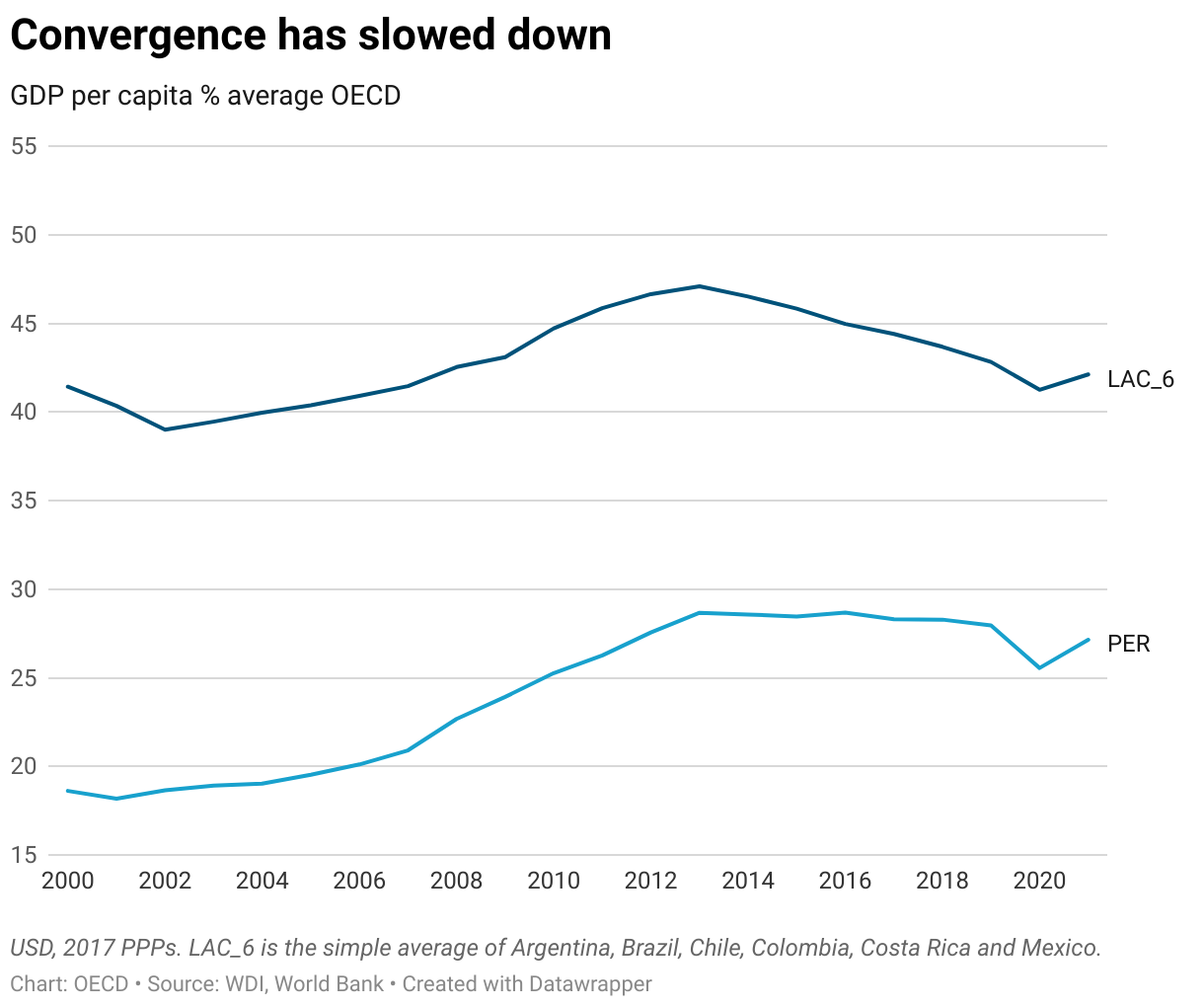
Income convergence to more advanced countries stalled in 2014 with the end of the commodity price boom, making it of utmost importance to boost productivity and investment. While commodities, particularly minerals, have fuelled past growth, there is a need to expand the economy’s productive base. High concentration of market power in a few major business groups reduces market dynamism. This calls for strengthening competition enforcement and simplifying regulations to boost productivity. Additionally, better public spending efficiency would help close infrastructure gaps and deliver essential services while boosting potential growth. This entails enhancing local government capabilities, improving infrastructure planning, and modernising the civil service to enhance overall state capacity. Strengthening the rule of law by fighting corruption and improving judicial independence and efficiency is equally important, as it not only encourages investment but also restores trust in institutions.

Tackling Informality

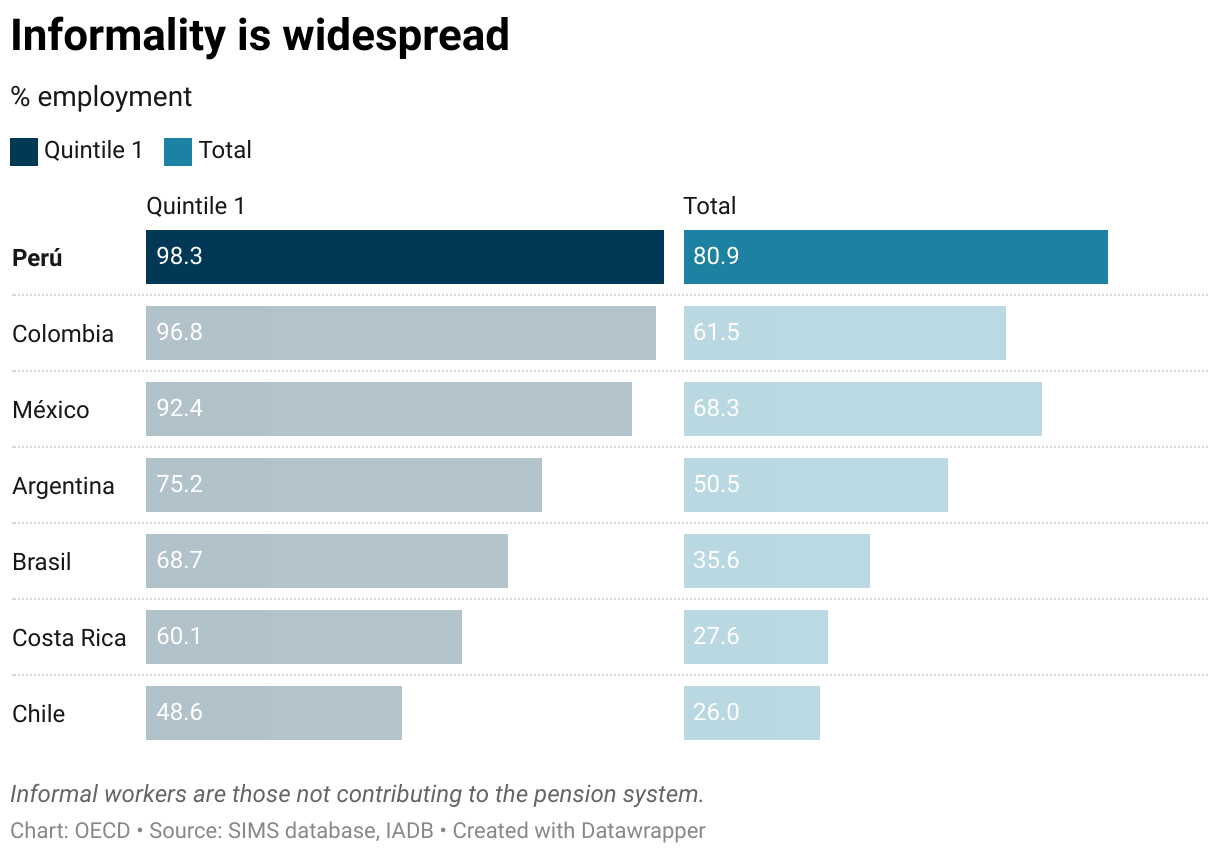
The challenge of informality looms large in Peru, with around 80% of workers in informal jobs, without social and labour protection, and on the margin of the formal tax and benefit system. Though there is no silver bullet solution as the roots of informality are multi-dimensional, fostering formality through a comprehensive reform package is essential for reducing poverty and inequality, boosting productivity, and improving tax collection. Ensuring universal access to basic social benefits – health, pensions, and social assistance – for both formal and informal sector workers alike, could remove some distortions that incentivise informality. This requires increased social spending funded by general taxation instead of by social contributions that make formal job creation expensive incentivising informal job creation. Providing universal access to pensions and health services financed by general taxation offers the possibility of reducing social contributions for low-income workers, promoting formal employment, and boosting productivity. Improving access to high-quality education tackles another root cause of informality, low labour productivity. Closing the gap in learning outcomes, especially among disadvantaged students, requires improving teachers’ training and addressing school infrastructure gaps.

Strengthening Public Finances

Peru’s current tax revenues, at 17% of GDP, lag both OECD and regional peers. A key challenge for Peru is sustaining fiscal responsibility while addressing social and infrastructure needs. Addressing this gap requires a multifaceted approach: improving spending efficiency while strengthening tax administration, reducing tax expenditures, modernizing property registries, and streamlining corporate tax schemes.

Confronting Climate Change

Climate change poses another significant challenge for Peru. The country is highly vulnerable to extreme weather events and is committed to achieving carbon neutrality by 2050. To achieve this goal, the country must combat deforestation—a major contributor to greenhouse gas emissions—and accelerate the use of renewable energy sources implementing stricter regulations and consistent price signals to reduce reliance on fossil fuels, tapping the enormous potential that the country has in this area.

As Peru navigates these multifaceted challenges, its process of accession to the OECD can offer a framework for long-term reforms that address existing vulnerabilities and allow the convergence to higher living standards. This roadmap, grounded in evidence and best practices, should build on the successes of the past, such as the robust macroeconomic setup that fuelled Peru’s economic growth. Realising this transformation demands political consensus, evidence-backed policies, and collaborative efforts.

References

OECD (2023), OECD Economic Surveys: Peru 2023, OECD Publishing, Paris, https://doi.org/10.1787/081e0906-en


Avanzando juntos: Reformas claves para un Perú próspero

Also available in English

Por Paula Garda y Michael Koelle, Departamento de Economía de la OCDE

Perú ha logrado significativos avances en las últimas dos décadas hasta 2019 en la reducción de la pobreza y la mejora de los niveles de vida, superando a muchos países de América Latina, como se destaca en el Estudio Económico de la OCDE de Perú 2023.  La base de este progreso fue un sólido marco macroeconómico y ambiciosas reformas estructurales implementadas en la década de 1990. Estas reformas han logrado darle al país estabilidad macroeconómica, alto crecimiento económico, baja inflación y una de las menores ratios de deuda pública- PIB en la región.

Sin embargo, la pandemia de COVID-19 puso de manifiesto los desafíos estructurales pendientes. Perú experimentó una de las contracciones económicas y tasas de mortalidad más altas de todos los países. La economía se recuperó en 2021, gracias a los existentes amortiguadores fiscales. Pero la recuperación fue transitoria y una serie de shocks, como la guerra de agresión de Rusia en Ucrania, conflictos sociales y el fenómeno del Niño, provocaron presiones inflacionistas y una ralentización económica. Se prevé que la economía se recupere gradualmente y que la inflación vuelva al rango objetivo a principios de 2024. Sin embargo, Perú se enfrenta a problemas estructurales de larga data, como una alta proporción de empleos informales, amplias brechas en infraestructuras básicas y un débil Estado de Derecho. Estos problemas no sólo magnifican el impacto de shocks adversos y las desigualdades socioeconómicas, sino que también frenan a Perú en su camino hacia mejores niveles de vida.

A medida que el Perú se embarca en su viaje hacia la adhesión a la OCDE, el proceso representa una oportunidad transformadora para que el país diseñe e implemente una agenda integral de reformas para fomentar la convergencia hacia mejores niveles de vida para todos los peruanos. El Estudio Económico del Perú 2023 destaca cuatro áreas prioritarias de reformas:

Fomentar el crecimiento de largo plazo

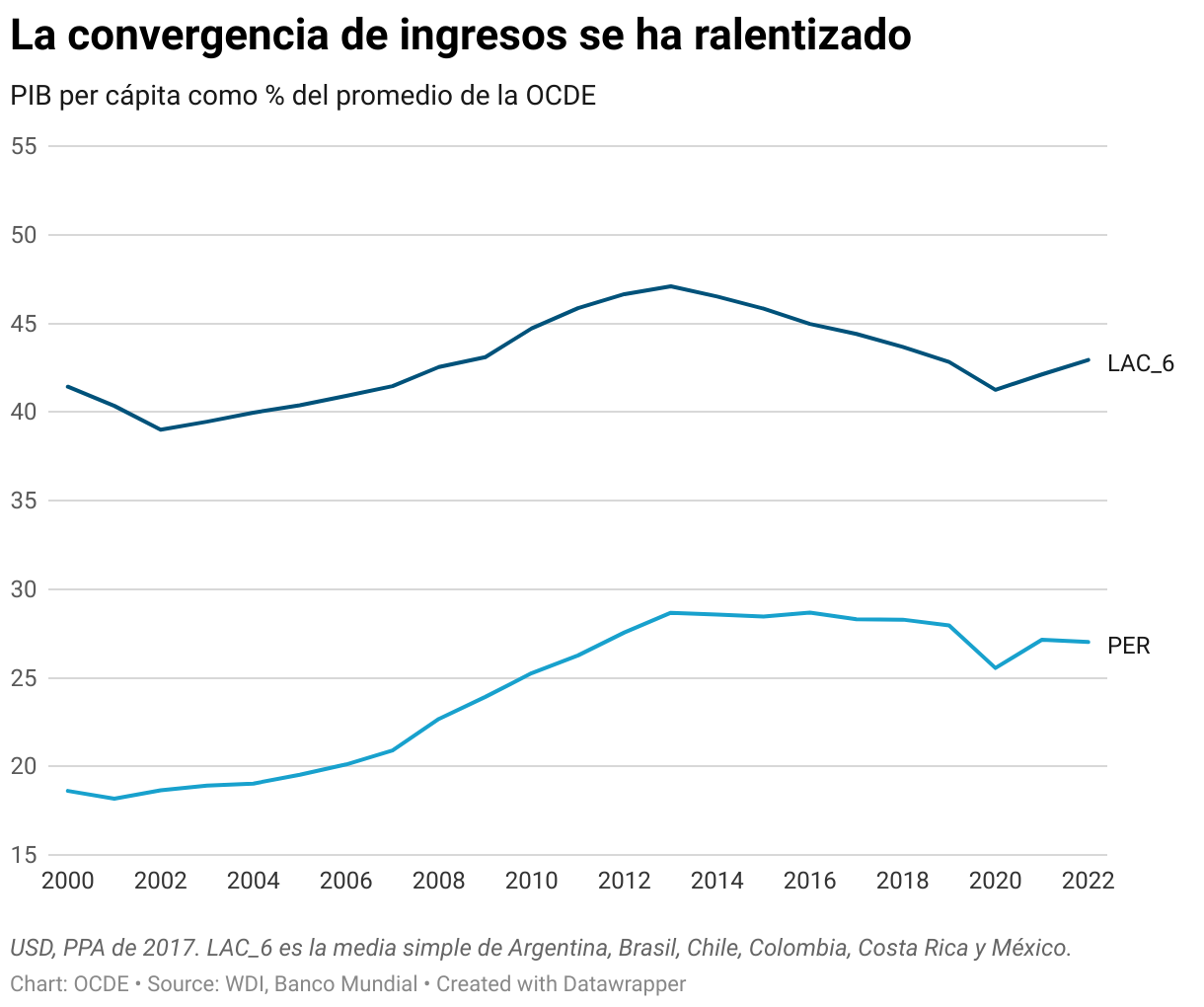
La convergencia de ingresos hacia los países más avanzados se estancó en 2014 con el fin del auge de los precios de las materias primas, por lo que es de suma importancia impulsar la productividad y la inversión. Aunque las materias primas, en particular los minerales, han impulsado el crecimiento en el pasado, es necesario ampliar la base productiva de la economía. La elevada concentración del poder de mercado en unos pocos grandes grupos empresariales reduce el dinamismo del mercado. Esto exige reforzar la aplicación de las leyes de competencia y simplificar las regulaciones y licencias para impulsar la productividad. Además, una mayor eficiencia del gasto público ayudaría a cerrar las brechas en infraestructuras y a prestar servicios públicos esenciales, impulsando al mismo tiempo el crecimiento potencial. Ello implica reforzar las capacidades de los gobiernos subnacionales, mejorar la planificación de las infraestructuras y modernizar el servicio civil para aumentar la capacidad de implementación del Estado. El fortalecimiento del Estado de Derecho mediante la lucha contra la corrupción y la mejora de la independencia y la eficiencia del sistema judicial es igualmente importante, ya que no sólo fomenta la inversión, sino que también puede restablecer la confianza en las instituciones.

Luchar contra la informalidad

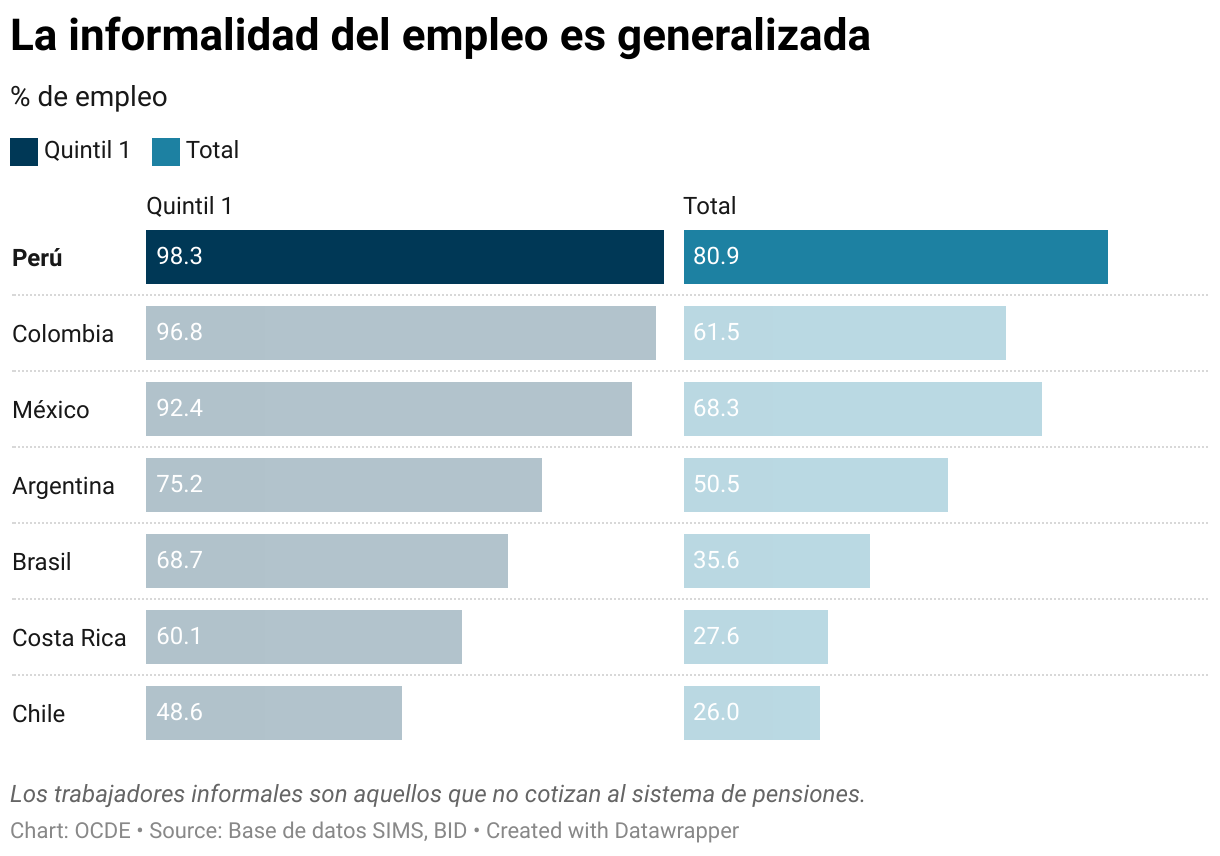
La informalidad representa un gran desafío para Perú, con cerca del 80% de los trabajadores en empleos informales, sin protección social o laboral, y al margen del sistema formal de impuestos y transferencias. Aunque no existe una solución milagrosa, ya que las raíces de la informalidad son multidimensionales, fomentar la formalidad a través de un paquete integral de reformas es esencial para reducir la pobreza y las desigualdades, impulsar la productividad y mejorar la recaudación tributaria. Garantizar un acceso universal a unos servicios básicos de protección social – en salud, pensiones y asistencia social – tanto para los trabajadores formales como informales, podría eliminar algunas distorsiones que incentivan la informalidad. Para ello es necesario aumentar el gasto social financiado con impuestos generales en lugar de con contribuciones sociales que encarecen la creación de empleo formal incentivando así la creación de empleo informal. Proporcionar un acceso universal a las pensiones y a los servicios de salud financiados por impuestos generales ofrece la posibilidad de reducir las contribuciones sociales de los trabajadores de bajos ingresos, promoviendo el empleo formal e impulsando la productividad. Mejorar el acceso a una educación de alta calidad aborda otra de las causas fundamentales de la informalidad, la baja productividad laboral. Cerrar la brecha en los resultados de aprendizaje, especialmente entre los estudiantes desfavorecidos, requiere mejorar la formación de los maestros y abordar las deficiencias de las infraestructuras escolares.

Fortalecer las finanzas públicas

Los ingresos tributarios del Perú, del 17% del PIB, son inferiores a los de sus pares de la OCDE y de la región. Un reto clave para Perú es mantener la responsabilidad fiscal al tiempo que se abordan las necesidades sociales y de infraestructura. Enfrentar este desafío requiere un enfoque multidimensional: mejorar la eficiencia del gasto público al tiempo que se refuerza la administración tributaria, se reducen los gastos tributarios, se moderniza el catastro y se racionalizan y simplifican los regímenes del impuesto a la renta de sociedades.

Afrontar el cambio climático

El cambio climático plantea otro desafío importante para Perú. El país es muy vulnerable a los fenómenos meteorológicos extremos y se ha comprometido a alcanzar la neutralidad de carbono para 2050. Para lograr este objetivo, el país debe combatir la deforestación -un importante contribuyente a las emisiones de gases de efecto invernadero- y acelerar el uso de fuentes de energía renovables aplicando regulaciones más estrictas y señales de precios coherentes para reducir la dependencia de los combustibles fósiles, aprovechando el enorme potencial que el país tiene en energías renovables.

Mientras Perú navega por estos desafíos multidimensionales, el proceso de adhesión a la OCDE puede ofrecer un marco para reformas que aborden las vulnerabilidades existentes y permitan la convergencia hacia niveles de vida más altos para todos los peruanos. Esta hoja de ruta, basada en evidencia y buenas prácticas, debería aprovechar lo que ha funcionado bien, como el sólido marco macroeconómica que ha impulsado el crecimiento económico de Perú. Llevar a cabo esta transformación exige consenso político, políticas basadas en evidencia y esfuerzos de todos los peruanos.

Referencias

OECD (2023), OECD Economic Surveys: Peru 2023, OECD Publishing, Paris, https://doi.org/10.1787/081e0906-en


Chile: How can growth be made more inclusive?

By Jens Matthias Arnold and Paula Garda, OECD Economics Department

Chile’s economy has been a poster-child of Latin America for a long time. As the new Economic Survey for Chile highlights, its solid institutions have delivered macroeconomic stability and rising living standards. Per-capita incomes have more than doubled since the 1990s and are among the highest in the region. But despite all this remarkable progress, cracks have emerged on the surface. In October 2019, widespread social unrest paralysed the country and revealed deep-rooted discontent with inequalities of economic conditions and opportunities.

After the social unrest, the Covid-19 pandemic took a steep toll on lives and livelihoods, and led to the sharpest contraction of economic incomes in 40 years. In 2021, the economy recovered swiftly on the back of exceptionally strong policy support, and eventually overheated significantly, as domestic demand pushed inflation well above target. Fiscal policy is rightly consolidating this year, including a strong reduction of public expenditure. The Russian aggression on Ukraine and global supply shortages in 2022 exacerbated inflationary pressures, with rising food and energy prices pounding hard on many families as inflation rose above 14%. Monetary policy reacted swiftly and forcefully, but the monetary policy stance will have to remain restrictive for some time to bring inflation back to the target and to firmly re-anchor inflation expectations.

In the face of these extraordinary shocks, Chile’s institutions have been resilient and helped to avert worse outcomes. The social unrest of 2019 eventually gave rise to an orderly and democratic process of rewriting the country’s constitution. In a national referendum, a majority of Chileans voted in favour of this step. A first new draft constitution was rejected in a second national referendum in September 2022, but another process for drafting a new constitution is being discussed.

Significant underlying growth and inequality challenges will have to be addressed over the next years. A long-standing process of income convergence to advanced economies has gone into reverse since 2014 (Figure 1). Productivity has been stagnant or even decreasing, and boosting it has now become a key priority. Investment in new technologies has been weak, and important parts of the economy could benefit from stronger competitive forces, as cumbersome regulations hold back new firm entry and investment.

Figure 1. Income convergence has reversed

Source: OECD, Productivity database; World Bank, WDI.

Besides boosting the engines of income growth, pressing social needs will require a growing attention to how incomes and opportunities are distributed. The quality of public education and health services needs to be improved to narrow the gap vis-à-vis private institutions. The pandemic has also highlighted significant gaps in social protection, particularly for the most vulnerable households. Ensuring some basic social protection coverage for formal and informal workers alike, while simultaneously reducing the cost of formal employment, is a key challenge. Only by addressing social protection and informality simultaneously will Chile be able to break the vicious circle where informal workers not entitled to most social protection benefits while the labour charges that finance these benefits raise the costs of creating formal jobs.

Few people have adequate old-age pensions, owing to low contributions and contribution gaps due to informal employment. Pension replacement rates were already low before the pandemic, but many pension accounts are now depleted following three rounds of extraordinary withdrawals during the crisis. A recently established universal basic pension is a key milestone: it will significantly improve pension benefits, particularly for many low-income earners. But future pension reforms should pay particular attention to formalisation incentives, while raising pension replacement rates. Income-support programmes for vulnerable households are highly fragmented, and unifying social assistance programmes into a single cash benefit scheme would allow increasing coverage and benefits.

Education is key for reducing inequalities and raising productivity at the same time. Learning outcomes remain well below the OECD average and pandemic-related school closures have exacerbated these longstanding challenges, as fewer students from vulnerable backgrounds used digital tools to remain connected. Expanding access to quality early childhood education would bridge early and often decisive gaps in cognitive and social progress and allow more women to work. Working conditions for teachers fall short of OECD average standards, with lower pay and longer working hours.

The small size of Chile’s public sector limits its ability to provide better public services and opportunities for all, and to reduce inequalities. Tax revenues of only 21% of GDP are insufficient to meet rising social demands while preserving necessary public investment in infrastructure, education and health (Figure 2). Personal income taxes, which only 20% of Chileans pay, are one explanation behind this low tax collection. Raising public revenues by several percentage points of GDP, as currently planned by the authorities, is ambitious but clearly within reach through a comprehensive tax reform.

Figure 2. Tax revenues are low

Note: LAC is a simple average of Argentina, Brazil, Chile, Colombia, Costa Rica, Mexico and Peru.
Source: OECD, Global tax revenue database.

As Chile embarks on this path of reforms, many decisions are now being taken that are likely to shape the future of its society and economy for years to come. These reforms are an excellent opportunity not only for raising future incomes, but also for making future growth more inclusive and providing better opportunities for all Chileans, as discussed in the 2022 OECD Economic Survey of Chile.

Reference

OECD (2022), OECD Economic Surveys: Chile 2022, OECD Publishing, Paris, https://doi.org/10.1787/311ec37e-en.


Structural reforms to help address the cost of living crisis

By David Turner, Balázs Egert and Jarka Botev, OECD Economics Department.

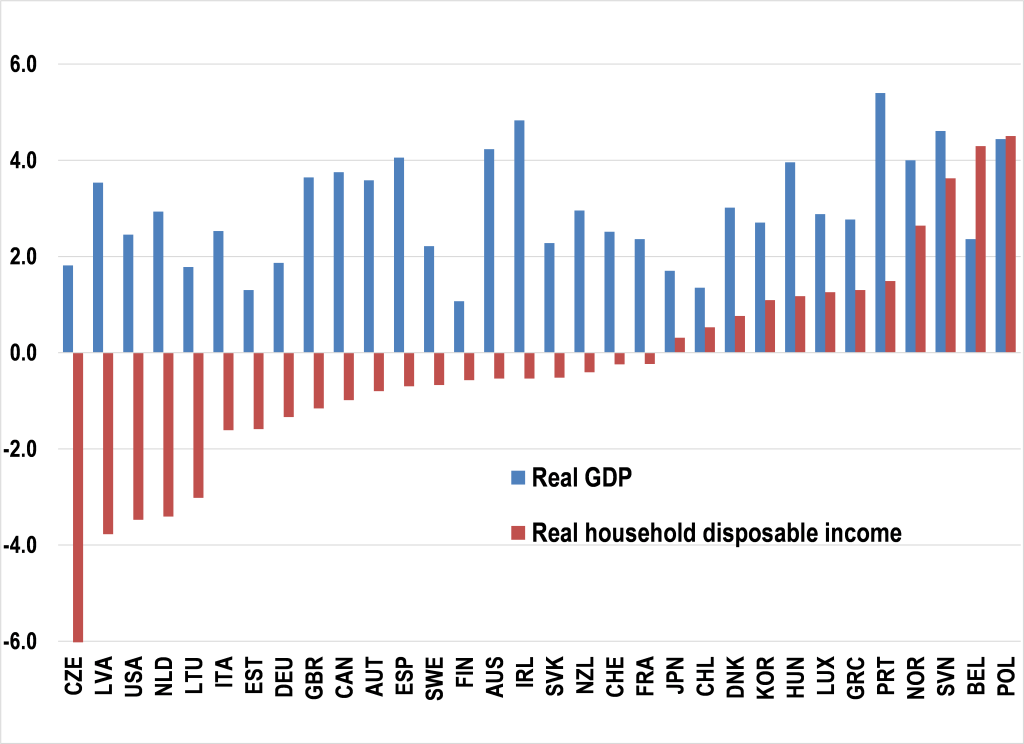
In the latest forecasts published by the OECD, the growth rate of GDP expected this year is positive for every OECD country, but the growth rate of real household disposable income is consistently lower and is negative for a majority of them (Figure 1). Moreover, the magnitude of this differential has not been experienced in some countries since at least the 1970s, leading to what is often referred to as a ‘cost of living crisis’. This difference is all the more important given the long-standing argument that income measures based around household disposable income provide a superior measure of welfare to GDP; adjusted household disposable income1 is used as an alternative income measure to GDP in the OECD flagship publication “How’s Life: Measuring Well-being”, is a component of the OECD Better Life Index and is more consistent with the recommendations of the Stiglitz-Sen-Fitoussi Commission on Measuring Economic Performance and Social Progress to focus on household income and consumption rather than output (Stiglitz et al, 2009).  

Figure 1. Comparing projections of GDP and household disposable income

% growth pa in 2022

Note: The chart compares recent OECD projections for 2022 of growth in real GDP and real household disposable income. Only OECD countries for which national accounts data on real household disposable income is readily available are shown.
Source: OECD Economic Outlook, June 2022.

In response to the cost of living crisis, governments are rolling out temporary, timely and well-targeted fiscal support to vulnerable households. Such policies might be contrasted with structural reform measures, which are typically more permanent in nature and usually take many years to raise the supply-side potential of the economy. However, just-published OECD research considers the differential impact of a range of structural reforms on adjusted household disposable income as compared to GDP and finds that some structural reforms — including family in-kind benefits, family cash benefits and cuts in the income tax wedge — have a disproportionately large effect on household disposable income compared to GDP (Botev et al, 2022).

In addressing the cost of living crisis, these results provide a particularly strong case for increasing support to early childhood education and childcare, which represents over 70% of family in-kind benefit payments across OECD countries. Not only would such policies boost long-run employment, especially for women, and have a rapid and magnified effect on household disposable incomes, but even prior to the current episode they were identified as being among the top structural reform priorities in no fewer than 22 OECD countries, including all G7 countries (Botev et al, 2022; OECD, 2021). Government spending on family in-kind benefits varies widely across OECD countries (Figure 2), with Nordic countries spending as a share of GDP more than double the OECD median. While there may be diminishing returns to additional such spending at higher initial levels, this still leaves substantial scope to increase spending in the majority of OECD countries. Finally, it should also be noted that there may an additional long-run supply-side benefit from boosting spending on early childhood education via a long-run improvement in human capital and total factor productivity (Égert et al, 2022).

Figure 2. Public spending on family in-kind benefits

Percent of GDP, 2019 or nearest year available

Source: OECD Social Expenditure Database.

References

Botev, J., B. Égert and D. Turner (2022), “The effect of structural reforms: Do they differ between GDP and adjusted household disposable income?”, OECD Economics Department Working Papers, No. 1718, OECD Publishing, Paris, https://doi.org/10.1787/def775b1-en.

Égert, B., C. de la Maisonneuve and D. Turner (2022), “A new macroeconomic measure of human capital exploiting PISA and PIAAC: Linking education policies to productivity”, OECD Economics Department Working Papers, No. 1709, OECD Publishing, Paris, https://doi.org/10.1787/a1046e2e-en.

OECD (2020), How’s Life? 2020: Measuring Well-being, OECD Publishing, Paris.

OECD (2021), Going for Growth, OECD Publishing, Paris.

OECD (2022), OECD Economic Outlook, June, OECD Publishing, Paris.

Stiglitz, J., A. Sen and J.-P. Fitoussi (2009), “Measurement of Economic Performance and Social Progress”, Report by the Commission on the Measurement of Economic Performance and Social Progress.


[1] The adjustment in ‘adjusted’ household disposable income reflects an imputed value from public services such as education and health that provides a better basis to compare performance across countries.


United we stand divided we fall: the need for greater inclusiveness in Israel

By Claude Giorno and Gabriel Machlica, Israel Desk, Economics Department

The Israeli economy is strong. The country is enjoying its 15th consecutive year of growth, with GDP increasing on average by 4.0% annually since 2003, i.e. faster than nearly any other OECD country. Unemployment is at historically low level, and the average standard of living is improving steadily. Rapid population growth, the rise in people with jobs, strong economic fundamentals, good economic policy settings and a dynamic high-tech sector are underpinning these impressive outcomes, which are expected to continue in the short term, according to the 2018 OECD Survey on Israel.

Today’s excellent outlook offers Israel a unique opportunity to prepare for the challenges of the future which require stronger social cohesion.  Israeli society is indeed marked by large inequalities. Almost 18% of the population live in relative poverty (i.e. with a disposable income below 50% of the median), higher than the OECD average (12.5%) and any other advanced economy. This reflects large disparities between different communities. Around half of Israeli-Arabs and Haredim are poor and live separately from the rest of the population. They have different school systems, live mostly in different cities and do not serve in the army. This leads to poor education results followed by worse labour market outcomes, notably in terms of earnings (Table 1). Haredi men have a cultural preference to engage in full-time religious studies, rather than participate in the labour market, and avoid core subjects in their school careers. Furthermore, Haredi women can work only part-time because of their large families. The majority of Israeli-Arab women also do not participate in the labour market due to cultural preferences. The result is that most Haredi and Arab families have only one breadwinner, resulting in significant problems of poverty, notably among children.

Israel 2018 survey tab 1 blog

Given the high fertility of Haredi women, the share of that community in the total population is predicted to triple in the next 45 to 50 years, with the total share of Israeli-Arabs and Haredim rising from one-third to one-half over this period (Figure 1). This will have a substantial impact on Israeli economic performance, given the poor labour market outcomes and low productivity of these disadvantaged groups.

Israel 2018 survey fig 1 blog

In the absence of further progress in social cohesion and any further convergence of productivity and labour market outcomes of Haredim and Israeli-Arabs with the rest of the population, average Israeli incomes would fall to nearly 30% below the OECD average, almost double the current gap according to OECD estimates (Figure 2). However, if ambitious structural reforms are launched to further improve the Haredi and Israeli-Arabs’ (youth in particular) integration into society through better education and training, improved work incentives and more business-friendly environment, the gap in Israeli living standards with the OECD average could shrink below 10%.

Israel 2018 survey fig 2 blog

References:

OECD (2018), OECD Economic Surveys: Israel 2018, OECD Publishing, Paris, http://dx.doi.org/10.1787/eco_surveys-isr-2018-en.

Geva A. (2015), Demographic Changes and their Implications for Fiscal Aggregates in the Years of 2015-2059, http://www.mof.gov.il/ChiefEcon/EconomyAndResearch/ArticlesSet/Article_20150518.pdf


Mexico’s reforms are paying off, but there is much left to do

By Sean Dougherty, Mabel Gabriel, Patrick Lenain, and Julien Reynaud, OECD Economics Department

The overall economic and social situation has improved in recent years, but important challenges remain, such as high levels of poverty, extensive informality, low female participation rates, insufficient educational achievement, financial exclusion, weak rule of law, and persistent levels of corruption and crime. To address these problems, the government has rolled out major structural reforms since 2012 aimed at improving growth, well-being and income distribution. The initial wave of reforms, kicked-off by the multi-partisan political commitments in the Pacto por México, led to notable progress across a range of areas and put Mexico at the forefront of reformers among OECD countries. Key laws and constitutional amendments were approved, and secondary laws or regulations passed.

blog-reform-mexico

Reforms have already brought short-term benefits, especially on productivity growth, and helped to mitigate exteproductivityrnal headwinds such as lower oil prices and rising US interest rates. The OECD estimated in the last Economic Survey that a subset of the Pacto por México reforms could add one percentage point to GDP growth after five years. An additional set of selected reforms could add another percentage point to GDP. Strong progress has been made to open sectors such as energy and telecoms to more competition. Institutional designs have been improved with a new National Productivity Commission, a strengthened competition authority, and expanded sectoral regulators. Initial progress has been made with education and poverty alleviation, although parts of these plans ran into difficulties that are now being addressed.

growth-disparaties

Nonetheless, large differences prevail across sectors, states, and firms – a situation not unlike that in many OECD countries. Mexico’s most productive firms are performing well, such as in the sector of transportation equipment manufacturing, but the majority of firms are still struggling to perform better, leading to a growing dispersion in productivity,  with a few leading sectors pulling ahead. Inequalities continue to grow across states and sectors, emphasising the divergence of a modern Mexico – highly productive, competing globally, mostly located at the border with the United States, in the central corridor and in tourism areas; and a traditional Mexico, less productive, with small-scale informal firms, mostly located in the South. As a result, growth has not been inclusive enough to achieve better living conditions for many Mexican families.

Addressing this divergence is the main focus of the new Economic Survey (OECD, 2017).

References:

OECD (2017), Economic Surveys of Mexico, OECD Publishing, Paris.

OECD (2015), The Future of Productivity, OECD Publishing, Paris.