How Sweden can strengthen climate resilience now

The front facade of a famous high school in Sweden with 2 people walking in front of it

By HyunJeong Hwang

Sweden is warming at nearly twice the global average pace. Coastal erosion, flooding, and extreme weather events are no longer future risks, they are affecting communities today. On the south coast of Skåne, more than 200 meters of shoreline have been lost to erosion in just four decades. With 82% of the population living in coastal areas, the stakes are high. Investments to adapt to climate change make good economic sense and can improve social equity. The 2025 OECD Economic Survey of Sweden highlights three strategic areas to strengthen Sweden’s climate resilience:

  • Accelerating market-based adaptation measures
  • Improving public funding mechanisms
  • Strengthening governance and coordination

Market tools can drive private investment in adaptation but are not used to their full potential in Sweden (Figure 1). Property owners are the main beneficiaries from safeguarding their own assets and should therefore at the outset foot the bill. Sweden’s legal framework therefore rightfully places the responsibility for climate adaptation largely on property owners, but in practice few financial incentives exist to drive meaningful action.

Insurance premiums typically do not reflect the actual risk of climate-related damages. For example, homes located in high-risk flood zones pay the same premiums as those in safer locations. Moreover, homeowners who take proactive steps, like building flood barriers or reinforcing foundations, rarely see their premiums lowered. This “risk-blind” pricing does not properly incentivise ex-ante adaptation strategies and investments in resilience.

A similar gap exists in property taxation. Municipalities in Sweden cannot adjust tax rates based on local climate risk, nor can they use tax tools to discourage new development in vulnerable coastal areas. The result is a system where those who benefit most from adaptation investments are not contributing proportionately to the cost of those investments.

To reverse this dynamic, Sweden needs to embed climate risks in the prices facing households and businesses to encourage risk-reducing actions. Insurance premiums should be better aligned with site-specific risks, such as flooding or erosion. International examples show that this works. In Denmark and the United Kingdom, for instance, insurers offer premium discounts for policyholders who for example install flood barriers or upgrade drainage. Such approaches have led to measurable increases in private adaptation investments and reduced long-term losses. Introducing similar arrangements in Sweden would not only encourage adaptation but also reduce future spending on disaster recovery (Figure 2).

In addition, Sweden should consider allowing municipalities to implement risk-based property taxation. This would ensure that households in high-risk areas contribute more to the cost of local adaptation projects, such as sea walls or improved stormwater infrastructure. It would also help resolve the “public goods dilemma,” where individuals benefit from shared resilience measures but lack incentives to pay for them. In coastal municipalities like Malmö and Vellinge, disagreements over who should finance protective infrastructure have already caused delays.

Another weakness in Sweden’s climate adaptation funding model is that the risk of large-scale weather-related losses is not properly reflected in insurance premiums. Households, businesses and the insurance industry expect that the government will bail them out in the event of major disasters. Explicit ex ante risk pooling is at the outset a superior solution to such ex post tax-financed bailouts. A prefunded pool, financed by a mandatory surcharge on all property insurance premiums, would act as a buffer in times of crisis and protect the insurance sector and taxpayers alike from unpredictable fiscal shocks. Insurers actively encouraging and facilitating risk mitigation efforts could be rewarded with more favourable terms when accessing the backstop to incentivise risk reduction and reduce the likelihood of high claims. France provides a proven example through its Natural Disaster Compensation Scheme (Caisse Centrale de Réassurance), which is funded by insurance premiums and ultimately guaranteed by the State.

Improving public funding mechanisms is also important. Variation in investment needs for climate adaptation between municipalities is largely orthogonal to their main funding sources, which are personal income taxes, the general grant from the government and the cost and income equalisation system. Municipalities can apply for national and EU grants, but these are mostly aimed at large-scale projects and entail a complex and resource-intensive process, disadvantaging smaller municipalities. Unlike mitigation, adaptation funding is not fully mainstreamed into Sweden’s budget process. Mainstreaming adaptation into national budgeting, alongside easily accessible grants conditional on specific performance targets or milestones, would provide more predictable support and help municipalities plan for the long term.

Governance is another area in need of reform. Sweden lacks a cohesive national action plan for climate adaptation, and responsibilities across sectors and administrative levels often overlap. Municipalities are not legally required to report on adaptation efforts, making it difficult to track progress and identify gaps. Strengthening the authority of County Administrative Boards, which are tasked with coordinating local adaptation efforts, and requiring regular and more standardised reporting would improve consistency across municipalities.

As the impact of climate change intensifies, adaptation can no longer be an afterthought. It must be embedded in financial systems, public policy, and institutional governance. The path forward depends on decisions today, ones that align market incentives and equitably allocate public resources. The resilience of future generations depends on it.

For more information, visit the Sweden snapshot page.

References

OECD (2025), OECD Economic Surveys: Sweden 2025, OECD Publishing, Paris.


Employment in Sweden: aiming high

Image from the 2023 Economic Survey of Sweden cover

by Hyunjeong Hwang, OECD Economics Department

Cover of the economic survey of Sweden 2023

Sweden has a very high labour force participation rate and one of the highest employment rates in the OECD, but cannot afford to be complacent. Maintaining high employment is a prerequisite for the sustainability of the Swedish welfare state and to counter the ageing-related contraction of the labour force and its negative fiscal impacts. The 2023 OECD Economic Survey of Sweden delves into some challenges holding back labour supply and proposes measures to make the Swedish labour market stronger, more inclusive, and conducive to sustained economic growth.

Long-term unemployment, notably among the foreign-born, remains a significant challenge. With lower educational attainment and lower Swedish language skills than natives, foreign-born people may struggle to get a job in a labour market characterised by a compressed wage distribution that demands high skills and productivity. Additionally, foreign-born women often face strong gender and family norms. Re-skilling and activation policies are key for these groups. A recent reform of the Public Employment Service, introducing a purchaser-provider model with outcome-based payments for employment services could help, but needs to be carefully monitored and calibrated to align providers’ incentives with the objectives of the reform and to secure sufficient competition. Carefully reviewing social assistance with the aim to strengthen work incentives while ensuring decent living standards for people in need could also help.

Taxes on work are high, particularly among above-average income earners in Sweden (Figure 1). The top personal income tax rate is among the highest in the OECD and it applies from a low threshold. As a result, a relatively large share of taxpayers faces the top marginal tax rate. Meanwhile, tax rates on dividends and capital gains are relatively low. The large difference between taxes on labour income and capital income creates incentives for high-wage earners to reclassify their income as capital income in order to minimise their tax obligations. Furthermore, housing taxation is both low and regressive. Shifting taxation away from labour and towards property and capital income would thus help create a more balanced and equitable tax structure, promoting labour supply and inclusive growth while preserving fiscal sustainability.

Lengthening working lives as life expectancy increases is essential to strengthen public finances and to ensure sufficient pension income. Reforms in the 1990s made Sweden’s pension system the envy of countries around the world, with in-built sustainability and incentives to lengthen working lives, and many policies have been put in place since to extend working lives. However, recent reforms to boost basic pensions and to introduce a new tax-funded income pension supplement go in the direction of reducing incentives to remain in work for many older workers and weaken the long-term sustainability of the system. The stated purpose of these changes was “to ensure a reasonable standard of living for pensioners who receive a low level of earnings-related pensions”. However, on average, Swedish pensioners are relatively well-off compared internationally and compared to younger generations in Sweden. Sweden should therefore change direction by holding back the uprating of tax-funded pensions for some time to come.

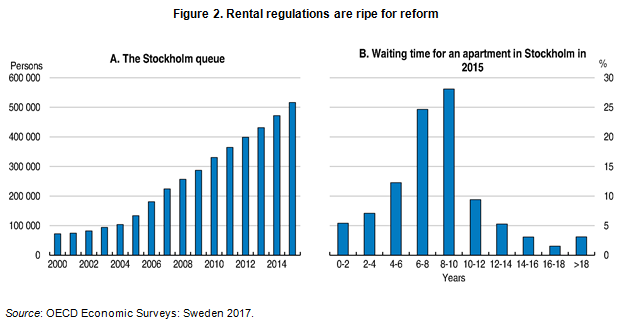
Relaxing strict rent controls, which would improve labour mobility and increase the supply of rental dwellings, should be considered. Waiting times for rental housing can stretch from years to decades in major cities in Sweden, perpetuating the scarcity of rental options. This pushes those with limited queuing time and limited means to buy housing, particularly youth and immigrants, into overcrowded housing, sublet or black markets with significantly higher rents. Greater flexibility in rental housing would facilitate the matching of skills with job vacancies and boost productivity by more efficiently allocating talent to where it is most needed.

Further reading:          

OECD Economic Survey of Sweden (2023), OECD Economic Surveys: Sweden 2023, OECD Publishing, Paris.


Beyond blah blah blah: taking action to reduce emissions in Sweden

Image from the 2023 Economic Survey of Sweden cover

By Jon Pareliussen, OECD Economics Department

“When I say ‘climate change’, what do you think of? I think of jobs – green jobs (…). Hope is not blah blah blah (…) hope is taking action (Greta Thunberg, 2021).”

Calls for a rapid green transition have followed us from Rio and Kyoto in the 1990s, to Paris and Sharm El Sheikh more recently. The calls have grown more desperate over time while emissions have continued to increase. However, as Greta Thunberg urged world leaders to move from talk to action during a 2021 climate summit in Milan, wheels were literally being put in motion at a factory in Braås, Sweden. In October the world’s first vehicle built from fossil-free steel rolled out the factory doors. The steel was produced in Luleå, Sweden in August the same year with hydrogen instead of coal for the first time in history. As described in the 2023 OECD Economic Survey of Sweden, green steel is just one part of a green wave of industrial development washing over Sweden, powered by abundant clean electricity notably in its Northern regions.

This nascent green industrial revolution was made possible thanks to a comprehensive and relatively efficient policy package comprising carbon pricing, subsidies, and regulations. These measures have helped cut greenhouse gas emissions by more than half since the 1970s. As the EU’s climate ambitions are converging towards Sweden’s and EU-wide policy instruments such as the Emissions Trading Scheme (EU ETS) are expanding to new sectors of the economy there is considerable hope that other countries will follow Sweden’s lead.

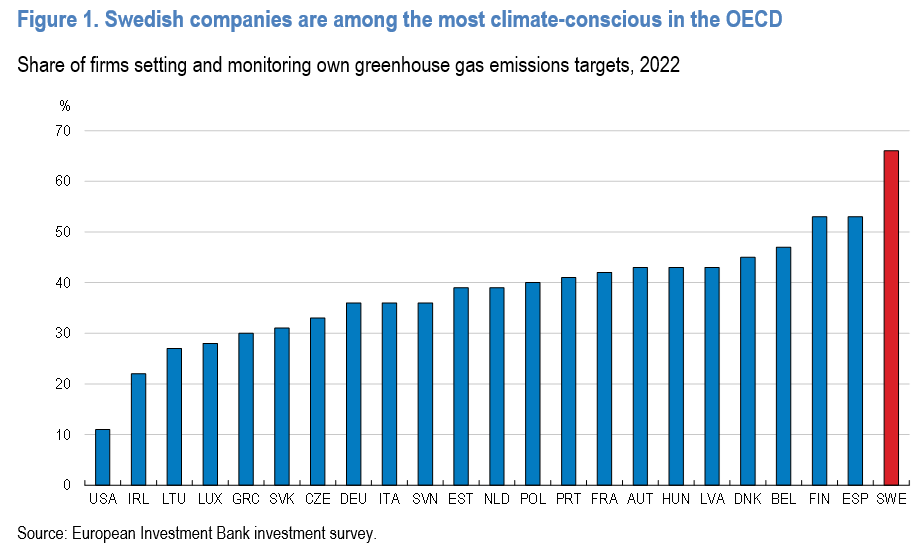
One might think that such radical change would trigger angst over industrial death and worker displacement, but the opposite is the case. Policy consistency and systematic dialogue between industry and government under the umbrella of “Fossil-free Sweden”, have made Swedish companies the most climate-conscious in the OECD (Figure 1), replacing nail-biting and resistance with green investment and green jobs.

Today’s worries revolve around how to meet rising demand for skills and how to supply adequate public and private services, housing and infrastructure, especially since the green wave’s epicentre is Sweden’s north, an area in demographic decline for decades. Another major challenge is maintaining momentum. For this, Sweden will need to roughly double its electricity generation with renewables and nuclear power and invest in plannable electricity generation capacity, storage and transmission. Plans for considerable investments exist and financing seems to be readily available, but long and complex planning and permitting procedures need to be streamlined.

What next? The big picture is that Sweden’s green industrial revolution is gaining  considerable momentum. Russia’s war of aggression against Ukraine and the ensuing energy crisis further increased the urgency of investments in clean energy and infrastructure. But just as national policies mattered in the past, they will continue to matter in the future. The government recently drastically cut mandatory biofuel blending in gasoline and diesel, thus placing Sweden on a trajectory to miss its 2030 emission reduction target by a margin. It should use the National climate action plan due this fall to sharpen policies for transportation, agriculture and other emissions outside of the EU ETS, and incentivise carbon uptake in Sweden’s forests as well as engineered carbon capture, usage and storage. Removing fuel tax cuts put in place during the energy crisis and remaining exemptions from the carbon tax are important first steps. This is the Government’s chance to convince the world that Swedish climate policies remain, as in the past, much more than just blah blah blah.

Further reading:          

OECD Economic Survey of Sweden (2023), OECD Economic Surveys: Sweden 2023, OECD Publishing, Paris.

G. Thunberg (2021), ”blah blah, blah”, Speech held at the 2021 preCOP26 Youth4Climate Conference in Milan in September 2021.


Are there ways to protect economies against potential future housing busts?

by Boris Cournède, Maria Chiara Cavalleri, Volker Ziemann, OECD

Housing, a large and volatile sector, is often at the centre of economic crises, as a trigger or amplifier. The current situation, which is characterised by house prices approaching or exceeding pre-crisis levels in many countries, raises questions as to whether these price levels may be indicative of a possible impending correction and what can be done to reduce housing-related macroeconomic risks.

Figure 1. House price developments since the global financial crisis

The OECD has been developing models that allow assessing to which extent economic trends associated with housing booms, such as steep house price increases or strong debt expansion, can fuel the risk of a severe economic downturn (Turner, Chalaux and Morgavi, 2018). About half of the countries covered by the models are estimated to face real yet limited risks (above 20% but below 30%) of experiencing a severe downturn over the medium term, with housing trends playing a significant role.” Model results suggest that housing booms can fuel crisis risk domestically but also across borders as a consequence of international financial links (Cavalleri, Cournède and Ziemann, 2019).

Countries can reduce housing-related risks in particular by:

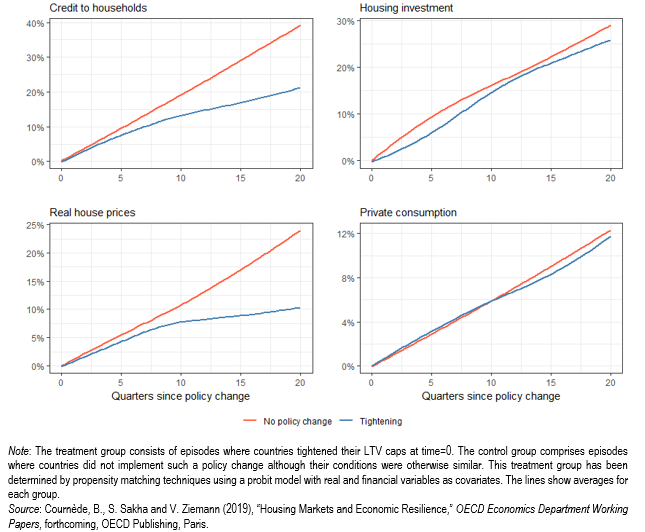
  • Capping the size of loans relative to house prices. New evidence suggests that such caps are capable of containing house prices and mortgage lending incurring limited economic cost (Figure 2): housing investment is only marginally reduced and there is very little effect on consumption. Tighter loan-to-value ratios are also linked with a lower risk of severe downturns.
  • Limiting the size of loans relative to income. This measure holds promising potential but has been seldom used so far, which means there is little scope yet to evaluate it ex post.
  • Tightening bank capital requirements for riskier housing loans. Measures of this nature are linked to more moderate output fluctuations and stronger recoveries after downturns.
  • Reducing the tax advantages given to housing assets. Higher effective taxation of housing assets (which can come from higher property taxes or lower income tax breaks for housing) favours smoother housing cycles.

Figure 2. Effect of tightening LTV caps

References:

Cavalleri, M. C., B. Cournède and V. Ziemann (2019), “Housing Markets and Macroeconomic Risks“, OECD Economics Department Working Papers, No. 1555, OECD Publishing, Paris.
Turner, D., T. Chalaux and H. Morgavi (2018), “Fan Charts around GDP Projections Based on Probit Models of Downturn Risk”, OECD Economics Department Working Papers, No. 1521, OECD Publishing, Paris.


Sweden’s schools: lessons from history to build a better future

by Jon Pareliussen, Sweden Desk, OECD Economics Department

Swedish schools entered
the 1990s from a position of strength, as one of the top performers in early
international school surveys, including the OECD Programme for International
Student Assessment (PISA). School governance was centralised, and implemented locally
by regional education boards. A suite of sweeping reforms in the early 1990s
decentralised the school system from the central to the municipal level and
introduced choice, competition and management by objectives. The general
direction of reform was common to several OECD countries at the time, some of
which perform well in international comparison.

However, the reforms seem
to have contributed to weakening results in Sweden. Implementation was not optimal,
as some municipalities were ill-prepared to take on the new tasks, and key
stakeholders, notably among teachers and school principals, were opposing the
new model. The reform design also had weaknesses. Regional education boards
were closed and municipalities were granted full autonomy over school funding, weakening  governance structures considerably, at a time
when the introduction of liberal entry for private (for-profit and non-profit)
school providers would have called for stronger governance and control.  

The latest vintage of PISA points to a brighter future for Sweden’s schools. Average results improved, reflecting at least partly recent government interventions. However, today is no time for complacency, as Sweden’s educational performance only climbed back to close to the OECD average. Inequalities across pupils and schools are widening, and children are increasingly segregated into schools with pupils from similar backgrounds. These developments are partially driven by broader societal trends, notably increasing income inequality and immigration. Nevertheless, the school system reinforces segregation instead of counteracting it, running the risk of depriving pupils of equal opportunities.

Against this backdrop, the
special chapter of the OECD Economic
Survey of Sweden 2019
describes and analyses the challenges facing primary
and lower secondary education in Sweden. A set of recommendations is outlined,
focussing on three main areas:

  • Economies of scale and the need for coordination
    calls for a partial recentralisation of some aspects of education policy. A
    centrally set minimum funding norm based on pupils’ socio-economic
    caracteritics would target funding better to needs and equity objectives. The
    norm should be non-binding and integrated in the existing system for cost- and income
    equalisation between municipalities, in line with established governance
    principles in Sweden. A regional arm of the central government governance
    structure should be re-built to enhance cooperation, improve skill development,
    promote continuous quality improvements, and instil accountability at every
    level of the school organisation.
  • Competition and school choice can be powerful
    tools to improve school quality, but private interests in many cases differ
    from the interests of society as a whole. Effective regulation and governance
    therefore need to steer private providers to deliver for the public good. Ensuring
    that grades fairly represent pupils’ skills and knowledge would reduce
    information asymmetries. Private schools’ admission procedures need regulation
    to hold back school segregation. Municipalities should adjust how they assign
    pupils to schools by promoting more socially mixed pupil groups while toning
    down the current strong focus on proximity. Investments in new school capacity
    can help counteract segregation, notably if coordination between municipalities
    and private providers improves.
  • High-quality teachers are a school’s most
    important asset, and Sweden faces teacher shortages. Teaching needs to become
    more attractive to recruit motivated and skilled students and retain high
    quality teachers in the profession. Better teacher education with a stronger
    research base and more teaching practice would help. Once in a job, teachers
    should face clearer career paths, incentives to progress, perform and take on
    challenging tasks as well as clear accountability for key outcomes, coupled
    with more cooperation, feedback and support between colleagues. A new regional
    arm of the central government governance structure should have a central role.

Sweden is now
moving towards a new round of school reforms, largely along these lines. A
clear lesson from the previous three decades of Swedish education history is
that reforming complex systems, warranted or not, can also be a risky
undertaking. The end result depends on reform design, implementation and intricate
interactions within the system undergoing reform as well as with the external
environment.

The need to adjust
to unintended consequences as complex reforms progress is inevitable, but accurately
identifying strengths, weaknesses and causality is challenging in hindsight,
and even more in real time. Not knowing exactly where you are and how you got
there reduces the likelihood of ending up where you want to be. Therefore, decision
makers should integrate experimentation, quantitative research and evaluations
into reform design in the next round of Swedish school reforms.

References:

OECD (2019), OECD Economic Surveys: Sweden 2019, OECD Publishing, Paris.


A balancing act: Why inequality increased in the Nordics

Mr. Jon Pareliussen, Economist, Sweden/Finland desk, Economics Department

The Nordics are rightly renowned for being inclusive societies with low inequality compared to other OECD countries. However, some of the largest inequality increases over the past few decades took place in Sweden, Finland and Denmark. A newly released article  building on previous OECD work discusses how market forces, demographic trends and redistribution together shaped the income distribution of the Nordics.

It may seem like a paradox that the Nordics, which are very open economies, heavily integrated in global value chains and front-runners in the use of new technologies, have not seen even more widening distributions of market incomes. However, the extent to which skill-biased technological change and other forces widening the earnings distribution of workers will actually drive up inequality depends on a number of factors, and key policies and institutions in the Nordics play a dampening role. First, institutions such as unions and collective bargaining, employment protection legislation and minimum wages dampen the direct effect of market trends on earnings. Second, higher demand for skills are met by publicly-funded higher education, increasing the supply of skilled workers and thus holding back skills premiums. Third, a widening earnings distribution among workers coincided with increasing employment, limiting the overall effect on inequality.

Nordic1.JPG

With a relatively modest overall impact from market forces, explanations for increasing inequality must be sought elsewhere:

  • Demographic trends have been relatively strong drivers of inequality in the Nordics. Household structure, with more single-headed households has widened income dispersion in Denmark, Finland, Norway and Sweden. Ageing has increased inequality significantly in Finland, and immigration has increased inequality in Norway, Denmark and Sweden.
  • Redistribution through taxes and transfers has weakened significantly in Denmark, Finland and Sweden, notably due to less insurance transfers (i.e. unemployment, sickness, disability insurance) and only partially offset by more assistance (i.e. means-tested) transfers. Income taxes have played a less important and more heroegneous role, as progressivity increased in Sweden while it decreased in Denmark and Iceland.

Technological and demographic pressures are set to continue going forward, and these challenges need to be embraced. Continued flexibility and constructiveness of the social dialogue and improvements to education are essential to seize opportunities from technological change and avoid a widening wage distribution. Making social insurance and welfare transfers more flexible and agile would improve workers’ protection in a rapidly changing world of work. Improving benefit system design so that work always pays, notably in Denmark and Finland, and linking benefits to real-time income registries are important steps to this end.

The Nordics demonstrate that equity and efficiency can be compatible if incentives are right. Low inequality and strong safety nets can even be an advantage in today’s globalised world, which requires constant adaptation. Reaping the full benefits from globalisation and technological progress requires broad support, which is easier to muster when the social dialogue is constructive and representative, when everyone is given opportunities to fulfil their potential, risks are shared and losers compensated.

References:
Pareliussen, J. K., Hermansen, M., André, C. and Causa, O. (2018), Income Inequality in the Nordics from an OECD perspective, Nordic Economic Policy Review 2018.


Structural Inequality – The Case of Sweden

by Jon Pareliussen, Sweden Desk, OECD Economics Department

Income equality is perceived by many as steadily embedded in Swedish society, as solid as a Volvo’s tyres firmly clinging to a narrow country road on a Småland’s bright midsummer night. However, the Gini coefficient has increased more in Sweden than in any other OECD country since the 1990s. But who is responsible when you suddenly find your Volvo wheeling off course? You, holding the wheel, or the rough northern weather?

Even though consecutive governments over the past few decades must take some of the responsibility for increasing inequality, we show in a newly released paper that they also faced rough conditions (Robling and Pareliussen, 2017). Since the late 1980s the population has been ageing; traditional family structures have weakened, leading to more single and single parent households; people spend more time in school and reach higher educational attainment than they used to; employment has shifted away from manufacturing, mainly towards high-skilled services; and Sweden receives more migrants than before, migrants who increasingly come from poorer countries and seek residence for humanitarian and family reunion reasons.

By re-weighting micro-data from Statistics Sweden, we find that these demographic and structural trends are behind more than 40% of the increase in the Gini coefficient of disposable income from 1987 to 2013, and about half of the increase in the relative poverty rate, defined as individuals living on less than 60% of the median disposable income (Figure 1). We show that understanding these underlying trends, common to many countries, is vital to fully grasp why inequality is on the rise. To date, however, with skill-biased structural change as a notable exception, such trends tend to be overlooked in the income inequality debate.

stru change sweden

So when you find yourself in the middle of a meadow, fighting the airbag off your face while curious cows consider your slightly bruised Volvo, is it fair to place the full blame on the sudden thunderstorm or the icy road? Of course not. The driver should adapt to weather conditions, and neither police nor insurance would accept anything else for all the butter in Småland. Likewise, structural trends that are largely outside political control, driving up inequality, make redistribution and labour market policies all the more important as countermeasures. Compared to most countries Sweden is still safely on the road, but caution calls for tapping the brakes.

References:

Robling, P. and J. Pareliussen (2017), “Structural inequality – The case of Sweden”, OECD Economics Department Working Papers, forthcoming, OECD Publishing.


Sweden is a champion of gender equality, but parity is not reached yet

by Christophe André, Swedish Desk, Country Studies Branch, OECD Economics Department

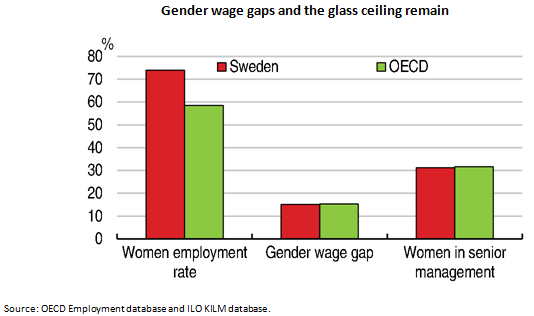
As shown in the Economic Survey, Sweden ranks among the OECD’s frontrunners in terms of gender equality. Women have a high employment rate, outperform men in education and are well represented in government and parliament. These achievements were made possible by policies which for decades have been promoting equality, notably through childcare and parental leave arrangements, individual taxation and mainstreaming gender issues.

Nevertheless, without further policy measures, achieving parity is still a distant prospect in several areas. Wage differences between genders persist, even though a large part of the gap results from differences in age, education, occupation, sector of employment and hours worked. Women are under-represented on private company boards, in senior management positions, in many well-paid and influential professions and among entrepreneurs.

blog-gender-wage-gaps

Hence, there is scope for further progress on gender equality. Paid parental leave has facilitated the rise in women’s employment rate, which is now close to that of men. However, 75% of the leave is still taken by women, which has a detrimental impact on their careers. Last year’s extension of the share of the parental leave reserved for each parent to three months is a move in the right direction, as it sends a signal which will contribute to shift social norms. Nevertheless, it would be desirable to move further in that direction to reduce the stigma associated with long leaves, even though there is a trade-off with the benefits of free choice.

The women’s share of board members of listed companies is still below one third. The recent government proposal to impose quotas, as Norway did more than a decade ago, has not received the necessary support from other parties. Notwithstanding, firms should continue to increase their share of female board members, and perhaps even more importantly, to increase the representation of women in senior management, which research shows to generally enhance economic performance. Gender inequalities can also be reduced through the fight against stereotypes in education and further promotion of women’s entrepreneurship.

Last but not least, special attention should also be paid to the integration of foreign-born women, whose employment rate is much lower than for their male counterparts. Helping foreign-born women to strengthen their contribution to the economy and society has to be a key ingredient of a more inclusive Sweden.

References:

OECD (2012), Closing the Gender Gap: Act Now, OECD Publishing. http://dx.doi.org/10.1787/9789264179370-en

OECD (2015), The ABC of Gender Equality in Education: Aptitude, Behaviour, Confidence, PISA, OECD Publishing. http://dx.doi.org/10.1787/9789264229945-en

OECD (2016), Working Together: Skills and Labour Market Integration of Immigrants and their Children in Sweden, OECD Publishing. http://dx.doi.org/10.1787/9789264257382-en

OECD (2017), OECD Economic Surveys: Sweden 2017, OECD Publishing, Paris.


The Swedish economic boom: can it last?

By Christophe Andre, Swedish Desk, Country Studies Branch, OECD Economics Department

The Swedish economy has been growing at over 3% over the past two years. Output is now more than 25% above its 2005 level, which dwarfs the achievements of the major advanced economies, including Germany and the United States, and its Nordic neighbours alike (see figure). As shown in the Economic Survey, Sweden’s out-performance is not just about GDP. The employment rate is the highest in the European Union, productivity is picking up, income inequality remains low and well-being indicators compare favourably.

blog-3-sweden

This begs the question of how a small open economy depending heavily on foreign trade is able to prosper in today’s sluggish global environment. Even though economic growth is always the result of a complex alchemy, we can point to two sets of explanations. First, the structural reforms which followed the crisis of the early 1990s have allowed a competitive and diversified business sector to flourish, while preserving the social safety net required to foster inclusive growth. Second, macroeconomic policies have been prudent and counter-cyclical. Prudent fiscal policy in the run-up to the global financial crisis created space allowing temporary deficits to dampen the impact of the subsequent recession, without putting the long-term sustainability of public finances at risk. Excessive optimism may have led to untimely monetary policy tightening in 2010-11, resulting in an extended period of low inflation. Nevertheless, the Riksbank reacted by reverting to an expansionary stance, bolstering the economy and pushing back inflation towards the 2% target.

How long will the current expansion last? Many clouds on the horizon, including geo-political tensions, financial instability and rising protectionism, hold the potential to harm Sweden, but on these the national authorities have little influence. The main domestic challenges will be to cool the housing market and to successfully integrate immigrants into the labour market and society. Macro-prudential and tax measures can dampen the rise in household debt. However, the structural causes of housing shortages need to be addressed to stabilise the housing market and provide adequate housing for all in locations where they see opportunities. Immigrants can make a significant long-term contribution to the economy provided integration and skills are enhanced. In sum, sticking to prudent macroeconomic policies, tackling housing market imbalances and investing in immigrants would pave the way for more years of inclusive growth in Sweden.

References:

OECD (2017), OECD Economic Surveys: Sweden 2017, OECD Publishing, Paris.
DOI: http://dx.doi.org/10.1787/eco_surveys-swe-2015-en.


Conquering utopia anew – Income inequality in Sweden

by Jon Pareliussen, Swedish Desk, Country Studies Branch, OECD Economics Department

“Equality is a utopia (…) that must be constantly redefined and constantly conquered anew.”

-Olof Palme, 30 July 1965.

Equality, a long-standing hallmark of Swedish society, carries multiple benefits in terms of economic performance, trust, opportunity and well-being. Income inequality is relatively low in Sweden compared to the OECD average, but a rapid rise from the 1990s calls for new efforts to redefine and re-conquer equality once again. Chapter one in the new Economic Survey is dedicated to understanding and addressing the rise of inequality in Sweden (OECD, 2017).

Top incomes grew strongly from the 1990s, mainly as a result of increasing capital gains and dividends, but the collection of wealth statistics was discontinued from 2007, which makes analysing the underlying causes challenging. In the bottom end of the income distribution, working-age benefits were cut or frozen following the economic crisis of the early 1990s. Decades of slow uprating led to a gradual decline of benefits relative to earnings. Analysing the distributional consequences of different uprating scenarios annually would highlight the consequences of inaction, but leave actual increases at the heart of political debate and decision-making, where it firmly belongs.

blog-fig-1-stagnating-sweden

Significant demographic and structural changes, with ageing, more single and single parent households, higher educational attainment, a shift away from manufacturing, and higher, mostly non-labour, immigration, are behind more than 40% of the increase in the Gini coefficient from 1987 to 2013 (Robling and Pareliussen, 2017). These trends increase the importance of redistribution and labour market policies as countermeasures.

One such trend is the increasing number of humanitarian and family reunion migrants, who have lower incomes than natives and less adequate housing. Furthermore, residential segregation leads to school segregation. With low skills compared to natives, partly as a result of lower education attainment, partly due to difficulties with language and culture, many struggle finding employment (OECD, 2015; Bussi and Pareliussen, 2015).  Relatively well-developed integration policies can be further harnessed by learning from successful experiences at the local level, continuing to individually adapt upskilling activities, shortening the time it takes to get residence and work permits, simplifying and consolidating wage subsidy schemes.

Finally, housing market inefficiencies hit the least well-off. The difference in housing conditions between the rich and the poor is high in Sweden. Tightening the generous tax treatment of owner-occupied housing would increase affordability. Easing strict rental regulations while maintaining tenant protection against abuse would increase mobility for those who cannot afford to buy, incentivise rental housing supply and lead to better utilisation of the housing stock. Some prioritisation to municipal housing with well-designed allocation rules could help low-income households and limit residential segregation.

blog-fig-2-rentals-in-sweden

References:

Bussi, M. and J. Pareliussen (2015), “Skills and labour market performance in Sweden”, OECD Economics Department Working Papers, No. 1233, OECD Publishing, Paris. http://dx.doi.org/10.1787/ 5js0cqvnzx9v-en.

OECD (2015), OECD Economic Surveys: Sweden 2015, OECD Publishing, Paris.
DOI: http://dx.doi.org/10.1787/eco_surveys-swe-2015-en.

OECD (2017), OECD Economic Surveys: Sweden 2017, OECD Publishing, Paris.
DOI: http://dx.doi.org/10.1787/eco_surveys-swe-2015-en.

Robling, P. and J. Pareliussen (2017), “Structural inequality – The case of Sweden”, OECD Economics Department Working Papers, forthcoming, OECD Publishing.