Making housing more affordable in Portugal

Building a hug housing complex in Portugal

Portugal’s housing has become increasingly unaffordable. This blog explores the causes and outlines coordinated reforms to boost supply, mobilise housing, and expand support.

By Timo Leidecker, Antoine Goujard and Aida Caldera-Sanchez, OECD Economics Department


Being a young adult or family in Portugal looking for a home is difficult. For many it has become seemingly impossible to find an affordable home to buy or rent: 44% of respondents in a 2023 survey considered leaving Portugal due to difficulties to find affordable housing (Azevedo and Santos, 2023). After house prices have doubled over the last decade, well outpacing incomes, high housing costs eat into people’s living standards, prevent young people from starting a life on their own, or from going after promising jobs and career prospects if they live far away from where jobs are concentrated (Fig. 1).

Portugal’s housing pressures did not emerge overnight and cannot be blamed solely on the spread of short-term rentals or golden visa programmes. They result from several, long-standing issues: a collapse in construction during the economic crisis, high construction costs, a high share of Portugal’s large housing stock lying idle or only being used ineffectively, and inadequate housing support – all amplified in recent years by rising domestic as well as foreign demand.

What can be done? Successive governments have taken welcome steps aimed at expanding housing supply and support, including through tax exemptions for young first-time buyers and investments in social housing. Yet, as the 2026 OECD Economic Survey of Portugal argues, more decisive action is needed to deliver an effective and lasting solution. The OECD Survey identifies additional reform priorities, including to cut red tape in construction, strengthen fiscal incentives to mobilise existing housing, and provide more well-targeted housing support.

Boosting new construction and making better use of existing housing

New housing supply is held back by high construction costs, including from complex administrative procedures. Digitalising procedures and harmonising requirements for building permits across municipalities would speed up procedures and reduce uncertainty – particularly for smaller firms. High land prices further limit affordability. While recent reforms simplified access to land mostly for social housing, a broader review of spatial planning is needed to remove barriers to sustainable development more generally.

At the same time, fiscal incentives to use existing housing more effectively remain weak. Recurrent property taxes are low, including for those who rarely if ever use or rent their home. Transactions taxes are relatively high for households wishing to buy or downsize (although these were mitigated for young people through transaction tax exemptions). Outdated property tax values are a key contributing factor for the low effective recurrent taxation of housing wealth (Fig. 2). These features help explain the high share of vacant or seasonal homes across the country – even in high-demand areas – and mean that long-standing homeowners have often benefited from largely untaxed capital gains, while younger generations struggle to enter the market.

Gradually shifting from transaction towards recurrent taxes of immovable property, and raising taxation on underutilised housing where demand is high, would help bring more homes onto the market. Regularly updating taxable property values to reflect market prices would strengthen these incentives and improve equity.

Figure 2. Updating tax property values would strengthen fiscal incentives to use housing efficiently and improve equity

Note: Panel A: The OECD average is computed based on preliminary data. Data for Greece are missing. A selection of OECD countries is shown.
Source: OECD Revenue Statistics (database); Eurostat..

Scaling up social housing and housing allowances

Even with more flexible housing markets, many households will remain unable to afford adequate housing at market prices. Portugal has one of the smallest social housing stocks of the OECD (Fig. 3), and waiting lists for social housing are long – exceeding three years for example in Porto. Investment is increasing but further expansion will be needed. Given municipalities central role, this will hinge on providing targets adapted to local needs and ensuring adequate funding.

As long as social housing remains scarce, housing allowances in the private rental market will play a crucial role. Current spending – at around 0.1% of GDP in 2022 – is limited and aimed reaches more households with high incomes than low-income households. Better targeting and ensuring adequate benefit levels are essential to ensure access to decent housing while containing fiscal costs.

A coordinated reform package is essential

Portugal’s housing affordability challenge is solvable—but only through a comprehensive reform package. Because the underlying causes are deeply interconnected, isolated measures risk being ineffective or counterproductive. Expanding housing support without boosting supply can push prices even higher; rebalancing rental regulations without adequate allowances can increase hardship. Reducing supply constraints would, in turn, lower construction costs, including for social housing, while making private rental investment more attractive.

Implemented together, the reforms proposed in the OECD Survey—to expand supply, mobilise existing housing, and strengthen housing support—can help restore better functioning housing markets. As a package, they would help ensure that everyone can find a suitable home they can afford—an outcome that is key not only to Portugal’s economic prosperity, but to its social and generational fabric.

For more information, visit the Portugal Economic Snapshot page.


References:

OECD (2026), OECD Economic Surveys: Portugal 2026, OECD Publishing, Paris, https://doi.org/10.1787/abc5c435-en.

Azevedo, A. and Santos, J. (2023), Housing Barometer, Francisco Manuel dos Santos Foundation https://ffms.pt/sites/default/files/2023-11/BarometroHabitacao-v7.pdf


Strengthening Portugal’s health system

Cover Image Eonomic Survey of Portugal

By Antoine Goujard and Nikki Kergozou, OECD Economics Department

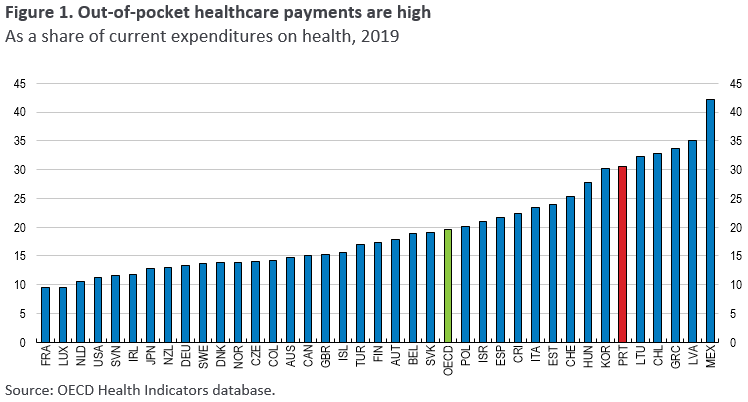
Portugal’s health outcomes have improved substantially over recent decades. In the past twenty years, life expectancy has increased by around 4 years and is now above the OECD average. Overall, the healthcare services provided by Portugal’s universal National Health Service (NHS) are of good quality and public spending remains contained. However, the NHS is struggling to provide effective access to healthcare services for everyone. Challenges related to long waiting lists, high out-of-pocket expenditures, staff shortages and heavy pressures on staff (Figure 1) have been building up for years and were further compounded by the COVID-19 pandemic.

These pressures, as highlighted in the 2023 OECD Economic Survey of Portugal, partly stem from a health system that remains strongly centred around hospital care and has suffered from underinvestment in the years following the global financial crisis.

Rapid population ageing is another major upcoming challenge. The median age is already one of the highest amongst OECD member countries and in two decades, around one third of the population will be over 65. The European Commission’s Ageing Report suggests that public spending on health and long-term care could rise by 1.6 percentage points of GDP by 2070 (Figure 2; European Commision, 2021).

Portugal has initiated a wide-ranging reform agenda through the Recovery and Resilience Plan (RRP) and the 2022 reform of the National Health Service, aiming to better integrate primary, community and hospital care. The initial RRP includes three reforms and nine investment projects in the NHS, valued at EUR 1.4 billion or 0.6% of 2022 GDP, to be completed by 2026. In addition, in late 2022, the government created an Executive Directorate for the NHS, aiming to strengthen management and coordination across different elements of the NHS. The authorities also reviewed the contracting arrangements of primary care providers and plan to roll out more local health units, which tend to improve the collaboration between hospitals and primary healthcare units.

Strengthening primary care and moving to more integrated care should remain a priority, as many NHS users are currently not registered with a general practitioner (Figure 3). When patients cannot access primary care services easily, it becomes harder to follow up on their health conditions. Improving access will require better working conditions for healthcare professionals, including through performance-based financial incentives and by addressing high levels of overtime, the lack of career progression and inflexible work schedules. The development of some integrated care services and the planned roll-out of local health units are welcome steps to improve coordination within the system. These efforts could be supported by defining clearer responsibilities and financing mechanisms for the provision of integrated care services, as well as developing payments linked to quality and outcomes.

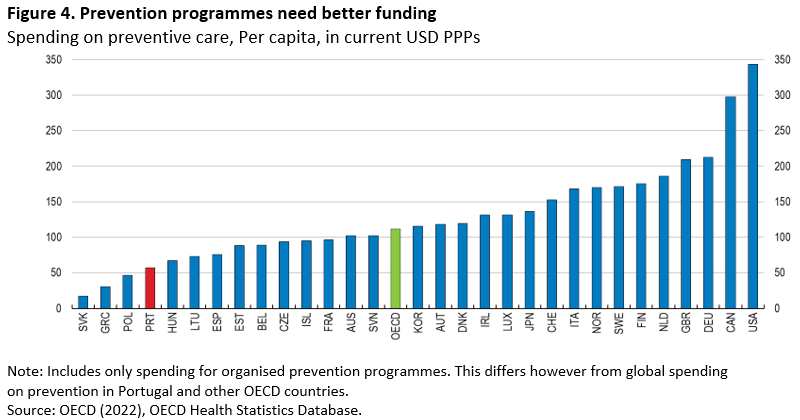
In 2019, one in three deaths in Portugal could be attributed to people’s behaviour, like unhealthy eating, lack of exercise, smoking or excessive alcohol consumption (OECD/EOHSP, 2021). Two out of every three Portuguese adults were overweight or obese in 2019. Prevention programmes are one way to get people to adopt healthier habits, but they could benefit from more stable funding and more regular reviews of their effectiveness (Figure 4). Doctors and nurses can also play a role, but they would need more financial and clinical resources to help their patients adopt healthier lifestyles. In addition, higher prices for alcoholic beverages, for example through minimum pricing or higher excise taxes on alcohol, could help reduce consumption. Finally, more could be done to reduce high rates of accidents at work, particularly among workers in small and medium-sized enterprises, for example by improving access to high-quality occupational health and safety services.

Helping the public NHS to confront these challenges will hinge on a better allocation, monitoring and review of health expenditures, and that will inevitably require changes in its budgeting processes. The initial NHS budgets have been repeatedly set unrealistically low, and as budgets are being overrun in any case, they don’t help much to monitor how cost effective the system has been. At the same time, there too few truly informative performance indicators to assess how much health expenditures actually improve patients’ health outcomes. Better indicators would definitely help to strengthen the accountability of healthcare providers and understand where improvements can be made. Moreover, setting budgets on a yearly basis makes long-term planning more difficult. Producing multi-annual budgets for the NHS would be more effective to balance medium-term health priorities with available fiscal space. In-built corrective mechanisms could be designed to give these budgets more teeth to avoid cost overruns.

References

OECD (2023), OECD Economic Surveys: Portugal 2023, OECD Publishing, Paris, https://doi.org/10.1787/2b8ee40a-en

OECD/EOHSP (2021), Portugal: Country Health Profile 2021, State of Health in the EU, OECD Publishing, Paris, https://doi.org/10.1787/8f3b0171-en

EC (2021), The 2021 Ageing Report: Economic and Budgetary Projections for the EU Member States (2019-2070), European Commision https://economy-finance.ec.europa.eu/publications/2021-ageing-report-economic-and-budgetary-projections-eu-member-states-2019-2070_en


Portugal: Policy action for a strong and sustainable recovery

By Caroline Klein, OECD Economics Department 

Like most countries around the world, the COVID-19 pandemic hit Portugal severely, taking a heavy toll on the economy. GDP declined by 8.4% in 2020 compared to 4.7% on average in the OECD. With the lifting of restrictions, activity has rebounded strongly and the latest OECD forecasts project GDP will reach its pre-crisis level in 2022 (Figure 1). Policy support and the impressive success of the vaccination campaign, with Portugal having the highest vaccination rate in the OECD end-2021, has been decisive for the recovery.  

Figure 1. The pandemic severely hit the economy

Gross Domestic Product, Index 2015Q1 = 100

Note: Peers refer to the weighted average of Greece, Italy and Spain.
Source: OECD Economic Outlook: Statistics and Projections (database) and updates.

At the same time, Portugal is still facing important challenges. The economic outlook remains fraught with uncertainties, such as the emergence of new virus variants, or the rise in inflation reflecting higher energy prices and supply bottlenecks. Productivity was only three-quarters of the OECD average in 2019, and productivity gains were 20% below the OECD average over the past ten years, limiting improvement in living standards. The crisis has accelerated the already rapid pace of the digital and green transitions. Portugal is no doubt ready to embrace these transformations, but more is needed to do so successfully. 

The 2021 OECD Economic Survey of Portugal presents key actions on how to sustain the recovery and lift Portugal’ economic potential in these uncertain times. 

Firstly, agile fiscal and financial policies are necessary to address persistent macroeconomic vulnerabilities. Portugal entered this crisis in a much better shape than before the Global Financial Crisis, but macroeconomic imbalances remained large. Portugal’s fiscal space should be restored by reducing the public debt ratio, which is among the highest in the OECD. A credible fiscal consolidation strategy – including the containment of age-related costs – should be implemented once the recovery is firmly established. Rapid and effective absorption of EU funds will help. Portugal will receive a total of EUR 61 billion over 2021-2027, supporting public investment from current low level (Figure 2). 

Figure 2. Public investment has been low

Public investment, Per cent of GDP, 2020 or latest available

Source: OECD (2021), OECD Economic Outlook: Statistics and Projections (database).

Secondly, policies should ensure that the recovery is more sustainable and benefit all. Youth, women and people with low skills were hardest hit by the pandemic. Almost one fourth of the active 15-24 year olds were looking for a job in September, twice the OECD average. Public employment services need to be reinforced to better adapt to the changing needs of the labour market, provide individualised support and expand training programmes. Portugal is at the forefront of many environmental policies, as reflected by its high share or of renewable energy, for example. However, more efforts are needed to reduce water abstraction and become a carbon-neutral economy by 2050. Policy action must combine investments with incentives to reduce environmental damages and compensation measures for low-income households. 

Thirdly, Portugal could get more from the digital transition. Portugal can build on its impressive development of digital government and its start-up ecosystem to help spur the digital transition more widely, as the least educated segments of the population and smaller firms lag behind in the adoption of digital technologies. Equipping the population and firms with adequate skills is a prerequisite for digitalisation. The government plans to further increase resources for schools and teachers, including regular in-service training on ICT use, are welcome and should be accelerated. Participation in adult education is low (Figure 3) and needs to expand. Introducing a personal training account for adults, with more generous vouchers for low-skilled workers should be considered. Finally, raising competition in the telecommunication sector by facilitating consumer mobility can increase the quality and the affordability of broadband services throughout the country. 

Figure 3. Few adults participate in training

Participation in education and training, Last 4 weeks, % of 25-64 year-olds, 2019

Source: OECD (2020) Education at a Glance Database; Eurostat (2020).

Further reading 

OECD (2021), OECD Economic Outlook, Volume 2021 Issue 2: Preliminary version, OECD Publishing, Paris, https://doi.org/10.1787/66c5ac2c-en. 

OECD (2021) OECD Economic Surveys: Portugal 2021, OECD Publishing, Paris, https://doi.org/10.1787/13b842d6-en.  


Will the tourist flocks keep landing in Portugal?

by Ben Westmore, Head of Portugal Desk, OECD Economics Department

Portugal’s export performance has been impressive, sustaining the economy through years of weak domestic demand in the wake of the banking and sovereign debt crisis. As discussed in the 2019 OECD Economic Survey of Portugal, part of the improvement in exports has been due to a sustained expansion of the tourism industry. Over one-fifth of the growth in exports between 2009 and 2017 was directly attributable to tourism, with other closely related sectors such as transportation also having a strong positive effect (Figure).

https://doi.org/10.1787/888933911877

Some signs of diversification in Portugal’s tourism sector bode well for its durability over the medium-term. Since 2009, the age profile of tourists in Portugal has gradually broadened, with the proportion of tourists aged above 64 almost doubling. Tourists are increasingly visiting new parts of Portugal outside the traditional tourist hubs and the concentration of the country of origin of visitors has slightly declined. However, since 2009, there has been a notable increase in visitors from the United Kingdom, with British visitors having now overtaken Spaniards as the main tourists in the country (Figure).

https://doi.org/10.1787/888933911896

One factor cited for the pick-up in
tourist flows to Portugal has been heightened perceptions of security risk in
competitor markets. Focusing on German tourists in the early 2000s, Ahlfeldt, Franke and Maennig (2015) highlighted
the potential for terrorist activities in a destination country to prompt
tourists to substitute towards other similar locations they perceive to be more
safe.

Data on the destination of outbound tourists from the United Kingdom does signal that recent tourist flows have been sensitive to terrorist events (Figure). The decline in United Kingdom tourists between 2010 and 2016 to countries that faced an increased impact of terrorism such as France, Turkey, Egypt and Tunisia coincided with a rise in travellers to Portugal and some other southern European countries such as Spain, Italy and Greece.

http://dx.doi.org/10.1787/888933911915

OECD (2019), OECD Economic Surveys: Portugal 2019, OECD Publishing, Paris

Given these patterns, the capacity
for a decline or stabilisation in perceived security risk elsewhere could lead
some of the tourist flows redirected to Portugal to reverse. One illustrative
example is the recent case of Turkey. There was a notable drop in tourists from
the United Kingdom to Turkey in 2012 and 2013, coinciding with a rise in terrorist
activities. However, an appeasement in such activity over the following few
years was met with a stabilisation of tourist flows in 2014 before visitors increased
by more than 10% in 2015.

Portugal’s recent tourism boom has
been exceptional. However, the uncertainty of the impact of Brexit on future
flows of UK travellers combined with the potential for security concerns in
competitor markets to fade, suggests the authorities should plan for the
possibility that some of the recent tourism boom is unwound.

As part of the government’s Tourism Strategy 2027, diversification
has been identified as a major priority, which is welcome. However, the
government should also pursue policy settings that promote the growth of other
export sectors in the economy outside of tourism. For example, existing strict
regulations in professional services harm the growth of exporters that use such
services as intermediary inputs. As do those regulations and practices that
hold back competition in the ports. In addition, innovation potential across
export sectors could be better promoted through increasing the capacity of
intermediary organisations that focus on boosting the innovation collaboration
of small and medium enterprises with other firms and research institutions.

Selected References

Ahlfeldt, G.,
B. Franke and W. Maennig (2015), “Terrorism and International
Tourism: The Case of Germany”, Bd, pp. 235-1.

Araújo, L.
(2017), “Portuguese tourism strategy 2027: leading the tourism of the future”, Worldwide
Hospitality and Tourism Themes
, Vol. 9/6, http://dx.doi.org/10.1108/WHATT-09-2017-0052.

OECD (2018), OECD Tourism Trends and Policies 2018, OECD Publishing, Paris.

OECD (2019), OECD Economic Surveys: Portugal 2019, OECD Publishing, Paris


Raising skills holds the key to higher living standards and well-being in Portugal

by Sonia Araujo, Country Studies Branch, OECD Economics Department

For each hour worked Portugal produces about half of the output produced in the United States. A historic legacy of very low education attainment is partly to blame for Portugal’s lower productivity. However, education attainment remains low even for those who have left the education system not so long ago. At 65%, the share of young adults (aged 25-34 years old) who have completed upper secondary education is still the third lowest in the OECD (Figure 1).

Portugal skills 1

Low levels of skills are not only an obstacle to higher material living standards, but also affect the well-being of Portugal’s citizens and stand in the way of reducing income inequality, one of  Europe’s highest, as education is often a pre-requisite for higher job quality and learning opportunities.

What are the priorities to enhance skills in Portugal?

As discussed in the 2017 OECD Survey of Portugal, the top priority is to raise the skills of the adult population that has left the education system but will stay in the labour market for long. The challenge for Portugal is to find strategies to engage the low skilled, which are much less likely to receive training than the highly qualified young adults. Although this is not a problem unique to Portugal, other countries have managed to attract more low-skilled workers into training by raising awareness of existing training opportunities and by offering opportunities of recognition of skills acquired beyond formal education. Another area for further improvement is to define clear labour market performance indicators against which to check the success of training programs. Monitoring performance and policy evaluation is underdeveloped in Portugal and improvement in these areas would allow focusing resources on those programmes that really make a difference for labour market outcomes of low skilled adults.

Second, the education system needs to do more to reduce Portugal’s early school leaving rate, one of the highest in Europe (Figure 2), and a major reason behind the low qualifications of young adults. One of the drivers of early school leaving is grade repetition, an ingrained practice in the Portuguese education system to resolve student learning difficulties. By age 15, around one third of Portuguese students have repeated a year at least once. International experience shows that grade repetition is an ineffective way of supporting underperforming students. In Portugal, grade repetition is a stronger predictor of additional repetitions along the education system. It also exacerbates inequalities, as half of the students coming from disadvantaged backgrounds are likely to repeat a grade, in stark contrast with the OECD average of 20%. Finding alternatives to grade repetition and strengthening learning opportunities of students from disadvantaged backgrounds is a priority to improve the overall level of skills. The economic survey of Portugal recommends re-focusing resources on primary and pre-primary education, detecting and providing early individualised support of students at risk, strengthening teacher training and exposure to best working practices, creating incentives to attract the most experienced teachers and principals to disadvantaged schools and taking account of students’ profiles and specific needs when allocating resources across schools.

Portugal student 2

Third, the vocational education and training (VET) system needs a comprehensive evaluation. The VET system has developed quite fast in the past decade, putting an end to Portugal’s strong bias towards academically-orientated programmes. However, two systems co-exist in parallel, and the courses run by the Ministry of Labour have a stronger dual nature than the VET courses organised by the Ministry of Education. The government should unify the different VET systems by establishing a single dual VET system with strong work-based learning in companies. VET is also provided by several private training entities, risking overlaps and inefficiencies in the use of resources. The capacity to monitor training quality and labour market outcomes of VET students also needs to be strengthened. The authorities should regularly compile performance indicators and use them to streamline the VET offer and improve training quality.

References

OECD (2017), OECD Economic Surveys: Portugal 2017, OECD Publishing, Paris. http://dx.doi.org/10.1787/eco_surveys-prt-2017-en

OECD (2015), OECD Skills Strategy Diagnostic Report: Portugal 2015, OECD Publishing, Paris. http://www.oecd.org/skills/nationalskillsstrategies/Diagnostic-report-Portugal.pdf


Portugal needs stronger investment to maintain growth and improve living standards

By Jens Arnold, Portugal Desk, OECD Economics Department

Portugal’s economy has successfully recovered from the strong recession that lasted until 2014. Nonetheless, the economy’s still low investment, which has declined far more than in other Euro area countries, remains a source of concern (Figure 1). Since 2012, investment has hardly exceeded the depreciation of the existing capital stock, meaning that growth of the productive capital stock has almost stalled. This is one reason behind the low potential growth of the Portuguese economy, which the OECD currently puts below 0.5%. Without stronger investment, growth performance is bound to decline to such low levels over the next years.

blog-portugal-1-total-invest

Raising investment also matters for wage and productivity developments. Low investment limits the growth of labour productivity, which represents the wage increases that Portuguese workers can pocket without deteriorating the competitiveness of their companies.

More investment is also needed to support the substantial structural change that the Portuguese economy is undergoing. After many years of credit-fuelled expansion of the non-tradable sector, there have been encouraging signs of a reversal towards tradable sectors in recent years, as illustrated by the significant increase in exports. But building on this progress will not be possible without stronger investment in tradable sectors.

Start-ups and young firms are playing a crucial role in this restructuring process. A remarkable 16% of goods exports originated from young exporters in 2014 (Bank of Portugal, 2016). Young firms are also important for productivity: firm level analysis from a census of Portuguese firms suggests that new market entrants have stronger productivity growth than more mature firms, both with respect to labour productivity and multi-factor productivity (Figure 2). They also create three times more jobs than other firms, accounting for almost half the jobs created (Criscuolo et al, 2014).

blog-portugal-2-young-firms

But for young firms to prosper, it is important that they get access to finance for their investment needs and that the overall framework conditions are conducive to their entry and growth. Indeed, there is some evidence that the rise of new firms among exporters is losing momentum (Bank of Portugal, 2016). This underlines the need for further improvements in policies.

For example, cleaning up large amounts of non-performing legacy loans on the balance sheets of Portuguese banks is crucial for freeing up funds that stronger firms require to finance investment. In a recent survey by the European Central Bank on SME financing, Portuguese respondents had the second highest incidence of mentioning access to finance as an obstacle, higher than the EU average. Dealing with non-performing loans will require much more decisive policy action than in the past, both with respect to bank supervision and the development of secondary markets for distressed debt.

Given that a large share of Portugal’s distressed assets are loans to corporate borrowers, well-working insolvency frameworks are crucial to restructure companies that are still viable and to allow a speedy recovery of non-viable companies’ assets before they lose value. Portugal has taken important steps to overhaul its corporate insolvency and restructuring framework. However, differences between the rules and their actual implementation persist.

Access to finance is not the only obstacle to higher investment. Even where firms could finance an investment project, they may prefer to hold off because the expected returns are not sufficiently attractive. Weak demand has been a drag on investment in recent years. That’s why it is important to pursue prudent macro-economic policies so as not to jeopardise the recovery of the economy. But further supply-side measures are also crucial. Structural reforms that reduce the cost of doing business in Portugal could make more potential investment projects worthwhile.

Reforms in areas such as regulation, the judicial system, services sectors including utilities and the labour market have led to impressive improvements in historical comparison. However, as discussed in the recently released OECD Economic Survey of Portugal, the reform momentum has slowed down visibly since the end of the external assistance programme, and reform implementation has fallen short of initial ambitions in several key areas. In some areas, much has changed, for example in labour markets, although more could be done. In other areas, such as product market reforms and the regulation of non-tradable sectors, there is scope for further progress, particularly with respect to implementation. Some of Portugal’s rules and institutional features can act as implicit barriers to firm entry and post-entry growth, and should be subjected to a critical review in light of the loss of momentum in the rise of new firms.

References

Bank of Portugal (2016), “Portuguese international traders: some facts about age, prices and markets”,  Economic Bulletin, October 2016, Lisbon.

Criscuolo, C, P N Gal, and C Menon (2014), “The dynamics of employment growth: new evidence from 18 countries”, OECD Science, Technology and Industry Policy Papers, OECD Publishing, Paris.

OECD (2017), OECD Economic Surveys: Portugal 2017, OECD Publishing, Paris. http://dx.doi.org/10.1787/eco_surveys-prt-2017-en


Fiscal policy in the euro area: in the current juncture, don’t apply sanctions


By Alvaro Pina, Head of European Union and Euro Area Desk, Country Studies Branch, OECD Economics Department

Tomorrow the European Commission will assess again the fiscal situation of Portugal and Spain, and decide whether to recommend to the Council that the Excessive Deficit Procedure be stepped up for those countries, exposing them to various sanctions. This momentous decision can have major consequences for the countries concerned, but also wider implications. It sets a landmark in the application of the Stability and Growth Pact rules, and therefore begs the question of how best those rules should be applied, especially in the current juncture of weak growth in Europe. In turn, this question hinges on what fiscal policies should do to support the recovery more. The recent OECD Survey of the Euro Area provides analysis on what should be done.

Growth has picked up gradually over the past two years, but demand is still weak and unemployment remains very high in several countries, including Portugal and Spain. In the euro area as a whole, support to the recovery has essentially come from monetary policy, with little or no fiscal help. After three years (2011-13) of strong and widespread fiscal consolidation, fiscal policy has turned broadly neutral (Figure 1), but it needs to go further in supporting demand as monetary policy alone cannot do everything. Budget support should mainly come from countries with fiscal space. Those without, like Portugal and Spain, should nonetheless avoid a return to austerity.

Desney1 euro are fisc stance

To maximise growth impacts and make them lasting, budget support should be targeted. Post-crisis consolidation often led to increases in labour taxes and large reductions in public investment (Figure 2), making public finances less growth-friendly. Policy levers to improve the composition and efficiency of public spending and taxes remain largely at national level, and progress on this front across the euro area has been insufficient. But European sanctions could make matters worse. For instance, they would likely imply a suspension (even if only temporary) of structural funds to the countries concerned, putting further downward pressure on public investment.

Desney2 change in public investmen

In the current juncture, sanctions would be an economic mistake. In the absence of temporary fiscal expansion by countries with enough space, sanctions will somewhat tilt the euro area fiscal stance towards austerity, the opposite of what is needed. Further, they risk inducing further cuts to investment, thus hampering potential growth. Not to mention rekindling political tensions and animosities, again the opposite of what is needed. In a word: don’t.

See also:

OECD (2016), OECD Economic Surveys: Euro Area 2016, OECD Publishing, Paris.