Powering competitiveness: Europe’s path to energy security and growth

by Ruben Maximiano and Wouter Meester, OECD Economics Department.

Europe’s competitiveness is increasingly linked to the availability of secure, affordable and reliable electricity. As electrification accelerates across industry, transport, heating and digital services, including AI data centres, power has become a strategic input to growth, investment and innovation, a point also underscored by the 2024 Draghi report. However, as outlined in a recent OECD report Diagnostic Tool for Reducing Regulatory Barriers to Solar, Wind and Pumped Hydro Storage in the EU, five key types of regulatory barriers slow the deployment of these technologies in Europe. This results in significant opportunity costs, especially in the European Union, where high import dependence exposes firms and households to price volatility, supply shock and higher prices.

The 2021–22 energy crisis laid bare this vulnerability: the EU’s energy import bill surged from EUR 137 billion in 2020 to nearly EUR 549 billion in 2022. Even after prices eased, the 2023 import bill remained well above historical levels.

Why the electricity system is changing and why rules matter

At the same time, Europe’s power system is being reshaped by technologies with fundamentally different system characteristics, including variable renewables, storage, demand-side response and digital controls. These resources increase the need for flexibility, real-time coordination across grids and more granular planning, particularly as new electricity-intensive loads, such as data centres, concentrate demand in specific locations. This transformation exposes the limits of regulatory frameworks designed for a centralised, thermal-based system. Ensuring the EU’s energy security, including by delivering its new energy mix, depends on fit-for-purpose regulation as much as on physical infrastructure.

Competitiveness increasingly depends on affordable, “always-on” electricity

In addressing its energy security, Europe has already made important progress. Since Russia’s invasion of Ukraine, renewable energy has expanded substantially, helping to cushion price shocks (see Figure 1). Evidence suggests that EU countries with higher shares of wind and solar in their electricity mix tend to exhibit lower wholesale prices on average (Figure 2), reflecting the declining technology costs and the downward pressure renewables place on marginal pricing. Moreover, recent system-level modelling by WindEurope shows that, even once the additional cost of grids, storage and backup capacity are taken into account, a renewables-led pathway is the lowest-cost option for Europe’s power system.

Figure 2. Relationship between the average wholesale electricity prices and the share of electricity generation from wind and solar in EU Member States, 2024
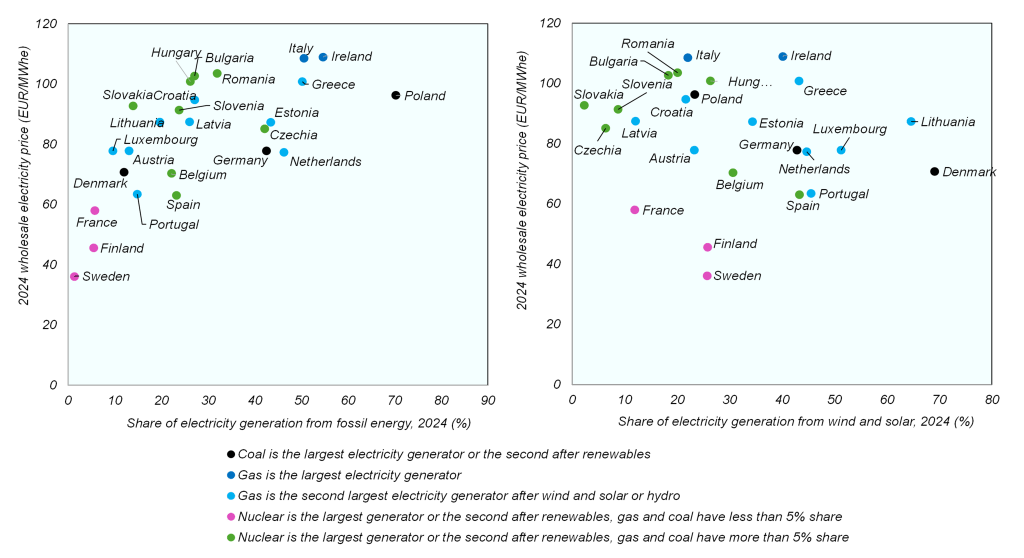
Source: OECD calculations based on Ember Yearly and Hourly Electricity Data

Yet the next wave of electrification will put (even greater) pressure on the EU’s electricity system. For example, in the EU, demand from data centres could rise from around 96 TWh in 2024 to about 236 TWh by 2035, increasing their share of total electricity use from 1.5% to nearly 6%.

Energy system upgrades require regulatory upgrades – and a tool to help deliver them

This increasing electrification, with more decentralised generation, new flexibility technologies and large, concentrated loads such as data centres, requires regulatory frameworks that are aligned with these new system characteristics.

In this context, regulation increasingly functions like infrastructure itself: it must be planned ahead of need, operate reliably, and remain aligned with system needs. Outdated or fragmented rules quickly become binding constraints on investment, adding years to project timelines and raising costs. As such, modernising and simplifying regulatory frameworks have become a strategic lever of energy security and competitiveness.

Recent EU legislation, including the Renewable Energy Directive III, provides an important foundation. Implementation at national level, however, will determine whether projects proceed from pipeline to operation.

Across EU Member States, five recurring regulatory barriers consistently slow deployment and undermine system efficiency:

First, unclear or restrictive legal frameworks create uncertainty and deter market entry, particularly for newer solutions. Where rights and permitted uses have been clarified – such as enabling dual land use for both agriculture and PV solar in France and Italy – deployment has accelerated; where ambiguity persists, projects stall.

Second, insufficient remuneration for new system services limits investment, for instance in flexibility. Many frameworks still do not reward services such as inertia or fast frequency response on a standalone basis, despite their growing importance for system stability. Ireland’s recent market reforms to remunerate these ancillary services illustrate how rule changes can unlock these services.

Third, infrequent and inefficient spatial planning and permitting remain a major drag on investment. Complex, sequential procedures involving multiple authorities often result in long timelines distorting siting decisions and raising financing costs. Where procedures have been simplified, impacts have been immediate and significant: reform to grid-permitting rules in Germany have enabled the Federal Network Agency (BNetzA) to approve roughly four times more transmission-line kilometres in 2024–25 than in previous years (see figure 3).

Fourth, outdated grid-connection rules create artificial bottlenecks. First-come, first-served queues allow speculative projects to hold capacity delaying viable investments. Sweden’s readiness-based connection rules show how prioritisation can improve outcomes without new infrastructure.

Finally, grid-investment frameworks still contain structural disincentives that limit system optimisation. Regulation often favours capital-intensive network expansion while constraining anticipatory investment, flexibility procurement, and digital solutions. In some Member States, system operators cannot recover the costs for non-wire alternatives, even when these are faster and cheaper than traditional reinforcement.

These barriers can add years to project timelines and increase financing costs. They affect not only renewable developers but also energy-intensive industries, such as AI infrastructure and advanced manufacturing, that require stable, low-cost electricity to remain competitive.

To address these barriers systematically, the OECD has developed the Diagnostic Tool for Reducing Regulatory Barriers to Solar, Wind and Pumped Hydro Storage in the EU for the European Commission. The Tool helps policymakers at national and sub-national levels identify where rules are misaligned with system needs, prioritise reforms, and coordinate implementation – providing a practical roadmap for accelerating electrification while strengthening both energy security and competitiveness.

With clear rules, coordinated planning and tools such as the OECD Diagnostic Tool, the EU can move from energy dependence toward electric resilience – strengthening both economic competitiveness and energy security.

*We will be launching the Diagnostic Tool on 29th January. You may register here.

References

European Commission, 2024, Study on energy prices and costs – evaluating impacts on households and industry’s costs – 2024 edition

Draghi, M., 2024. The Future of European Competitiveness—A Competitiveness Strategy for Europe

IEA, 2025, Energy and AI, World Energy Outlook Special Report

IEA, 2023, Renewable Energy Market Update Outlook for 2023 and 2024

OECD, 2025, OECD–EU Diagnostic Tool for Reducing Regulatory Barriers to Solar, Wind and Pumped Hydro Storage

WindEurope and Hitachi, December 2025, Delivering a cost-effective energy system for Europe


Boosting EU productivity through a stronger Single Market

3 young adults running with the EU flag

By Martin Borowiecki and Federico Giovannelli, Economics Department

Strengthening productivity remains a key challenge

Productivity has grown more slowly in the EU than in the United States. Since 2000, labour productivity growth in the EU has been on average half a percentage point lower each year than in the United States (Figure 1, panel A).

Productivity developments have been particularly weak in the largest EU economies. In contrast, some Northern as well as Central and Eastern European countries recorded stronger productivity growth. Nevertheless, productivity levels in Central and Eastern Europe remain relatively low (Figure 1, panel B).

The productivity growth difference compared to the United States is mainly due to the services sector (Figure 2). In particular, productivity growth in the information and communication sector, as well as in professional services, has been weaker in the EU. These are two sectors that make strong use of digital technologies. This reflects industry structure as well as the greater ability of U.S. companies to develop and utilise digital technologies. In contrast, the EU has made significantly less use of the benefits of digital technologies (van Ark, O’Mahony and Timmer, 2008; Schivardi and Schmitz, 2019).

Overall, investment as a share of GDP is relatively high in the EU, which is due to high residential investment. In contrast, productivity-enhancing investments (excluding residential investment) – as shown in Figure 3 (panel A) – have grown less dynamically than in the United States since the early 2000s. In particular, after the financial crisis, investment rates between the EU and the United States began to diverge significantly.

The divergence in investment spending is mainly due to lower expenditures on intellectual property, particularly on research and development (R&D) as well as information technologies (Figure 3, panel B). This affects all sectors but is especially pronounced in information and communication technology. It reflects the higher R&D spending of U.S. high-tech companies as well as their larger size. In contrast, business R&D spending in the EU tends to be concentrated in medium-tech sectors such as the automotive industry. The lower level of innovation activity in the EU, along with the specialisation in medium-technology sectors, has contributed to the EU falling behind the United States, and increasingly China, in cutting-edge technologies such as artificial intelligence (Filippucci, Gal and Schief, 2024; Fuest et al., 2024).

One factor behind the weak innovation activity in Europe is weak business dynamism and the low level of investment in young innovative companies. Firm entry and exit rates have been declining in both the manufacturing and services sectors (Figure 4). Promoting the growth of successful companies and the market entry of new firms is crucial to fully unlock the potential of the private sector and to boost innovation and productivity growth.

The Single Market is key for productivity

A more integrated Single Market will be key to boost productivity. Market integration is particularly low in the services sector (Figure 5). A fragmented Single Market puts European companies at a disadvantage, as firms in larger markets can achieve economies of scale more easily and tend to be more productive and innovative.

In its latest Economic Survey of the EU and euro area, the OECD provides policy recommendations to boost productivity (OECD, 2025).

First, a more integrated Single Market with fewer regulatory barriers for businesses would strengthen productivity. Well-designed EU regulations can reduce compliance costs for companies in the Single Market compared to the inefficiencies of fragmented national rules. However, in practice, a growing EU regulatory burden is slowing down business dynamism. Subjecting EU regulatory proposals to rigorous cost-benefit analysis would help reduce the EU regulatory burden, including documentation requirements and reporting obligations for businesses. In addition, a common EU corporate law (“28th regime”) would help innovative firms scale, strengthen dynamism, and set minimum standards for registration and bankruptcy.

Another challenge is the still relatively low labour mobility within the EU. Cross-border labour mobility is hindered by limited mutual recognition of qualifications. To this end, mutual recognition of qualifications should be improved, and all unjustified and disproportionate restrictions on professional services removed.

Third, a deepening of European capital markets would also help to promote productivity growth. Capital markets in the EU remain underdeveloped. The fact that the high savings rates in the EU do not translate into productive investments is partly due to the insufficient risk appetite of the predominantly bank-based financial system. In particular, young and innovative companies suffer from the lack of alternatives to bank loans. Strengthening competition in savings and investment products could help deepen the pool of long-term capital available for investment. This could be paired with a stronger uptake of privately funded pensions to strengthen the institutional investor base.    

Fourth, while the EU’s science base is strong, a major weakness lies in the translation of science into breakthrough innovation. However, EU-level public R&D spending is limited. This makes it all the more important that EU public R&D expenditures are consistently targeted at addressing this innovation deficit. This calls for rigorous evaluations of R&D programmes based on clear key performance indicators, closing underperforming programmes, and shifting funding to well-performing programmes.

Finally, unilateral national industrial policies pose risks to the Single Market. The EU announced to make the state aid framework simpler and more flexible to support investment in strategic sectors until 2030. Such an approach to industrial policy raises risks for the Single Market as countries with more fiscal space may provide excessive support. To protect the level playing field within the Single Market, state aid rules should not be relaxed.

For more information about the latest OECD Economic Survey of the European Union and euro area, please visit the economic snapshot page.

References

Filippucci, F., P. Gal and M. Schief (2024), “Miracle or Myth? Assessing the macroeconomic productivity gains from Artificial Intelligence”, OECD Artificial Intelligence Papers, No. 29, OECD Publishing, Paris, https://doi.org/10.1787/b524a072-en.

Fuest, C. et al. (2024), EU-Innovation Policy: How to Escape the Middle Technology Trap?, Policy Report of the IEP/TSE/EconPol-CESifo European Policy Analysis Group.

OECD (2025), OECD Economic Surveys: European Union and Euro Area 2025, OECD Publishing, Paris, https://doi.org/10.1787/5ec8dcc2-en.

Schivardi, F. and T. Schmitz (2019), “The IT Revolution and Southern Europe’s Two Lost Decades”, Journal of the European Economic Association, Vol. 18/5, pp. 2441-2486.

van Ark, B., M. O’Mahony and M. Timmer (2008), “The Productivity Gap between Europe and the United States: Trends and Causes”, Journal of Economic Perspectives, Vol. 22/1, pp. 25-44.


Accelerating the EU’s green transition

By Martin Borowiecki, Economics Department

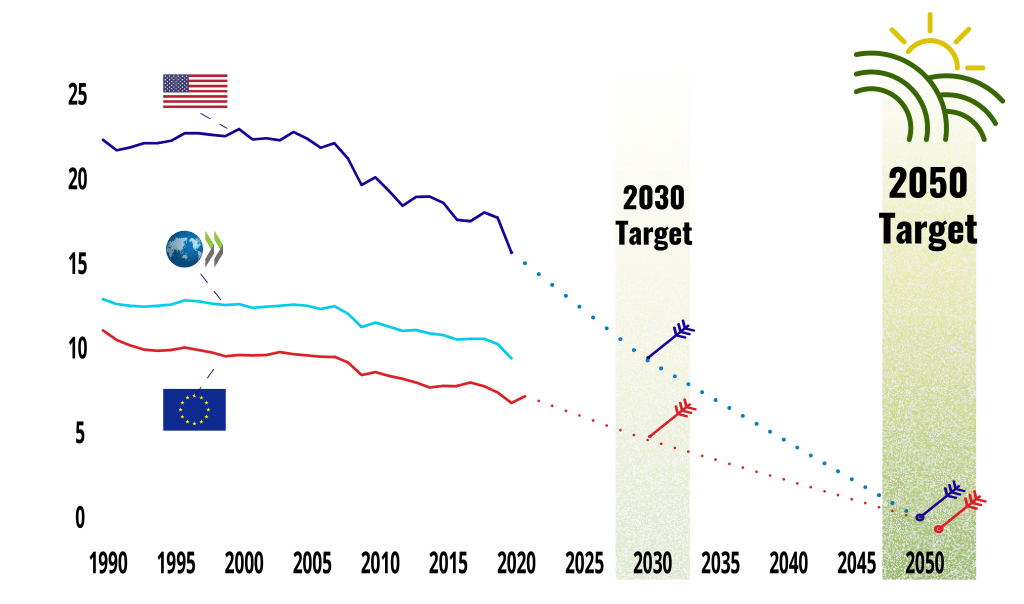
The EU’s Green Deal aims at achieving net zero emissions by 2050. Reaching this target will require a tripling of the rate of emission reductions relative to 1990 and 2020 (Figure 1). More action is needed across all sectors, but particularly in sectors not covered by emission trading, notably agriculture and transport. Reducing emissions in these sectors will rely on regulatory measures and a gradual alignment and raising of carbon prices. Also, more ambitious climate action will entail transition costs. The OECD Economic Survey of the European Union and euro area highlights four main challenges to reduce emissions more cost-effectively and equitably.

Figure 1. Reductions in greenhouse gas emissions need to accelerate

Greenhouses gases emissions

Tonnes of CO2 equivalent per capita

Note: Greenhouse gas (GHG) emissions include those from the land use/land use change and forestry sector (LULUCF). Data on the EU’s GHG emissions for 2021 are taken from the European Environment Agency (2022).

Source: Eurostat; OECD Environment database; OECD Population database; European Environment Agency; and OECD calculations.

Towards more efficient mitigation policies

First, climate change mitigation policy is currently based on a combination of regulations and carbon prices that vary across sectors (Figure 2). The EU’s Emission Trading System (ETS) sets an EU-wide carbon price, but only for energy generation and energy-intensive industry. Other sectors are not covered by the EU-wide carbon price. The uneven coverage of the ETS across sectors imposes heterogeneous abatement incentives across activities, leading to higher costs of achieving climate targets. Moreover, industry continues to receive most emission allowances free of charge. The consequence is that polluters do not necessarily pay the cost of pollution. Addressing the challenge of reducing greenhouse gas emissions requires a gradual alignment and raising of carbon prices together with adopting and implementing standards and regulations.

Figure 2. Carbon pricing differs across sectors and energy uses

Effective energy tax rates across sectors, 2021

Note: Data refers to EU member countries that are also members of the OECD (22 countries). Effective carbon rates (ECRs) have been averaged by sector and energy category. Year of coverage is 2021, taxes as of 1st April 2021. ETS coverage estimates are based on OECD, with adjustments to account for recent coverage changes. Instrument coverage: specific fuel excise taxes, explicit carbon taxes, ETS (Emission Trading System) permit price includes German National ETS besides EU-ETS. No fossil fuel subsidies or other GHG are accounted for. The ETS permit price is the price of tradable emission permits in mandatory emissions trading and cap-and-trade systems representing the opportunity cost of emitting an extra unit of CO₂ equivalent, regardless of the permit allocation method.

Source: OECD (2022), Pricing Greenhouse Gas Emissions: Turning Climate Targets into Climate Action, OECD Series on Carbon Pricing and Energy Taxation, OECD Publishing, Paris, https://doi.org/10.1787/e9778969-en.

To make polluters pay, the OECD recommends to continue expanding the ETS, including to agriculture. In addition, bringing forward the phase-out of free emission allowances would align effective costs of polluting in the ETS.

Ramp up mitigation in agriculture and transportation

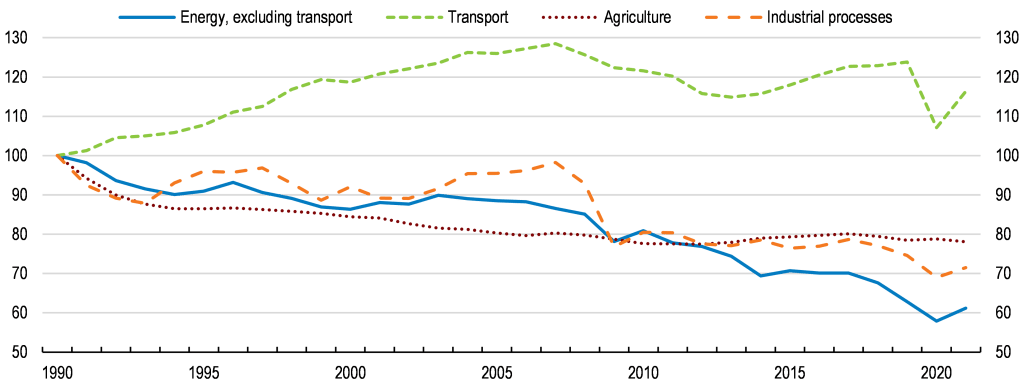
Second, agriculture and transport have contributed little to emissions reduction during the last decade (Figure 3). Reducing emissions in these sectors calls for phasing out environmentally harmful subsidies. In agriculture, direct payments to farmers keep livestock numbers high and promote the agricultural use of drained peatlands, despite their negative impact on the climate. In transportation, more stringent EU vehicle emission standards and an extension of the ETS carbon price to transportation fuels from 2027 will help reduce emissions. However, reduced tax rates and tax exemptions for environmentally harmful fossil fuels, including aviation and maritime fuels, continue to undermine decarbonisation efforts.

Figure 3. Agriculture and transport have contributed little to emissions reduction  

GHG emissions by source sector

index 1990 = 100

Note: Excluding land-use, land-use change and forestry (LULUCF).

Source: OECD Environment Statistics database.

To reduce emissions in agriculture, support for the agricultural use of drained peatlands should be removed, and direct payments for high livestock numbers gradually withdrawn. Withdrawing coupled payments may lead to higher meat prices, which may have an impact on food affordability for low-income households. Hence, withdrawing direct payments should be done gradually. To reduce emissions in transport, minimum tax rates for transportation fuels should be based on energy content and environmental performance, and the tax base broadened by phasing-out exemptions and reduced rates.

Accelerate the energy transition

Third, more integrated wholesale electricity markets are key for the energy transition and achieving energy security. For instance, countries with excess supply of wind and solar can export electricity to meet demand in other countries where supply is short. However, insufficient investment in cross-border electricity grids hampers such integration. Moreover, retail electricity prices are regulated for affordability reasons, often to below-cost levels. Low regulated prices discourage investment in much-needed clean technologies and reduce energy saving incentives.

An important element of the energy transition is affordable and secure clean energy, which requires more integrated electricity markets. To this end, the OECD recommends to increase investment in cross-border grid connections. In addition, the EU should ensure EU countries phase out regulated retail electricity prices to recover costs in the energy sector and encourage investment in clean energy. To help low-income households, government could use well-targeted affordability measures.

Limit the reallocation costs from the green transition

Finally, the green transition will also involve transition costs, including those arising from the reallocation of workers across sectors or regions. EU funding aims to help most affected regions manage the employment effects of the green transition. However, funding for mobility and training could be better tailored to local labour market needs. As regions develop their “Just Transition Plans”, greater efforts are needed to identify and address the drivers of low training and job-to-job transitions.

Concentrating future EU funding on mobility support and training, and making it conditional on labour market outcomes would help to alleviate the socio-economic impacts of the green transition.

References

OECD (2023), OECD Economic Surveys: European Union and euro area 2023, OECD Publishing, Paris


How can Europe catch up on its digital backlog?

By Laurence Boone, OECD Deputy Secretary-General and Chief Economist; Jörg Haas, David Haugh, and Young-Hyun Shin, OECD Economics Department.

With political agreement on two big regulatory reforms – new rules about online content moderation and competition rules for big digital platforms – in the last two months, the European Union is showing that digitalisation continues to be a policy priority despite the geopolitical turmoil related to Russia’s war in Ukraine. The issue certainly requires urgent attention: Covid-19 has resulted in many activities moving online and underlined the importance of innovation. In order to thrive in the future, economies will need to be nimble when it comes to using and producing digital technology. This blog post1 argues that the EU will need sizeable efforts to keep up with the United States and parts of Asia. So far, it lags behind in the skills and innovation needed to reap the benefits of digitalisation and has been “generating” relatively few technology-frontier firms. 

Escaping the low digitalisation trap will demand forceful investment to tackle pre-pandemic weaknesses in digital skills, innovation and tangible capital, as well as pro-competition reforms to encourage the entry and growth of innovative, high potential firms (Andrews, Nicoletti and Timiliotis, 2018; Sorbe et al., 2019). This is also key for the transition to net zero carbon emissions. This transition relies heavily on bringing future technologies to the market. The EU must tackle all its problems faster than it has been used to, because in a digital world “winner takes all” dynamics rapidly widen the gap between those regions who have it and those who do not (Barwise and Watkins, 2018).

Boosting skills and attracting skilled workers

Many Europeans lack the skills necessary to succeed in a rapidly digitalising economy. The OECD Survey of Adult Skills shows 43% of the respondents in participating EU countries having a very low proficiency in the category “problem solving in technology-rich environments” (Figure 1, Panel A), meaning they could not perform simple digital tasks. While the EU shares this challenge with other OECD economies, including the United States, it compares unfavourably in terms of education outcomes. The share of top performers in maths and science is low, especially compared to Asian economies like Korea, but also Canada and Switzerland (Figure 1, Panel B). These deficits in the scientific education system risk making it harder for the next generation of Europeans to find well-paid and highly productive employment opportunities.

Figure 1. Many Europeans lack digital skills

Note: Panel A: Very low or no ICT skills refers to level 1 or lower proficiency in problem solving in technology-rich environments. EU is the unweighted average of the following EU member states: AUT, CZE, DNK, EST, FIN, DEU, GRC, HUN, IRL, LTU, NLD, POL, SVK, SVN, SWE. Panel B: Top performers refer to students who have achieved at least Level 2 in all three core domains and at Level 5 in mathematics and/or science. EU is the unweighted average of EU27 countries. * Data did not meet the PISA technical standards but were accepted as largely comparable. TWN denotes Chinese Taipei.
Source: Survey of Adult Skills (PIAAC) (2012, 2015, 2018), PISA 2018; and OECD calculations.

In addition, while the US makes up for lower skills attainment by attracting highly qualified people from abroad, the EU suffers net outflows of its scientific workforce. It is remarkable that the share of tertiary graduates in STEM is relatively high in the EU (Figure 2, Panel A), but there is a steady stream of scientific authors leaving the EU for countries that offer higher wages or better working conditions, such as Australia, Switzerland, or the United States (Figure 2, Panel B).

Figure 2. The EU struggles to retain talent

Note: Panel A: STEM refers to natural sciences, mathematics and statistics, ICT, engineering and engineering trades. Tertiary education refers to education levels of short-cycle tertiary education, bachelor’s or equivalent level and master’s or equivalent level. EU refers to the 22 EU members that are also members of the OECD. Panel B: EU refers to the 27 member states of the EU.
Source: OECD Education at a Glance, OECD Science, Technology and Industry Scoreboard; and OECD calculations.

The EU performs poorly in digital innovation

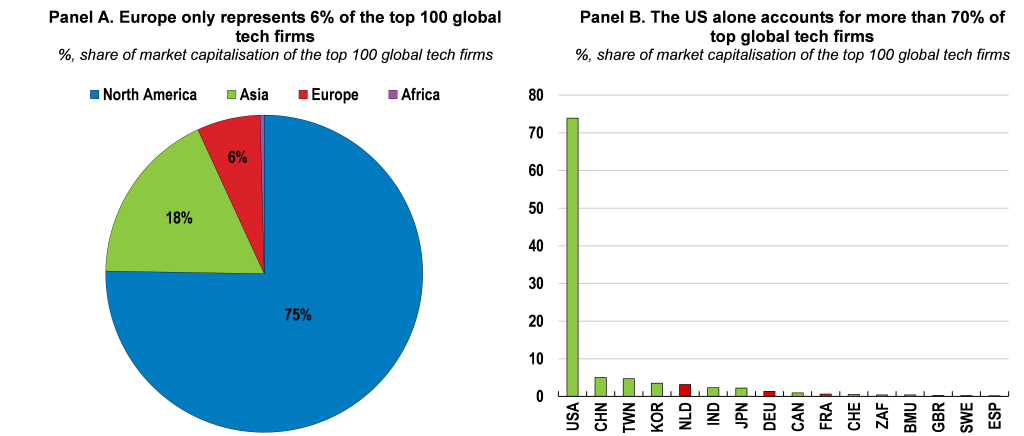
Beyond the human capital factor, the EU is lagging behind in the global race for technological leadership. Today’s tech giants, including Apple, Facebook, Google, Alibaba or Tencent, are dominated by the US and China. Of the 100 largest global tech firms by market capitalisation, the share of European tech companies amounts to only 6%, while the share for the US alone represents 75%, and for the US and Asia combined 93% (Figure 3).

Figure 3. Few tech giants are European

Note: The market value is the average of January 2022 and converted to million USD. Technology firms refer to firms that fall under the category of Computer Services, Internet, Software, Computer Hardware, Electronic Office Equipment, Semiconductors and Telecommunications Equipment. Panel B: TWN denotes Chinese Taipei.
Source: DataStream Global Equity Index and OECD calculations

Insufficient digital investment and research and development (R&D) are at the heart of the issue. European businesses invest significantly less in the tech industry than the United States or Asian economies like China or Korea (Figure 4, Panel A) – and the EU falls behind on important innovation output indicators such as information and communications technology (ICT) patents (Figure 4, Panel B). Bridging this digital investment gap and lack of R&D will be essential to allow the EU to boost innovation, productivity growth and avoid falling behind the curve on the technology front.

Figure 4. Europe needs to pick up digital investment and research

Source: OECD Science, Technology and Industry database.

A lack of innovation may also hamper the EU’s climate ambition

Insufficient investment in innovation, research, and skills also risks obstructing the transition to net-zero emissions (NZE) by 2050, which requires huge leaps in clean energy innovation and the widespread deployment of clean energy technologies.

The EU’s high reliance on energy imports makes its energy-intensive sectors particularly vulnerable to energy supply shocks and energy price rises, as witnessed during the pandemic and war. To secure reliable energy sources and deliver on its climate ambitions, EU economies will need to substantially ramp up clean energy investment and accelerate clean energy innovation (Figure 5, Panel A).

According to International Energy Agency (IEA) scenarios (International Energy Agency, 2021), many clean energy technologies needed to reach CO2 emission reduction targets by 2030 already exist today. However, while some of these technologies are mature, meaning that they are established in the market, many still require increased commercialisation or a wider integration into the market to reach its full market potential (Figure 5, Panel B). In addition, the IEA estimates that by 2050, almost 50% of the emission reductions needed will depend on technologies that are currently under development, i.e. at the demonstration or prototype stage (Figure 5, Panel B). This means that further effort in new technology development, as well as deployment will be needed, in addition to the required tripling of annual clean energy investment already by 2030. These will be essential to bringing new technologies to the market on time and reaching net zero emissions.

Figure 5. To reach climate targets, the EU must accelerate innovation

Note: Panel A: Total final consumption refers to the sum of the consumption in the end-use sectors and for non-energy use, excluding for own use of the energy producing industries, backflows from the petrochemical industry, international aviation bunkers and international marine bunkers. A negative rate indicates a net exporter of energy, while a dependency rate above 100 % means that energy products have been stocked. Panel B: shows global CO2 emissions changes by technology maturity category in the NZE by 2050.
Source: IEA World Energy Balances database; IEA (2021), “Net Zero by 2050”; and OECD calculations.

Increasing tangible investment in the EU

All of the above suggests that only a significant investment effort will be able to achieve the EU’s laudable ambitions, the twin objective of faster digitalisation and a smooth path to net zero. Both public and private capital will have to play an important role in delivering the large amounts of investment needed to make the digital and green transformations a success. The EU should be commended for avoiding the mistakes of the Global Financial Crisis, when public investment spending was cut drastically in an attempt to consolidate government budgets. It activated the Stability and Growth Pact’s escape clause and set up the Recovery and Resilience Facility. With the support of accommodative monetary policy, these measures allowed governments to use fiscal policy to start addressing structural problems and even countries that were hit hard by COVID-19 could increase their productive spending. After a long weakness, public investment in the euro area surged during the pandemic and is now above 2007 levels in volume terms and catching up with the United States (Figure 6, Panel A).

Figure 6. Investment needs to increase in order to meet future challenges

Note: Euro area refers to the 17 members of the euro area that are also members of the OECD.
Source: Economic Outlook 110 database; and OECD calculations.

However, while public investment can crowd in private capital, it accounts for less than a sixth of overall investment. Overall investment has been affected more severely by the pandemic, and has only recently reached pre-GFC levels (Figure 6, Panel B). This is inconsistent with the aspiration to accelerate digitalisation and ultimately increase productivity. In addition, the composition of investment will have to change, with more focus on digital and green technologies for productivity, environmental and security reasons.

A combination of national and EU policies will have to be deployed, including:

  • structural policies at the level of member states to improve their attractiveness as destinations for investment and talent
  • redoubling EU efforts to deepen the capital markets union to enhance return on private investment
  • better EU and national fiscal frameworks to support investment over the short, medium and longer term.

References

Andrews, D., G. Nicoletti and C. Timiliotis (2018), “Digital technology diffusion: A matter of capabilities, incentives or both?”, OECD Economics Department Working Papers, No. 1476, OECD Publishing, Paris, https://dx.doi.org/10.1787/7c542c16-en.

Barwise, P. and L. Watkins (2018), The evolution of digital dominance: how and why we got to GAFA, Oxford University Press, New York, NY. https://doi.org/10.35065/pub.00000914

International Energy Agency (2021), Net Zero by 2050, IEA, https://www.iea.org/reports/net-zero-by-2050.

Sorbe, S. et al. (2019), “Digital Dividend: Policies to Harness the Productivity Potential of Digital Technologies”, OECD Economic Policy Papers, No. 26, OECD Publishing, Paris, https://dx.doi.org/10.1787/273176bc-en.


[1] This blog post is based on an issues note for the Informal Meeting of the EU Ministers for Economy and Finance (ECOFIN) on 25 and 26 February 2022.

Photo credit: Featured image by Gorodenkoff/Shutterstock.com


For a more resilient and cohesive Europe

By Filippo Gori and Álvaro Pina, OECD Economics Department

The COVID-19 pandemic precipitated Europe into a recession of unprecedented nature and magnitude. Owing to a rapid and effective policy response to the crisis, the recovery in Europe is now firming up, but there is no room for complacency. To achieve stronger growth than before the pandemic and weather well future shocks, the EU needs to enhance both its economic resilience and its territorial cohesion. To achieve this, the 2021 OECD Economic Surveys of the European Union and the Euro Area focus on two closely related aspects: (i) improving cyclical convergence among member states and (ii) spurring convergence in living standards across EU regions.

Increasing cyclical convergence in the euro area

In the aftermath of the global financial crisis, large differences in business cycles across euro area countries developed into diverging economic paths for hardest hit economies. Today, the COVID-19 pandemic is again affecting euro area economies differently and posing risks of diverging economic trajectories. Europe needs to ensure that no country is left behind during the recovery.

Cyclical divergence in the euro area has deep roots, including heterogeneous national economic structures that enhance the likelihood of asymmetric shocks. In the years following the introduction of the euro, the removal of trade and investment barriers led to spatial agglomeration of economic activities according to national or regional competitive advantages (Fontagné and Freudenberg, 1999; Mongelli et. al, 2016). Heightened competition and agglomeration economies favoured sectoral concentration, resulting in greater divergence in the productive structure of individual countries (Figure 1. B). Though industrial heterogeneity among euro area countries is still milder than across the United States (Figure 1.A), the dispersion in GDP growth among euro area members has tended to be higher than across US states, peaking during downturns (Figure 1. C).

This suggests that industrial polarisation alone cannot explain the relatively high cyclical divergence in the euro area. Much of this divergence is instead explained by policy and institutional frameworks.

Figure 1. Differences in industrial structures among euro area members have been rising

1. The Krugman Specialisation Index (KSI) is a widely-used specialisation measure.
2. Gross value added by NACE activities, EA17.
3. Coefficient of variation for annual GDP growth across 50 US States and EA17 countries. EA17 include all other euro area members that are also part of the OECD.
Source: OECD (2020), OECD Economic Outlook: Statistics and Projections (database); Eurostat

To reduce cyclical divergence in the currency union, the 2021 OECD Economic Survey of the Euro Area suggests policy reforms in three directions:

  • More resilient labour markets. In this regard, euro area countries should strengthen policies that preserve viable jobs during major downturns, such as job retention schemes (JRS), and ease workers’ transition to new jobs through skilling and activation.
  • A more effective single market for capital and stronger banks. In the current context, this requires supporting European banks to deal with a possible new wave of non-performing loans (NPLs) by designing better insolvency and loan foreclosure procedures, improving regulatory policies, and developing secondary markets for distressed assets. To strengthen European banks it is also necessary to complete the banking union, notably by setting up a common deposit insurance scheme.
  • The introduction of common fiscal capacity:  Fiscal integration remains one of the most important missing features of the euro area. The euro area should consider setting up a common fiscal stabilisation capacity through an unemployment re-insurance scheme.

Enhancing the convergence between regions

Over the decades, the European Union gained the reputation of a “convergence machine” (Gill and Raiser, 2012), helping its poorest member states narrow the gap to their richer partners. Since the turn of the century, however, the convergence machine has become less well oiled. Central and Eastern European countries have been converging, but Southern Europe has lost ground (Figure 2). In addition, within countries, remote rural regions have fallen further behind large cities, and especially capitals. Growing territorial inequalities threaten social cohesion and weaken growth potential in Europe as a whole.

Figure 2. Southern and Eastern European countries have had a contrasting growth performance

Source: OECD (2020), OECD calculations based on data from the OECD Regional Statistics (database).

Why has convergence faltered? Part of the explanation lies in global trends, such as digitalisation, which has mainly benefitted large cities, and stronger competition from emerging economies, which has hurt some industrial regions. Indeed, a growing spatial concentration of manufacturing – Figure 1.B – has also taken place at regional level. But European-specific factors have also played against convergence. Incomplete financial integration and procyclical fiscal policies have led to the expansion of low-productivity non-tradable sectors, such as construction, in the run-up to the global financial crisis, and to abrupt adjustment and divergence in its aftermath. This cyclical divergence, discussed above, has particularly affected Southern Europe. Furthermore, growth and innovation in the EU as whole, including in many wealthy regions, has often been modest, limiting the ability to generate spillovers across the Union.

How can poor regions prosper? The above reforms to reduce cyclical divergence will help. In addition, the 2021 OECD Economic Survey of the European Union suggests policy recommendations in two main directions:

  • Place-based policies, tailoring different sectoral policy interventions to region-specific circumstances, can help upgrading the productive specialisation of lagging regions. Cross-regional cooperation in innovation and transport can play an essential role on this count, by for instance fostering capacity building in poorer regions and helping them gain better access to markets and a shorter travel time to thriving large cities.
  • The European Union should also use more effectively Cohesion Policy and the Common Agricultural Policy (CAP) to support regional convergence. A stronger focus on innovation is needed: more cohesion funds should be devoted to R&D projects, and the CAP needs to promote generational renewal in agriculture. At the same time, these policies should not end up propping up inefficient firms or activities, which may happen, for instance, due to  weak competition in public procurement.

References

Fontagné, L., and Freudenberg, M. (1999), “Endogenous symmetry of shocks in a monetary union”, Open economies review, Vol. 10 Issues 3, p.p. 263-287.

Gill, I. S. and M. Raiser (2012), Golden growth: restoring the lustre of the European economic model: Overview (English). Europe and Central Asia Studies Washington, D.C.: World Bank Group. http://documents.worldbank.org/curated/en/723961468032339818/Overview

Mongelli, F. P., Reinhold, E., and Papadopoulos, G. (2016) “What’s so Special About Specialisation in the Euro Area?” ECB Occasional Paper, No. 168, European Central Bank, Frankfurt.

OECD (2021), OECD Economic Surveys: Euro Area 2021, OECD Publishing, Paris. https://doi.org/10.1787/214e9f0a-en

OECD (2021), OECD Economic Surveys: European Union 2021, OECD Publishing, Paris. https://doi.org/10.1787/a77ab220-en


Europe must act now to prepare the aftermath of the pandemic crisis

by Laurence Boone, OECD Chief Economist and Alvaro S. Pereira, Director, Economics Department Country Studies Branch, OECD

We are currently facing extraordinary challenges posed by the Covid-19 pandemic, due to which necessary health measures are shutting down part of our economies and precipitating a recession of unprecedented nature and magnitude.

In the immediate response to the crisis, governments increased health spending, but also introduced large fiscal support (e.g. short-time working weeks, extended unemployment schemes, tax and social security deferments, new credit lines, among others, see OECD Policy tracker) in an attempt to mitigate the social and economic impact of the pandemic. In addition, in Europe, the ECB launched a large program of asset purchases and a set of other unprecedented measures, and the European Commission temporarily shut down budget rules and exceptionally lifted state aid rules.

Still, given the magnitude of the crisis that we are facing, these measures and packages, albeit important and unprecedented, will not be enough for most European countries to address a post-pandemic world where debt levels will be much higher and the job losses tremendous. According to OECD estimates, the widespread shutdowns needed to contain the spread of the coronavirus and save lives will cause an estimated initial direct output decline of around 25% in many economies (Figure 1).This is equivalent to a contraction of about 2 percentage points of annual GDP per month of confinement. Thus, the 2020 output fall will far exceed that of 2009.

When the confinement is gradually withdrawn, European policymakers will have to do more to speed up the recovery and avoid massive unemployment and firm bankruptcies. The challenge will be significant: many euro area countries will have debt ratios above – and sometimes much above – 100% of GDP, and economic fundamentals will have been hurt. History shows that countries that invest in the recovery, rather than tighten too much too fast, not only accelerate the recovery, but are also able to bring debt down faster. Too rapid fiscal tightening in some countries in 2010/2011 weakened the euro area and left it with long-term scars, including an incomplete restructuring of the banking and corporate sectors, higher structural unemployment, low investment and low inflation, and a failure to revive structural reforms agendas.

There is an important positive element in the current crisis: by committing to “do everything necessary within its mandate”, the ECB has responded forcefully and much faster than in the previous crisis, contributing to and buying precious time for policymakers to work out a sustainable response to this symmetric shock.

Europe is building up a multi-pronged response to the crisis and the ensuing recovery, but some debate remains regarding the financial instruments that must be used for this purpose. The EIB is proposing substantial support to firms, and the Commission is proposing to support the unemployed, which seems to have met consensus. But the bulk of Europe’s fiscal response to address the “war effort”-like recovery remains largely individual or national. Unlike in the recent financial crisis, this exogenous shock is shared across countries. The debate is made more complex by some perceptions that the uneven situation across countries is due to different levels of responsibility at the national level, especially regarding fiscal policy. It may be fair to say that much of the debt legacy prior to the crisis is indeed individual countries’ responsibility. But this is not the case for the health and economic efforts resulting from the Covid-19 pandemic. Both the widespread pandemic and the close integration of EU countries argue for a financial response that should be large and shared . Such a response should be clearly differentiated from the stock of debt prior to the Covid-19 crisis.

It is imperative to bridge the gap between the existing options in the debate for a forceful response. Two options could provide the EU with the necessary fire power to address this crisis: a new financial instrument featuring joint issuance, and the European Stability Mechanism (ESM). We start with the latter.

The ESM was created by euro area members to mobilise funding and provide financial assistance to countries threatened by or experiencing severe financing problems. Its use involves a rigorous analysis of public debt sustainability and strict policy conditionality, because these difficulties were perceived as resulting from past policies having led to poor economic performance. Obviously, these criteria do not apply in the current crisis. In particular, the strong conditionality attached to financial assistance seems totally inadequate when the crisis arises from a pandemic or a natural disaster. Some are suggesting light conditionality. However, this approach may not be acceptable to those countries that believe that strict conditionality is an explicit requirement for accessing its resources. In addition, the 410 billion euros in unused lending capacity (3.4% of 2019 euro area GDP) seems modest when compared to the needs of the euro area as a whole. In addition, the ESM currently relies on short-term credit facilities having an initial maturity of one year, and renewable twice, each time for six months. Therefore, ESM credit lines provide only limited relief against medium-term rollover risks, which makes it more of a bridge facility to overcome temporary fiscal distress pending a medium to long-term solution.

For all these reasons, as it currently stands, the ESM is ill suited to provide widespread fiscal support to euro area countries to counteract the economic fallout of the pandemic. If the ESM is to play a significant role in the challenges posed by the current crisis, its firepower will have to be substantially upgraded, the conditionality requirements will have to be significantly watered down and replaced by an allocation usage condition (namely, fund all pandemic-related spending).

An alternative is the creation of European financial instruments that mutualise a large part of the fiscal costs and financing of the crisis. More specifically, the launch of one-off, ad-hoc European debt instruments should help finance fiscal needs at a relatively low cost for all euro area members and for the euro area as a whole. This would have the advantage of not adding directly to the national debt numbers, provided such a feature is part of the original design. This approach demands that several conditions are met:

  • Ensuring the one-off, temporary nature of the fund: the credibility of the one-off nature of the instrument would be enhanced by dedicating a targeted tax flow to its payment over a very long period, such as, for example, the model of the German solidarity tax after reunification. Long maturities should help ensure that repayments will be spread over generations and not hamper the recovery efforts.
  • The spending would cover only Covid-related expenditures, to address health risks and the associated recovery from the exceptional shutdown. The instrument would be governed by the European Commission, and overseen by the European Parliamentt.
  • The supra-national nature of the bonds would allow the ECB to purchase up to 50% of the issuance, while anchoring the fiscal commitment of euro area countries to the recovery .
  • Such instrument would increase the fiscal space in countries more sensitive to borrowing costs and accelerate the recovery for all.

The crisis faced by Europe is extraordinary and requires extraordinary responses. It is also a unique opportunity for Europe, and in particular the EMU, to consolidate its economic and financial architecture, and to promote Europe as the engine of “shared prosperity”. A significantly reinforced and revamped ESM or a new financial instrument based on joint issuance, as described above, would be possible vehicles to translate words into action. The ECB has bought European policymakers some precious time that they now have to use to devise a common approach.


La Croissance est à son pic, la négociation d’un atterrissage en douceur s’annonce délicate

‌Laurence Boone, Chef économiste de l’OCDE

PE Nov2108L’économie mondiale traverse des zones de turbulences. La croissance du PIB mondial est élevée, mais a probablement atteint son pic. Dans de nombreux pays, le chômage est bien en dessous de ses niveaux d’avant-crise, les tensions sur l’emploi augmentent et l’inflation demeure modérée. Mais les échanges et l’investissement marquent le pas, sur fond de hausse de certains droits de douane. De nombreuses économies émergentes sont confrontées à des sorties de capitaux et ont vu s’affaiblir leur monnaie. L’économie mondiale paraît prête pour un atterrissage en douceur, avec une croissance du PIB mondial qui devrait passer de 3.7 % en 2018 à 3.5 % en 2019-20. Mais les risques s’accumulent et les gouvernements et banques centrales devront naviguer prudemment pour préserver des rythmes de croissance du PIB certes plus modestes, mais durables.

Négocier un atterrissage en douceur a toujours été délicat, mais l’exercice est particulièrement difficile aujourd’hui. Avec des banques centrales qui réduisent progressivement, et à juste titre, leurs injections de liquidités, les marchés ont commencé à revoir les prix des risques, la volatilité fait son retour, le prix de certains actifs baisse. Les flux de capitaux, qui ont contribué à l’expansion des économies de marché émergentes, s’inversent progressivement. Les tensions commerciales génèrent de l’incertitude et risquent de perturber les chaînes de valeur mondiales et l’investissement, plus spécialement dans les régions aux liens étroits avec les États-Unis et la Chine. Des incertitudes politiques et géopolitiques montent également en Europe et au Moyen-Orient.

Une accumulation de risques pourrait créer les conditions d’un atterrissage plus brutal que prévu. La recrudescence des tensions commerciales pourrait peser sur la croissance des échanges et du PIB, et générer encore plus d’incertitude pour l’investissement des entreprises. Le durcissement des conditions financières pourrait accélérer les sorties de capitaux en provenance des économies émergentes et faire reculer encore la demande. Un net ralentissement de l’activité en Chine frapperait non seulement les économies émergentes, mais aussi les économies avancées, si ce choc entraînait un repli des cours des actions et une augmentation des primes de risque dans le monde.

Les tensions politiques autres que commerciales augmentent aussi. Au Moyen-Orient et au Venezuela, les difficultés géopolitiques et politiques ont accru la volatilité des cours du pétrole. En Europe, les négociations autour du Brexit suscitent des inquiétudes. Dans certains pays de la zone euro, l’exposition des banques à la dette souveraine pourrait peser sur la croissance du crédit si les primes de risque devaient encore augmenter, ce qui ralentirait la consommation, l’investissement, la croissance et l’emploi.

Dans ce contexte, nous invitons instamment les responsables politiques à rétablir la confiance dans les institutions internationales et dans le dialogue entre tous les pays. Notamment pour apporter une solution coopérative aux discussions sur les échanges commerciaux. L’adoption de mesures concrètes au niveau du G20 serait aussi un signal positif, démontrant que les pays peuvent agir de manière coordonnée et concertée si la croissance devait ralentir plus nettement que prévu.

La coopération est d’autant plus nécessaire que les marges de manœuvre de politique économique sont limitées. Dans certains pays, les taux sont très bas et la politique monétaire est encore très accommodante, alors que les ratios dette privée/PIB et dette publique/PIB se situent à des niveaux historiquement élevés. Le soutien budgétaire diminue, à juste titre, mais si la croissance devait ralentir plus brutalement, les pouvoirs publics devraient profiter de la faiblesse des taux d’intérêt pour s’engager dans une relance budgétaire coordonnée. Dans cette édition des Perspectives économiques, nous présentons des simulations qui montrent qu’une relance budgétaire coordonnée au niveau mondial serait un moyen efficace de réagir rapidement à un ralentissement plus marqué que prévu.

La fragilité de l’environnement rend d’autant plus important l’achèvement de l’Union monétaire européenne, comme suggéré dans la dernière Étude économique de la zone euro réalisée par l’OCDE. Il est urgent que l’Europe mène à son terme l’union bancaire. L’absence de progrès dans ce domaine n’incite pas les banques à réduire la part, toujours importante, d’obligations souveraines domestiques dans leur bilan, ce qui nourrit la perception du risque de redénomination. Progresser sur la mise en œuvre d’une capacité budgétaire commune aiderait aussi à accroître la confiance dans l’aptitude de la zone euro à réagir aux chocs, et à inscrire la croissance dans la durée.

Enfin, la reprise mondiale depuis la crise financière n’a pas produit d’améliorations tangibles du niveau de vie pour un grand nombre de citoyens. Si la pauvreté absolue a fortement reculé dans un certain nombre d’économies émergentes, la crise a montré que les écarts de bien-être entre la partie de la population mobile et hautement qualifiée et la part, plus nombreuse, de personnes moins mobiles et souvent moins qualifiées, se sont creusés depuis plusieurs décennies dans de nombreuses économies avancées. Les écarts de revenu se perpétuent d’une génération à l’autre : trop souvent les perspectives d’avenir de chaque individu dépendent de l’endroit où il est né, où il a été scolarisé et où il a commencé à rechercher un emploi. Ces inégalités, l’absence de mobilité intergénérationnelle, menacent la croissance et alimentent le rejet de la mondialisation, qui a pourtant été vecteur de prospérité de nombreuses régions du monde.

Le ralentissement des gains de productivité dans de nombreuses économies bride la hausse des salaires réels mais même dans les entreprises très productives, la progression des salaires a été modeste. L’innovation technologique, qui tire vers le bas le prix relatif des investissements, renforce le pouvoir de marché des entreprises très productives. En même temps, la baisse du prix relatif des investissements peut entraîner une substitution du capital au travail, en particulier pour les emplois faiblement qualifiés et répétitifs, pour toutes les entreprises. Avec la diffusion du numérique, le fossé entre les emplois hautement qualifiés peu répétitifs et les emplois faiblement qualifiés répétitifs se creuse. Conjuguées à une redistribution moins poussée, ces tendances risquent d’aggraver les inégalités.

Les pouvoirs publics peuvent faire davantage pour favoriser l’augmentation de la productivité et des salaires. Renforcer la concurrence sur les marchés des produits permettrait de favoriser la croissance de nouvelles entreprises, d’encourager une diffusion plus large des nouvelles technologies, et de contribuer ainsi à une hausse des gains de productivité, mais aussi de mieux répercuter les gains de productivité sur les salaires. Renforcer les compétences est également essentiel parce qu’une main-d’œuvre qualifiée est moins facile à remplacer par de nouvelles technologies. Des politiques actives du marché du travail et des politiques de formation axées sur les compétences sont aussi clés pour aider ceux qui courent le risque d’être exclus du marché du travail.

Certaines décisions des pouvoirs publics renforcent les vents contraires qui soufflent sur nos économies. Aujourd’hui plus que jamais, nous avons besoin de meilleures politiques, qui reposent sur la coopération, la confiance et l’ouverture, pour pouvoir créer des emplois, pérenniser la croissance et relever les niveaux de vie.

Éditorial extrait des Perspectives Économique de l’OCDE, Novembre 2018

References

OECD (2018), Perspectives économiques de l’OCDE, OECD Publishing, Paris.


Growth has peaked: Challenges in engineering a soft landing

by Laurence Boone, OECD Chief Economist

EO-nov-2018-cover-enThe global economy is navigating rough seas. Global GDP growth is strong but has peaked. In many countries unemployment is well below pre-crisis levels, labour shortages are biting and inflation remains tepid. Yet, global trade and investment have been slowing on the back of increases in bilateral tariffs while many emerging market economies are experiencing capital outflows and a weakening of their currencies. The global economy looks set for a soft landing, with global GDP growth projected to slow from 3.7% in 2018 to 3.5% in 2019-20. However, downside risks abound and policy makers will have to steer their economies carefully towards sustainable, albeit slower, GDP growth.

Engineering soft landings has always been a delicate exercise and is especially challenging today. As central banks progressively, and appropriately, reduce their liquidity support, markets have started repricing risks as reflected by the return of volatility and the decline of some asset prices. Capital flows, which had fuelled the expansion of emerging market economies, have been reversing towards advanced economies and especially the United States. Trade tensions have heightened uncertainty for businesses and risk disrupting global value chains and investment, especially in regions tightly linked to the United States and China. Political and geopolitical uncertainty has increased in Europe and the Middle East.

An accumulation of risks could create the conditions for a harder-than-expected landing. First, further trade tensions would take a toll on trade and GDP growth, generating even more uncertainty for business plans and investment. Second, tightening financial conditions could accelerate capital outflows from emerging market economies and depress demand further. Third, a sharp slowdown in China would hit emerging market economies, but also advanced economies if the demand shock in China triggered a significant decline in global equity prices and higher global risk premia.

Political tensions other than trade have also grown. In the Middle East and Venezuela, geopolitical and political challenges have translated into more volatile oil prices. In Europe, Brexit is an important source of political uncertainty. It is imperative that the European Union and the United Kingdom manage to strike a deal that maintains the closest possible relationship between the parties. In some euro area countries, the exposure of banks to their government debt could weigh on credit growth if risk premia were to increase further, with dampening effects on consumption, investment, GDP growth, and ultimately jobs.

Against this backdrop, we urge policymakers to restore confidence in international dialogue and institutions. This would help strengthen trade discussions in order to tackle critical new issues and to address concerns with the rules and processes of the existing trading system. Concrete action at the G20 level will send a positive signal and help demonstrate that countries can act in a coordinated and cooperative fashion should growth slow more sharply than envisaged.

It is all the more important to cooperate now that policymakers have limited margins for manoeuvre in case of an abrupt slowdown. In some countries, monetary policy is still very accommodative, while public and private debt-to-GDP ratios are historically high. Fiscal stimulus will be scaled back, which is appropriate. But in the event of a downturn, governments should leverage low interest rates to coordinate a fiscal stimulus. In this Economic Outlook, we report simulations showing that a coordinated fiscal stimulus at the global level would be an effective means of quickly responding to a sharper-than-expected global slowdown.

The fragile environment heightens the importance of completing European Monetary Union, as suggested in the latest OECD Economic Survey of the Euro Area. It is urgent for Europe to complete the banking union. The lack of progress has led to higher domestic sovereign debt holdings by banks in some countries, magnifying hazards and maintaining the redenomination risk that undermines confidence. Progress towards establishing a common fiscal capacity would help maintain confidence in the ability of the euro area to react to shocks and sustain growth.

The global recovery since the financial crisis has not led to tangible improvements in the standards of living of many people. While absolute poverty has plummeted in a number of emerging market economies, the crisis exposed decades of widening well-being gaps between the higher-skilled mobile part of the population and a larger number of less mobile, often less-skilled people in many advanced economies. Income gaps pass from one generation to the next: one’s future prospects are framed by where one is born, educated and starts looking for a job. These entrenched inequalities threaten growth, intergenerational mobility, and fuel discontent with the integrated global economy, which has brought prosperity across large parts of the world.

The general slowdown in productivity growth in many economies constrains real wage growth. But even in highly productive firms, wage growth has been more sluggish than expected, a result in part of technology driving down investment prices. This can prompt substitution of labour by capital, particularly for low-skilled, high-routine jobs. As digitalisation deepens, the divide between high-skill, low-routine jobs and low-skill, highroutine work risks widening. In addition, slower business dynamics preserve firms which are less productive and accordingly are less able to increase wages.Together with declining redistribution, this trend risks fuelling inequalities.

Governments can do more to foster higher productivity and wages. Strengthening product market competition would not only favour wider diffusion of new technologies, thereby raising productivity growth, but also help transfer productivity gains to wages. Investment in skills can help workers seize the gains from technological progress as higher-skilled labour is less easily replaced by new technologies. Effective active labour market and skills training policies can help those at risk of being excluded from the labour market.

Certain policy decisions are exacerbating many of the headwinds faced by our economies. Better policies, built on greater trust and openness, are needed now more than ever in order to create jobs, sustain growth and raise living standards.

Editorial from the November 2018 edition of the Economic Outlook

References:

OECD (2018), OECD Economic Outlook, Volume 2018 Issue 2: Preliminary version, OECD Publishing, Paris, https://doi.org/10.1787/eco_outlook-v2018-2-en.


A sustainable European currency needs a common fiscal stabilisation instrument

Jan Stráský and Guillaume Claveres, OECD Economics Department, Euro Area/EU desk

The euro area sovereign debt crisis has exposed important flaws in the design of the Economic and Monetary Union, especially when it comes to dealing with macroeconomic shocks. Compared to federal states, fiscal transfers at the euro area and EU level are virtually non-existent. Since labour mobility remains low, private risk sharing in the euro area mainly takes place through cross-border flows of capital and credit, which may not always be sufficient to deal with large negative shocks.

The lack of effective risk-sharing is particularly damaging in a monetary union, where countries cannot use independent monetary policy or exchange rate depreciation to support growth and employment and national fiscal policies in some countries may be unable, in the short run, to deal with country-specific shocks through national counter-cyclical policies. Moreover, monetary policy may become overburdened even when dealing with common shocks. During the financial crisis, contagion effects and negative feedback loops between sovereigns and banks threatened price stability and forced the ECB to reduce policy interest rates to below zero, coming probably close to an effective constraint for monetary policy. Even though the ECB put in place other unconventional measures, such as asset purchases, to ensure transmission of its policy, these measures are not without costs and limits.

The weak potential growth and inflation outlook for the euro area, as well as the global shifts in saving and investment preferences, also suggest that nominal interest rates may stay close to zero for a prolonged period of time and return close to zero more often in the future (Rachel and Smith, 2017).

In this situation, where the ECB monetary policy may remain constrained for some time and fiscal space limited in some countries, a common fiscal stabilisation instrument would improve the policy toolkit. Our recent paper,  Euro area unemployment insurance at the time of zero nominal interest rates  simulating a general equilibrium model of the euro area with imperfect risk-sharing mechanisms shows that a fiscal capacity, in the form of a common unemployment benefit scheme, can significantly improve macroeconomic stabilisation when the monetary policy constraints become binding.

Building a common fiscal stabilisation instrument for the euro area is an important topic of the 2018 Economic Survey of the Euro Area. The concept of a common fiscal instrument goes back at least to the 1970s Marjolin’s Report and the interest in the topic has been rekindled post-crisis by several concrete proposals, including the IMF’s rainy-day fund (Arnold et al., 2018), the European Commission’s investment protection scheme (European Commission, 2017) and several variants of unemployment insurance and re-insurance schemes (Beblavý and Lenaerts, 2017; Dullien et al., 2018). However, such schemes face significant resistance, due to the fears of permanent transfers towards some countries that would reduce incentives to carry out structural reforms. To overcome these criticisms, the scheme must avoid permanent transfers among countries, a condition made explicit in the Five President’s Report.

Our companion paper, Stabilising the euro area through an unemployment benefits re-insurance scheme, discusses a novel design for a common fiscal stabilisation instrument, in the form of an unemployment benefits re-insurance scheme. As other recently proposed mechanisms (European Commission, 2017), the scheme is activated according only when unemployment increase and is above its long-term average, and involves a cap in payments, ensuring that pay-outs to individual countries are limited. These features, together with a mechanism charging higher contributions to countries that draw more frequently on the fund (experience rating), effectively prevent permanent transfers in the medium term.

Using counterfactual simulations of the proposed mechanism for individual euro area countries on annual data from 2000 to 2016, we show that the scheme would have delivered considerable stabilisation gains, both at the individual country level and euro area level (Figure 1). Macroeconomic stabilisation would be timely in most cases and achieved at the cost of limited debt issuance (less than 2% of the euro area GDP) and average annual contributions not exceeding 0.17% of GDP (Figure 2). It would have also avoided permanent transfers among countries, as none of them would have been a major net contributor or receiver with respect to the scheme, and all countries would have benefited from the scheme at one point in time.

StratskyJuly2018

Figure_2_C&S

References:

Arnold, M., Barkbu, M., Ture, H., Wang, H. and J. Yao (2018), “A central fiscal stabilization capacity for the Euro Area”, IMF Staff Discussion Note SDN/18/03 , International Monetary Fund. https://www.imf.org/en/Publications/Staff-Discussion-Notes/Issues/2018/03/22/A-Central-Fiscal-Stabilization-Capacity-for-the-Euro-Area-45741

Beblavý, M. and K. Lenaerts (2017), “Feasibility and added value of a European Unemployment Benefit Scheme”, Centre for European Policy Studies, Brussels. https://www.ceps.eu/system/files/EUBS%20final.pdf

Claveres, G. and J. Stráský (2018a), “Euro area unemployment insurance at the time of zero nominal interest rates”, OECD Economics Department Working Paper No. 1498, OECD Publishing, Paris.

Claveres, G. and J. Stráský (2018b), “Stabilising the euro area through an unemployment benefits re-insurance scheme”, OECD Economics Department Working Paper No. 1497, OECD Publishing, Paris.

Dullien, S., Fernández, J., López, M., Maass, G., del Prado, D., & von Weizsäcker, J. (2018), Fit for purpose: a German-Spanish proposal for a robust European Unemployment Insurance. http://www.fes-madrid.org/media/2017_FESpublicaciones/Arbeitslosenversicherung_doc.pdf

European Commission (2017), New budgetary instruments for a stable euro area within the Union framework, Communication from the Commission COM(2017) 822 final. https://ec.europa.eu/info/sites/info/files/economy-finance/com_822_0.pdf

OECD (2018), OECD Economic Surveys: Euro Area 2018, OECD Publishing, Paris.


European banking union in its final leg

by Jan Stráský and Guillaume Claveres, OECD Economics Department,  Euro Area/European Union desk

euro area

After years of crisis, we are now experiencing an economic expansion in Europe. But further crises are certain to come, sooner or later, and improvements in the euro area’s resilience to economic shocks will require further policy changes. Notably, it is important to allow that the cost of significant economic shocks is shared as widely and fairly as possible, both within private and public sectors, what we call for simplicity public and private risk-sharing. In this post, based on the 2018 Economic Survey of the Euro Area, we focus on potential for private risk sharing through the banking sector. The lack of risk sharing in this sector was a major cause of the euro area crisis during the great financial recession since governments became overly exposed to difficulties faced by their banking sectors. Better risk sharing would reduce the risk that a banking crisis triggers government insolvency, reinforcing the solidity of the euro area.

For better or for worse, banks remain at the core of the financial system in Europe. Diversification towards other sources of financing and better access to finance for small and medium enterprises are important goals, which in the longer-term will be substantially facilitated by completion of the capital markets union project. In parallel, the efforts to improve the functioning of the European banking system, including the conditions for creation of Pan-European banks, must continue.

The euro area banks are now much better capitalised than before the financial crisis and benefit from stronger and unified supervisory standards. Even so, additional reforms to complete the banking union are necessary. The Single Resolution Mechanism that restructures failed banks while preventing wider repercussions in the financial system needs an effective backstop to ensure its credibility. The backstop should be fiscally-neutral over the medium term, meaning that any pay out should be recouped from future banks’ contributions. As the next step, euro area countries should put in place a pre-funded common European deposit insurance scheme. Such a tool would increase financial stability benefits for all participating countries by spreading the risks across a large and more diverse pool of financial institutions and reducing the likelihood that individual pay outs will overwhelm the system. It would also further improve monetary policy transmission in the euro area by making different forms of money more homogenous across euro area countries.

To limit the risk of some banks subsidising others, the insured banks should pay to the European deposit insurance scheme a variable insurance premium that would require risker banks – based, among other things, on the level of loss-absorbing capacity, stability and variety of funding sources, business model and management quality – to pay higher contributions. In addition, the risk premia should also be sensitive to the amount of systemic risk in the national banking system.

Risk reduction in the banking sector will eventually have to go beyond the reduction of still-elevated non-performing loans in some countries and prevention of the build-up of new non-performing loans. The recent gyrations in some European sovereign debt markets have shown that the potentially harmful links between banks and their own states that amplified the euro area crisis are still present. Large exposures of banks to the sovereign debt of their home country, linking the health of the banking sector to the health of public finances, continue to exist in many euro area countries and need to be addressed (Figure 1).

EU-EA2018blogfig

The reduction in banks’ holdings of government bonds would make banks’ financing costs dependent on their own riskiness, rather than geographical location, potentially reinforcing cross-border activity and banks’ ability to exploit the economies of scale. Such change, which would need to be gradual, including long phase-in periods and involving only the newly issued debt, could be achieved by introducing an additional capital requirement increasing with concentrated sovereign bond holdings of banks (BCBS, 2017; Véron, 2017). Banks with higher holdings of sovereign debt would be required to hold additional capital as protection against associated risks. In order to give banks an alternative safe asset to invest in, potential changes should be considered in parallel with the introduction of a European safe asset. Although some existing proposals suggest the creation of synthetic safe assets, such instrument may be too sensitive to cyclical variation in investors’ demand. Other ways of creating a European safe asset without risk mutualisation thus may be needed.

The Banking Union needs to be completed and the time to act is now. The three missing legs the Banking Union should stand on are the fiscal backstop to the Single Resolution Fund, the European deposit insurance scheme and the reduction of the harmful links between banks and their own states.

References:

OECD (2018), OECD Economic Surveys: Euro Area 2018, OECD Publishing, Paris.

BCBS (2017), “Discussion Paper – The regulatory treatment of sovereign exposures”, Basel Committee on Banking Supervision, Basel. https://www.bis.org/bcbs/publ/d425.pdf

Véron, N. (2017), “Sovereign concentration charges: a new regime for banks’ sovereign exposures”, A paper prepared for the Economic and Monetary Affairs Committee of the European Parliament, Brussels. http://www.europarl.europa.eu/RegData/etudes/STUD/2017/602111/IPOL_STU(2017)602111_EN.pdf