Lockdown policies and people in the age of COVID-19: Lessons from the OECD Policy Tracker

By Jon Pareliussen and Daniela Glocker, OECD Economics Department

Closing down social and professional interactions have helped bringing COVID-19 outbreaks under control, but at high economic and human cost. Some countries locked down their economies with few exceptions, while some allowed most economic activity to go ahead subject to observing physical distancing and hygiene advice. Others relied heavily on testing, tracking and isolation of the sick. Countries using all these approaches have managed to bring the virus under control, but at widely different cost to society. These experiences suggest more targeted restrictions and heavy investments in the capacity to test for the virus, track contacts and isolate cases may help limit confinement and the spread of the virus. Such responses need to strike a fine balance, allowing economic activity to take place, while instilling the sense of safety and confidence that people need to get back to business.

As the COVID-19 pandemic took hold of the world, countries responded with unprecedented restrictions on movement and professional and social interactions. Frequently used policies include issuing health advice, social distancing at the work place, case isolation, household quarantines, community contact reduction, shop and school closures, prohibitions of mass gatherings and travel restrictions (OECD, 2020a). These containment measures aim to slow the spread of the virus, buying time to enhance healthcare capacity and better address the virus. The benefits for society of slowing the spread of the virus are represented by saved human lives and are massive (see e.g. Greenstone and Nigram, 2020).

However, containment measures and confidence loss lead to high economic and societal costs. By disrupting both supply and demand, restrictions and behavioural responses to the disease are projected to lead to a global GDP contraction of up to 7.6% in 2020, a decline unmatched in living memory (OECD, 2020b).

Some measures are relaxed as the spread of the virus is slowed, but some will stay with us until an effective treatment or a vaccine is widely available. Thus, physical distancing, wearing protective masks and testing, tracking, tracing and isolating (TTTI) will be the main instruments to fight the spread of the virus as confinement restrictions are eased. However, stricter measures might need to be re-imposed in countries hit by new waves of contagion. For example, recent flare-ups of cases in Beijing (China) have led to immediate tightening of containment measures in some areas, and re-opening has been partially rolled back on the state level in the United States. This makes it important to understand the effectiveness and cost of policy options and their economic and societal impacts. This Blog post provides insights on how containment policies and policy packages have affected mobility. We find that while containment policies contributed to curb people’s mobility, a range of containment and mitigation measures, differing in their design and strictness, have been consistent with bringing the virus outbreak under control. We tentatively conclude that countries, now better prepared, can fight future waves of the virus with more targeted and less disruptive policy packages.

How did countries respond to the Covid-19 outbreak?

As the virus spread around the globe, countries had to find effective responses taking into account the capacity of their health systems and their capability to identify and isolate contagious persons. The interactive map below shows how the level of restrictiveness, as measured by the OECD COVID 19 Policy Tracker, evolved across OECD members and partner countries from the day the number of confirmed cases in the respective countries exceeded one per million inhabitants until 3 July (Figure 1.; OECD, 2020c). Policy responses to contain the virus differed, ranging from relatively moderate restrictions and distancing advice like in Sweden to a temporary lockdown of social life in for example Italy, France and Spain. Countries hit later by the virus could draw on the experience of other countries, and many of them were quick to implement containment policies when they recorded their first cases (e.g. Hungary and Poland).

Figure 1. Countries tightened containment measures as virus cases spiralled upwards
Evolution of strictness of containment measures since countries’ confirmed cases exceeded one million per inhabitants

Source: OECD Policy Tracker, COVID-19 Case data: European CDC – Situation Update Worldwide and Roser et al. (2020)

Several countries with experience from the 2002-04 SARS and the 2015 MERS outbreaks, including South Korea and Vietnam, were able to bring down the initial wave of contagion with less disruptive policies and limited economic damage. A cornerstone of the policy response in these countries, along with health- and distancing advice, has been to test on a large scale, track and isolate infected people as well as their recent contacts (OECD, 2020c; Korea Ministry of Economy and Finance, 2020). Similarly, Germany’s approach of extensive testing and early track and trace helped to control the spread of the virus with less stringent measures and less economic damage than in some other large European countries, although other factors may have contributed too (OECD, 2020b).

Viral outbreaks that are highly infectious and that cause serious health effects generally require more comprehensive policy packages if these policies are implemented late (OECD, 2020a). China’s early experience in the province of Hubei, notably the city of Wuhan, demonstrated that a package of strict but economic costly policies, including closing down whole sectors of the economy and ordering people to stay at home, was consistent with bringing down contagion in highly affected areas. Many countries, including the hardest hit European countries (Belgium, France, Italy, Spain and the United Kingdom) followed the general idea of a strict lockdown to flatten the peak number of infected people and reduce immediate pressures on their health systems (Figure 2, Panel A; OECD 2020a, 2020c).

By contrast, some countries, including Denmark, Norway and the Netherlands opted against a complete lockdown to limit economic and social impacts. These three countries had a similar trajectory of confirmed cases per million population as France and Belgium until mid-March (Figure 2, Panel B). As France and Belgium implemented lockdowns, Denmark, Norway and the Netherlands closed schools, banned high-risk activities and legislated distancing measures, but allowed most businesses to continue operations and put limited restrictions on individual movement, conditional on distancing rules being observed. Still, the latter three countries managed to bring down contagion to a manageable level (Roser et al., 2020, OECD 2020c). Sweden has to an even larger extent relied on distancing advice and entrusting the population to act responsibly and limit their movement as much as possible as an alternative to formal restrictions. Progress in reducing contagion there has been positive, but much slower, while economic costs are similar to their neighbours.

How do containment measures affect movements and thereby exposure to infection?

Strict containment policies are clearly correlated with people’s visits to public places, as identified in Google’s COVID-19 Community Mobility Reports (Figure 3). However, recent research for Europe and the United States suggests that lower mobility is largely a behavioural response to the health situation and official advice (Andersen et al., 2020; Chen et al., 2020). This finding is consistent with the experience from countries relying predominantly on health advice (Sweden) or countries relying more on health advice in combination with some formal confinement policies such as in Denmark, the Netherlands and Norway.

Nonetheless, restrictions should be expected to reduce mobility beyond these voluntary behavioural responses to the pandemic. One way to assess the impact of lockdown measures is to look at changes immediately around the time of implementation. Restrictions were often imposed more or less immediately after the initial announcements. Daily mobility data from Google helps to show how mobility patterns evolved around confinement dates (Figure 4). Taking the United Kingdom as an example, visits to places of retail and recreation, to workplaces, and to public transit hubs had already fallen for a week before the lockdown was imposed on 23 March. This could potentially reflect other policies and recommendations already put in place, such as strong advice to stay at home if possible, as well as a voluntary response to health and safety risks. People also seem to have anticipated future policy tightening, as illustrated by visits categorised as grocery and pharmacy rising sharply a week before the lockdown, before falling well below average thereafter. Anticipation could also reflect news coverage, herd behaviour and developments in neighbouring countries.

Mobility patterns are remarkably similar across countries, with one exception. Visits identified in Google’s Community Mobility report to places categorised as “parks” suggest that confinement measures do have an impact on limiting mobility independent of the spread of the disease itself. Mobility to parks fell in many countries, including France, Italy, Turkey and the United Kingdom, which explicitly closed down parks, beaches and forests to avoid people breaching social distancing rules. Visits to parks increased substantially in other countries, such as Germany, the Netherlands and the Nordics, which allowed and in some cases even encouraged their use conditional on social distancing

Figure 4. People reduced movement ahead of lockdowns
Select your country


Source: Google Covid-19 Community Mobility Reports, OECD COVID-19 Policy Tracker, COVID-19 Case data: European CDC – Situation Update Worldwide and Roser et al. (2020).

Does activity return once containment measures are eased?

Many countries are now easing confinement restrictions. There are good reasons for doing this, as the number of infections falls to a more manageable level, and countries boost treatment capacity and capabilities to test, trace and quarantine the infected.

Overall, the descriptive evidence above indicates that containment restrictions lead to direct behavioural responses. Assuming that this relationship works in both directions, loosening restrictions will allow economic activity to pick up again. Indeed, recent mobility data show that people increased their movement once the strictness of confinement measures eased, although not enough to offset the initial drop (Figure 4). Thus, by easing or revoking containment measures, governments can allow the economy to recover. However, in the same way as activity likely dropped more from people’s fear of infection than from restrictions put in place, fear will also keep demand from immediately climbing back to previous levels as countries roll back containment policies. These fears need to be assuaged by a credible plan to control contagion also after some restrictions are lifted in order to help bring back confidence and growth.

Cross-country lessons for better managing COVID-19 in the future

As professional and social interactions increase, it will remain critical for countries to continue managing the spread of COVID-19, especially in the absence of a vaccine or an effective treatment. Many distancing measures will need to stay in place, and a resurgence of cases may force the reintroduction of stricter containment measures. Strict lockdown measures were consistent with reducing the spread of the virus in countries first hit (China) and countries that felt the need to buy time to increase their healthcare capacities (e.g., France, Italy, Spain and the United Kingdom). However, such measures are very disruptive to the economy and social life, and risk losing public support in the long term.

As knowledge about the virus increases, and healthcare system capacity have risen, future containment measures may be better targeted to lower the economic and social burden. Experience across OECD countries suggests that there is scope to control the spread of the virus while avoiding strict measures that heavily intervene in the economy and people’s lives like school closures, blanket business closures and shelter-at-home orders. Future measures should include a combination of strong public health advice (e.g. Denmark), boosting testing capacity and using technology to improve contact tracing (e.g. South Korea, Singapore) .In the event of new flare-ups more targeted lock-downs should be focused on clusters as long as the virus reproduction rate remains low. Countries should invest in testing and tracking to know how and where the virus spreads, to be able to fight future waves of COVID-19 with policy packages better targeted to the sectors, geographies and people at risk, while instilling the sense of confidence and safety that people need to get back to business.

References:

Andersen, A., E. Hansen, N. Johannesen and A. Sheridan (2020), “Pandemic, Shutdown and Consumer Spending: Lessons from Scandinavian Policy Responses to COVID-19”, Papers 2005.04630.

Chen, S., D. Igan, N. Pierri and A. F. Presbitero (2020), “Tracking the Economic Impact of COVID-19 and Mitigation Policies in Europe and the United States”, IMF Special Series on COVID-19.

European CDC (2020), Situation Update Worldwide.

Greenstone, M. and V. Nigam, (2020), “Does Social Distancing Matter?”, University of Chicago, Becker Friedman Institute for Economics Working Paper No. 2020-26.

Korea Ministry of Economy and Finance (2020), Flattening the curve on COVID-19: How Korea responded to a pandemic using ICT.

OECD (2020a), Flattening the covid-19 peak: Containment and mitigation policies, Policy Brief, OECD Publishing, Paris.

OECD (2020b), OECD Economic Outlook, Volume 2020 Issue 1, OECD Publishing, Paris.

OECD (2020c), Country Policy Tracker (Accessed 10 April 2020), Paris.

OECD (2020d), Beyond containment: Health systems responses to COVID-19 in the OECD, Policy Brief, OECD Publishing, Paris.

Roser et. al (2020), Coronavirus Pandemic (COVID-19), Our World in Data.
WHO (2020), Covid-19 situation reports, Geneva.


Reaching out to informal workers in Latin America: Lessons from COVID-19

By Jens Arnold, Paula Garda, Alberto Gonzalez-Pandiella, OECD Economics Department

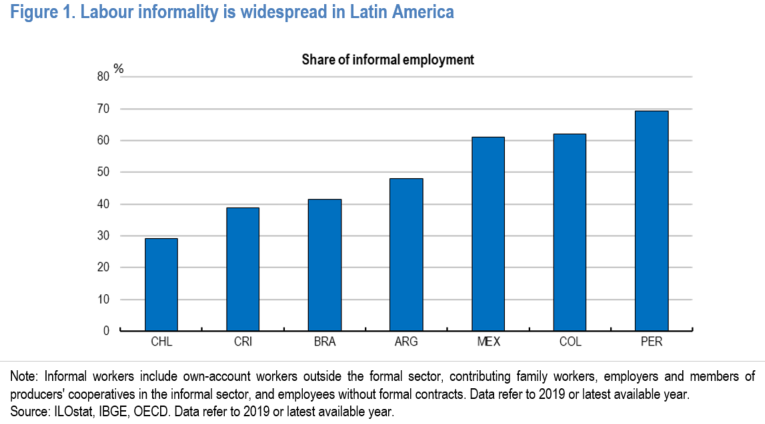
Social distancing has led to sharp declines in mobility and activity across Latin America. Widespread informality creates particular challenges for the livelihoods of many workers. As their activities are shut down to contain the spread of COVID-19, informal workers or small entrepreneurs are usually not covered by social protection. Largely out of reach of the public sector, they easily fall through the cracks of emergency income support measures. This has highlighted a major need to rethink and strengthen social protection mechanisms in Latin America. Providing more complete social safety nets that are not tied to formal employment and that can react rapidly to income losses would be one solution. In many countries in the region, such safety nets could be built on the basis of existing conditional cash transfer programmes.

Informal workers and small entrepreneurs account for a significant share of the workforce across Latin America (Figure 1). Most of them have no access to social protection, and almost no savings to carry them through the trough. Informal employees were the first to lose their jobs, while self-employed entrepreneurs such as street sellers and small service providers were left with no source of income as streets became empty. Working from home may be a solution for educated middle-class workers, but it is out of reach for the most vulnerable (Mongey and Weinbergy, 2020).

The crisis has exposed shortcomings in existing social protection mechanisms

Governments in Latin America responded swiftly to the unprecedented challenges posed by COVID-19. Many countries designed temporary support measures, building on existing instruments such as formal-sector unemployment insurance and cash transfers. Formal-sector employees benefitted from more flexible access to unemployment benefits, for example in Brazil and Chile, while temporary short-time work schemes, wage subsidies or lower labour contributions helped to preserve formal labour contracts Brazil, Colombia, Costa Rica and several Mexican states. Cash transfer schemes targeted to low-income households play important roles in Argentina, Bolivia, Brazil, Chile, Colombia, Costa Rica, Ecuador, Mexico and Uruguay, among others. These cash transfer schemes are typically based on large locally-maintained registries of low-income households that can consider both formal and informal incomes. Providing additional resources to these schemes allowed to raise benefit levels and/or expand coverage, including by eliminating previous enrolment waiting lists, as in the cases of Brazil, Chile, Colombia and Peru.

The COVID-19 policy response, however, has also exposed significant gaps in existing social safety networks. Amid policy support for formal workers and for the poor, vulnerable households whose livelihoods depend on informal activities are often left without any social protection mechanism to fall on. Before the pandemic, many of these had successfully escaped poverty and gained incomes above the threshold where they would qualify for cash transfers, but without gaining access to the kind of social protection in place for formal employees. As distancing measures led to unprecedented declines in demand, many of these households were left without any income.

Reaching informal workers is a challenge for public policies and has required innovative ideas. Beyond the grasp of income tax systems, and with no access to social benefits, many informal workers have traditionally been outside the radar of the state. In addition, they often lack access to banking services, so governments had to respond creatively and ensure the creation of basic bank accounts for emergency benefit recipients. More than 50 million Brazilians used a smartphone application to receive an emergency benefit established after the outbreak. Colombia has been similarly successful, paying out benefits to 1.5 million households previously not covered by social benefits, and including free digital banking products. Chile is supporting more than 2 million vulnerable and informal households through different cash transfers, handing out debit cards to those without a bank account. Costa Rica’s new cash transfer also offers the creation of a bank account. Such programmes have replaced significant shares of pre-crisis incomes for low-income households (Busso et al., 2020).

Lessons for the future

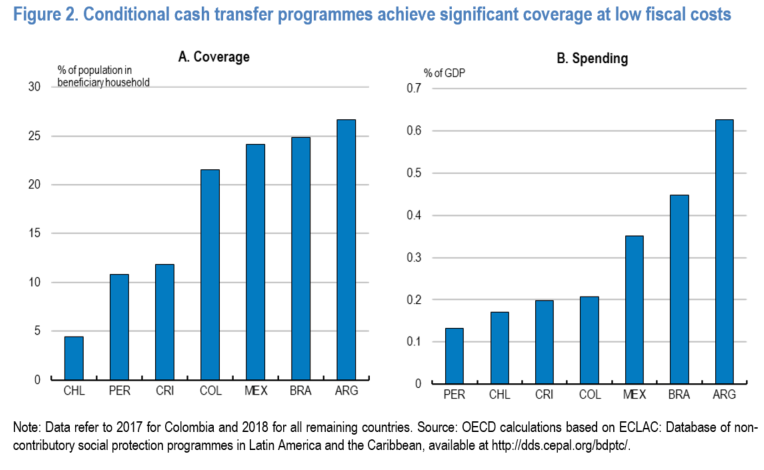
Building more effective universal social safety nets that include informal workers and entrepreneurs emerges as one of the main lessons from the COVID-19 crisis and the social unrest during 2019. Given their wide reach in many countries, existing cash-transfer programmes would be the most straightforward basis for effective social safety nets (Figure 2, Panel A). In several countries, eligibility is in principle universal, but in practice, enrolment processes are too slow or cumbersome to help people in the face of sudden income losses. An important step would therefore be to make cash transfer programmes more agile, so that they can disburse quickly when people lose their livelihoods, following the examples of the UK’s Universal Credit or Malaysia’s BSH programme. More universal social safety nets based on means-tested cash transfers could also help to reduce the widespread fragmentation of social programmes, and strengthen their effectiveness.

Financing universal social safety nets will require additional resources, but building on existing programmes may make the cost manageable. Cash transfer schemes are among the most cost-efficient social expenditure programmes, and they cost relatively little (Figure 2, Panel B). Brazil’s successful Bolsa Família programme, for example, currently only costs 0.5% of GDP, compared with 12% spent on formal social security schemes. During the COVID-19 pandemic, additional spending of 0.04% of GDP was enough to eliminate an accumulated queue of 1 million benefit applicants. Building on existing citizen identification systems and digital technologies could further reduce costs.

Social protection for informal workers should go along with efforts to foster formalisation. Reviewing non-wage labour costs can help to reduce informality, as illustrated by Colombia’s 2012 tax reform. Costly and complex business regulations, including those for starting a formal business, also hamper the formalisation of firms and jobs. Expanding the use of one-stop shops for business regulations would be one way forward. Social programmes could increasingly integrate training and lifelong learning for informal workers. This could create a virtuous circle between formal employment, growth and equity.


Global policy co-operation would strengthen the recovery from the pandemic

by Nigel Pain and Véronique Salins, OECD Economics Department

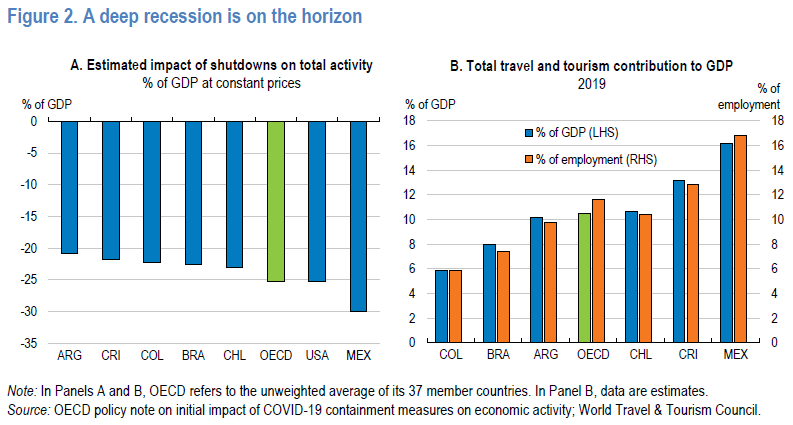
The COVID-19 pandemic saw governments throughout the world impose stringent containment measures to contain the spread of the virus, including the partial or total shutdown of the activity in many sectors. These necessary measures succeeded in slowing the spread of infections and reducing the death toll, but have severely impacted economic activity, with GDP declines of more than 20% in many countries during shutdowns and a surge in unemployment.

Governments reacted quickly, with substantial fiscal measures being used to help preserve the incomes of workers and companies despite the collapse of activity. In addition, monetary policy has been eased and financial policy relaxed to support credit provision by financial institutions. While such measures have helped to limit the short-term costs of the crisis, the path to recovery remains exceptionally uncertain in the absence of a vaccine or adequate treatment of the disease,.

The OECD Economic Outlook, released on June 10, presented two possible scenarios: one in which the virus recedes slowly and remains under control (the single-hit scenario), and one in which a second wave of contagion is assumed to erupt later in 2020 (the double-hit scenario). In both cases, the G20 economies are projected to experience a severe output decline in 2020, followed by a slow and gradual recovery in 2021 with output and incomes remaining well below the levels expected prior to the pandemic.

Policymakers face exceptional challenges as the recovery gets underway. Government budget deficits are elevated, public debt is set to rise to exceptionally high levels in many countries, monetary policy space is limited, and there are strong risks that a fragile recovery will leave lasting scars.

Should another virus outbreak occur, as assumed in the double-hit scenario, or the recovery proves unexpectedly weak, additional stimulus will need to be supplied mainly by fiscal policy, with monetary policy helping to ensure adequate liquidity and low interest rates along the yield curve. In either scenario, supportive macroeconomic policies will be required for some time to foster a durable recovery. Debt-financed public spending will need to be well targeted on support for the most vulnerable and on public investment in the health, education, digital and environmental infrastructures that are necessary for a sustainable recovery and which lift demand in the near term.

Potential scars in labour and product markets, the necessary reallocation of workers and capital across sectors in the aftermath of the pandemic, and the significant adverse impact of the crisis on living standards also emphasise the urgent need for renewed and well-targeted structural policy reforms in all economies.

Global policy co-operation would enhance the benefits of these actions. Acting together creates confidence and positive spillovers on trade and investment that will be more effective for all countries than if they acted alone. Co-ordinated policy actions across all the major economies are needed to ensure effective healthcare provision around the world and provide the most effective stimulus to the global economy. They would help restore growth more efficiently than country specific actions, with larger effects on trade, consumer and investor confidence and uncertainty.

Illustrative policy simulations for the G20 economies highlight the benefits of economic policy co-operation. The particular set of co-ordinated fiscal, monetary and structural measures considered includes a debt-financed fiscal easing of 0.5% of GDP in all countries for three years, reductions in policy interest rates in economies with sufficient policy space, and additional competition-enhancing structural reforms that increase productivity slowly over time. In all of the G20 countries (or wider areas) central banks are also assumed to use forward guidance that helps interest rates to remain low and takes into account the longer-term output gains from the package of policies being undertaken. In addition, a temporary reduction in investment risk premia is incorporated when all countries act together to capture the favourable effects on investor confidence.

Taken together, these policy measures raise the level of GDP by around ¾ per cent in the first year in the median G20 economy (Figure below, Panel A) and by 1¼ per cent in the second year, with the level of output permanently higher in the longer term. The near-term boost to output primarily results from the collective gains from more supportive macroeconomic policies, but the structural reform measures also start to raise output in the short run, with their impact continuing to build over time. The near-term impact on GDP is a little higher in the G20 economies that have space to reduce policy interest rates, reflecting positive effects on demand and investment, but output gains nevertheless remain strong in the other economies.

In all G20 countries, there are clear gains from collective action relative to each country acting by itself (Figure below, Panel B). First, acting together enhances the spillovers through stronger trade growth and higher financial asset prices as firmer external demand boosts exports and incentives to invest. Second, there are additional gains for each country from the boost to global confidence and reduction in uncertainty that comes from acting together to tackle a common problem. Altogether, the gains from collective actions add nearly one-half and one-third respectively to the output gains in the median G20 economy in the first and second year of the scenario.

This suggests that co-ordinated policy action across countries remains the most effective response to the large economic disruptions caused by the Covid-19 outbreak and the challenges that result. In practice, it may either not be possible for all countries to undertake actions on all fronts or countries may simply choose to undertake a different mix of fiscal, monetary and structural responses. Nonetheless, it is important that all countries participate in a co-ordinated effort to support growth as this will increase the collective gains and the benefits for each country.


Germany’s short-time work scheme: can its past success be replicated?

By Alexandra Effenberger, Michael Koelle and Andrew Barker, OECD Economics Department

Germany has avoided a large jump in unemployment in the early stages of the COVID-19 recession, just as it did during the global financial crisis (GFC). One important factor in this success is the well-established short-time work (STW) scheme (Kurzarbeit), whereby the government subsidises wage payments for employees whose hours are cut at companies in temporary distress. Countries such as Austria, Switzerland and Italy have similar established schemes, while others such as the UK, Denmark and Latvia have just recently implemented job retention schemes. A number of questions are pertinent for countries looking to learn from the German experience: how many jobs have been saved by STW, what are the fiscal costs and how much does the scheme’s success depend on the specific institutional settings in Germany?

In its current form the scheme functions as an automatic stabiliser, as companies are generally eligible to use STW if they face a major drop in activity for economic reasons or due to extraordinary events, provided the drop is temporary and unavoidable. The application process is fairly streamlined. After notifying the labour agency of the intent and demonstrating the need to use STW, firms are flexible in the actual take-up in terms of both workers and individual work-time reductions. Similar to previous economic crises such as the GFC, exceptional measures to extend the scheme during 2020 could be readily implemented including:

  • The eligibility threshold for the share of workers affected by a lack of demand within a firm has been lowered from one-third to 10%, and temporary agency workers made eligible.
  • The labour agency reimburses 100% of social security contributions for lost working hours (usually covered by the employer).
  • To shield workers from large earnings losses, the replacement rate of lost net earnings is increased from 60% for childless workers and 67% for workers with children to 70% and 77% from the fourth month if they have reduced their working time by at least 50%. In the seventh month, payments are increased further to 80% and 87%.
  • Restrictions on taking part-time jobs while on STW have been lifted. The additional earnings are not credited against short-time working benefits as long as the total income does not exceed the previous income.

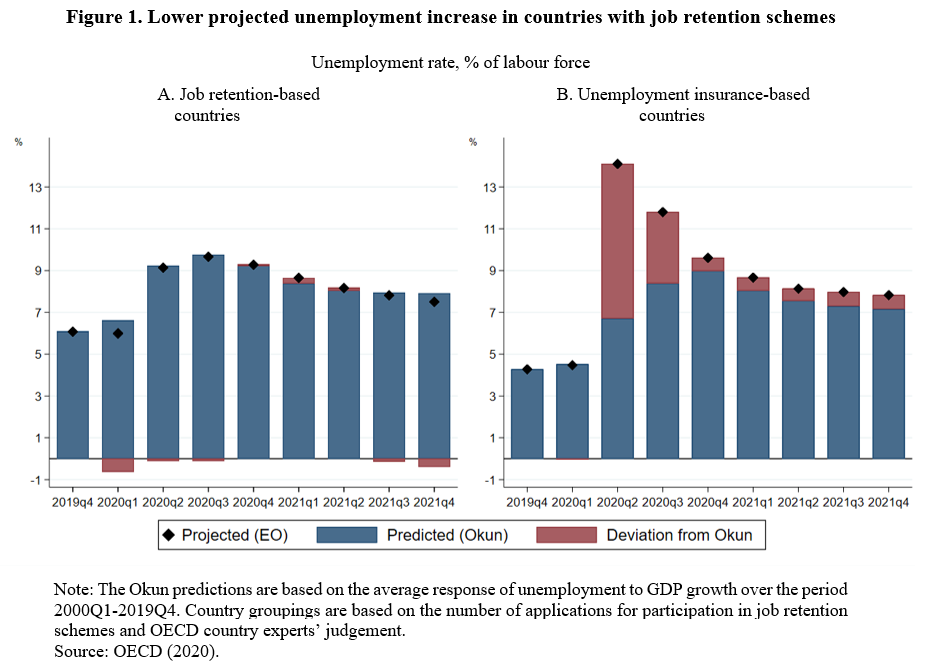
The key benefit of STW is moderation of the increase in unemployment during a downturn, with immediate payoffs through avoiding the large wellbeing and scarring costs of unemployment for workers and medium-term gains from maintaining viable job matches. Countries with large STW or job retention schemes have seen substantial take-up of these schemes alongside much smaller increases in unemployment during the current crisis (Figure 1). STW is estimated to have saved in the order of up to half a million German jobs during the GFC when at its peak around 1.4 million workers were in STW (Hijzen and Martin, 2013[1]; Boeri and Brücker, 2011[2]). Based on the number of notifications the labour agency estimates that 6 million individuals were in short-time work in April 2020. The flipside is that by subsidising existing positions, STW can impede labour reallocation, reduce the probability that those without a secure job find work and slow job growth during the recovery (Cahuc, 2019[3]; Hijzen and Martin, 2013[1]).

Will STW be an efficient instrument in the current crisis?

It remains unclear how well STW will perform in the current crisis, but it will be best-suited if there is a relatively rapid economic rebound without substantial changes to the sectoral composition of the economy (Schwellnus, Koelle and Stadler, 2020[4]). STW was well-suited to dealing with the downturn in Germany during the financial crisis as the sectoral composition of the economy changed little. No major industry grouping gained or lost more than 1 percentage point in its share of labour between 2008 and 2011, with manufacturing experiencing the biggest decline from 19% of hours worked to 18.2% (OECD, 2020[5])

Certainly, the current crisis hit the economy faster and more broadly, as many stores and services were required to shut down completely. This is also visible from the concentration of STW notifications and movements into unemployment in those most affected sectors (Figure 2). However, in contrast to the GFC the decline in business activity has been determined by confinement and social distancing rather than pre-existing differences in firm performance, which is mirrored in the so far much greater reliance on STW rather than lay-offs (Weber and Gehrke, 2020[6]). This suggests that the risk of locking workers in unviable jobs through the use of STW might be less pronounced. Sectoral shifts might be avoided again if the lifting of confinement measures continues and consumers’ demand picks up quickly. In addition, Germany entered the current crisis with very low unemployment and a high degree of labour shortages making firms reluctant to lay off valuable workers. Nevertheless, sectors such as tourism, hospitality and aviation might be subject to longer-term interruptions. A fall in demand during the downturn might accelerate structural changes in some industries, such as automotive manufacturing. As a result, reallocation of labour might become more crucial. In this case, relying on STW for an extensive period might be less efficient than implementing measures focusing more directly on job creation.

Some current additional measures increase the efficiency of the scheme. For example, expansion of STW to allow part-time working in a second job is positive as it facilitates reallocation towards sectors with a temporarily higher labour demand. On the other hand, deadweight effects might increase with the full reimbursement of social-security contributions as it makes it less costly for firms to hold on to workers even if their job is not viable and they will be laid off eventually (Crimmann, Wießner and Bellmann, 2010[7]).

How much does it cost?

The fiscal costs from STW are generally low relative to the number of jobs saved. The costs to the labour agency of saving around half a million jobs during the GFC amounted to about EUR 4.6 billion in 2009 and EUR 3.1 billion in 2010 (Bundesagentur für Arbeit, 2011[8]). Based on the estimate of 6 million workers in STW in April 2020, labour agency budget estimates suggest costs could have been running at almost 2% of GDP recently, with the increase in unemployment payments roughly a degree of magnitude smaller. By comparison, increases in unemployment benefits under expanded coverage were costing US governments around 5% of GDP in early May (including substantial increases in payment generosity) and the Israeli government just over 3% per cent of GDP in April.

The generosity of German STW payments is aligned with unemployment benefits, but may cost the government more upfront if it pays for reductions in hours for workers who would have been kept on anyway. Conversely, STW offers fiscal benefits because the government saves on the cost of helping those who become unemployed to find work. Compared with job-saving alternatives, STW schemes such as the German one have a lower cost per job (Cahuc, Kramarz and Nevoux, 2018[9]). By allowing for a partial hours adjustment, the fiscal cost per worker covered is lower than job retention schemes that subsidise workers who stop work altogether. They are also better targeted than wage subsidies.

Can Germany’s successes with STW be readily replicated?

There are some institutional settings that favour working time adjustments in Germany and may limit applicability to other countries. Stringent rules about layoffs make STW more pertinent to firms. Germany, like some other countries with extensive STW programmes such as France and Italy, ranks in the top 10 OECD countries for protection of permanent workers against dismissal (OECD, 2020[10]). Protection includes notice periods, during which the regular salary would have to be paid, and in some cases severance payments. Total costs averaged across different tenures reach almost 22 weeks of salary, among the highest in the OECD (World Bank, 2020[11]).

Similarly, firing and re-hiring is more costly for firms that require specific qualifications such as technology-intensive production. At the time of the GFC, the turnover costs for low-skilled workers were around EUR 7000 in Germany whereas they were almost five times that high for qualified workers (Bach and Spitznagel, 2009[12]). OECD research shows that technology- and skill-intensity is positively related to labour-hoarding tendencies during economic downturns (OECD, 2010[13]). In this context, the relative importance of technology- and skill-intensive manufacturing in Germany may help to explain the modest response of employment to the decline in output during crises.

In addition, internal flexibility measures such as working hour accounts and reductions in weekly hours or overtime play an important role in working time adjustments in Germany and help cushion the effects of cyclical downturns. Such internal flexibility measures are often covered through collective bargaining agreements or agreed between the social partners, which might not be easily transferred to other countries.

What’s to be learned?

In sum, the German experience shows that an established, flexible and quickly accessible STW scheme can help reduce the labour market effects of an economic crisis and save viable job matches when the downturn is short-lived, the sectoral composition of the economy is not affected, and costly firing and hiring by firms might slow the recovery. For the German case, it remains to be seen whether COVID-19 will trigger the need for substantial reallocation of labour, undermining the benefits of keeping employees in their current jobs. Moreover, any such scheme needs to be tailored to country-specific institutional settings and the eligibility for different types of workers and their share in the economy have to be carefully considered. For example, even when they are eligible for STW it might still be easier for firms to lay off workers on fixed-term contracts, which across European OECD countries on average constitute around 8% of all workers in sectors hit heavily by the COVID-19 crisis (OECD, 2020[14]). During the GFC, take-up of STW in Germany was lower in firms with a higher share of fixed-term contracts (Boeri and Brücker, 2011[2]). Similarly, the self-employed cannot use STW and might need different support programmes. Many countries including Germany have established special funds for the self-employed. Finally, as STW is targeted at keeping incumbent workers in employment, it needs to be recognised that potential new hires such as young graduates and those currently unemployed do not benefit and may lose out if subsidised jobs hinder their own entry into the labour market. Rates of transition from unemployment to employment during April and May 2020 were the lowest ever recorded for those months, worse even than as unemployment approached its 2009 peak during the GFC (Bundesagentur für Arbeit, 2020[15]).

References

Bach, H. and E. Spitznagel (2009), “Kurzarbeit: Betriebe zahlen mit – und haben was”, IAB-Kurzbericht No. 17/2009. [12]

Boeri, T. and H. Brücker (2011), “Short-Time Work Benefits Revisited: Some Lessons from the Great Recession”, Economic Policy, Vol. 26/68, pp. 697-765. [2]

Bundesagentur für Arbeit (2020), “Der Arbeitsmarkt im April 2020”, Press release No. 27 April 30, https://www.arbeitsagentur.de/presse/2020-27-der-arbeitsmarkt-im-april-2020. [16]

Bundesagentur für Arbeit (2020), Monatsbericht zum Arbeits- und Ausbildungsmarkt Mai 2020. [15]

Bundesagentur für Arbeit (2011), Aktiv aus der Krise – Geschäftsbericht 2010. [8]

Cahuc, P. (2019), “Short-Time Work Compensation Schemes and Employment”, IZA World of Labor, Vol. 11/2, pp. 1-11. [3]

Cahuc, P., F. Kramarz and S. Nevoux (2018), “When Short-Time Work Works”, Banque de France Working Paper No. 692. [9]

Crimmann, A., F. Wießner and L. Bellmann (2010), The German work-sharing scheme: An instrument for the crisis. [7]

Hijzen, A. and S. Martin (2013), “The Role of Short-Time Work Schemes during the Global Financial Crisis and Early Recovery: A Cross-Country Analysis”, IZA Journal of Labor Policy, Vol. 2/5, pp. 1-31. [1]

OECD (2020), “Distributional Risks Associated with Non-Standard Work: Stylised Facts and Policy Considerations”, Tackling Coronavirus Series. [14] see also: https://oecdecoscope.blog/2020/06/19/policy-responses-to-covid-19-no-worker-should-be-left-behind/

OECD (2020), OECD Employment database, https://stats.oecd.org/Index.aspx?DataSetCode=EPL_OV. [10]

OECD (2020), OECD National Accounts database, https://stats.oecd.org/Index.aspx?DataSetCode=NAAG. [5]

OECD (2010), Employment Outlook 2010, OECD Publishing, Paris. [13]

Schwellnus, C., M. Koelle and B. Stadler (2020), “Flattening the unemployment curve? Policies to support workers’ income and promote a speedy labour market recovery”. [4] See also: https://oecdecoscope.blog/2020/06/17/flattening-the-unemployment-curve-policies-to-support-workers-income-and-promote-a-speedy-labour-market-recovery/

Weber, E. and B. Gehrke (2020), Kurzarbeit, Entlassungen, Neueinstellungen: Wie sich die Corona-Krise von der Finanzkrise 2009 unterscheidet. [6]

World Bank (2020), Doing Business 2020: Employing Workers, https://www.doingbusiness.org/en/data/exploretopics/employing-workers. [11]


Policy responses to COVID-19: no worker should be left behind

By Maria Chiara Cavalleri and Orsetta Causa

While the magnitude of the COVID-19 crisis unfolds, millions of people and workers worldwide wonder what the future holds for them. In response to the pandemic, OECD governments implemented unprecedented measures to stop the spread of the virus. Facing the risk of a severe recession, many governments implemented extensive policy packages to help workers and firms weather the COVID-19 storm. Some workers have been more affected than others because of the nature of their work. Those working in the tourism industry and in service sectors involving personal contact, such as hospitality, sports and entertainment, have been suffering the most from the shutdown and the widespread restrictions in mobility. These are sectors where activity is likely to remain affected for quite some time even as economies slowly recovery.

New OECD work shows that some groups of workers face a higher risk of being left behind and experience poverty associated with COVID-19 labour market disruptions. The self-employed, those hired on fixed-term contracts and part-time workers – generally referred to as non-standard workers – account for a sizeable share of total employment in the sectors most affected by containment measures. On average across European OECD countries, they represent around 40% of total employment in hard-hit sectors, reaching more than 50% in Italy, the Netherlands, Spain and Greece (Figure 1).

Policy challenges

Non-standard workers are particularly vulnerable to the COVID-19 crisis because they tend to have weakest access to social safety nets. For instance, in many countries the self-employed have limited, if any, social protection against income loss due to sickness or a halt in activity. Also, employees under temporary contracts may de facto be excluded from job retention schemes as the incentives for firms to include such workers in short-time work schemes are weak because participation costs can be higher than hiring and firing costs.

Tight access conditions to social protection and low benefit replacement rates weigh relatively more on living standards at the bottom of the wage distribution. Non-standard workers in low-paid jobs represent on average around 12% of dependent employment in affected sectors. These workers may work only occasionally or irregularly, sometimes failing to meet the income thresholds required to access unemployment benefits. Finally, involuntary part-time workers – of which the vast majority are women – may be relatively more at risk of economic hardship in the event of job loss.

Policy responses: immediate action and the way forward

Policy responses to the labour market crisis should be inclusive by ensuring that vulnerable workers are not left behind. In the initial phase of the crisis, the main challenge was to address social protection gaps between standard and non-standard workers. OECD countries have generally been responsive to that policy challenge:

  • About half of OECD countries have exceptionally expanded or eased access to paid sick leave for non-standard workers.
  • Access to unemployment benefits has been enhanced in a majority of OECD countries.
  • Some countries have included temporary employees in short-time work schemes.
  • Several countries have introduced temporary income replacement schemes to support the self-employed experiencing severe income losses.

Looking forward, the policy challenge is to prevent crisis-related adverse distributional effects from becoming long lasting, for instance avoiding that temporary job losses from COVID-19 translate into long-term unemployment with associated scarring effects. Durable changes in the structure of economic activities may require workers to relocate from declining to expanding sectors and new jobs. The reallocation and matching between workers and jobs should be smooth and inclusive, that is, minimising labour market segmentation and inequality. This requires effective active labour market policies and requalification schemes, on top of adequate income support to help job search, for all workers. This crisis is also an eye-opener on the need to provide workers with equal opportunities to access social protection: countries should consider reforming regular social protection schemes to become more accessible to non-standard workers. Reforms in this area would reduce labour market segmentation and inequalities, and accompany the transition towards new forms of employment.

References

OECD (2020a), OECD Economic Outlook, Volume 2020, Issue 1, Issue Note 4: Distributional risks associated with non-standard work: Stylised facts and policy considerations, OECD Publishing, Paris, https://doi.org/10.1787/0d1d1e2e-en


Flattening the unemployment curve? Policies to support workers’ income and promote a speedy labour market recovery

by Cyrille Schwellnus, Michael Koelle, Balazs Stadler, OECD Economics Department

The spread of COVID-19 across countries and measures taken by governments to contain it – including shutdowns of many business and restrictions on travel and mobility – have led to employment losses that dwarf those experienced during the economic crisis of 2008-09 in terms of both speed and magnitude. The OECD projects the OECD-wide unemployment rate to increase by around 6 percentage points between the fourth quarter of 2019 and the second quarter of 2020 as compared to an increase of around 2 percentage points between the third quarter of 2008 and the second quarter of 2009.

A number of countries, including Australia, Japan, New Zealand and most Western European countries, have established or expanded job retention schemes to preserve as many existing jobs as possible (OECD, 2020). These schemes typically operate on the principle that businesses are subsidised to preserve existing job matches while workers experience no or limited wage losses. In practice, businesses continue to pay employees a significant part of their monthly wages even though they are working only part-time or not at all. In return, they can claim a wage subsidy that covers part of the excess wage cost.

Other countries, including a number of Central and Eastern European countries and the United States, have taken very limited labour market measures to support the preservation of existing jobs. Firms in these countries have greater incentives to lay off workers in response to the COVID-19 shock. The unemployment rate in the United States, for instance, increased by about 10 percentage points between February and May 2020, which partly reflects the ease of layoffs and the absence of significant job retention schemes at the federal level.

The massive use of job retention schemes during the crisis raises the question of their effectiveness in preserving existing jobs in the short term. Although data on GDP growth and unemployment for the first half of 2020 are not yet available, a first assessment can be made by analysing OECD projections. OECD country specialists integrate real-time information on GDP growth and unemployment from high-frequency indicators in their projections, as well as information on the extent of job-preserving measures, including past experience and real-time information on programme uptake, thereby summarising the currently available information in a synthetic way. The analysis suggests that – relative to predictions based on the historical relation between unemployment and GDP growth (“Okun’s law”) – countries that have resorted to large job retention schemes during the crisis are projected to experience smaller increases in unemployment than other countries (Figure 1).

A complementary way to assess the effectiveness of policies to preserve existing jobs is to compare real-time unemployment developments across countries with and without large job retention schemes. Ideally, such comparisons would take into account differences across countries in the magnitude of the GDP shock. However, GDP is available on a less timely and lower-frequency basis than unemployment data, which makes conditioning on GDP impossible. The approach taken instead is to report changes in registered unemployment along with the workforce covered by applications to job retention schemes. The results, shown in Figure 2, suggest that increases in unemployment have been systematically smaller in countries with larger coverage of applications, suggesting that – at least in the short term – these schemes have been effective in limiting increases in unemployment.

Job retention schemes may be effective in preserving existing jobs in the short term, but this may come at the cost of a less efficient reallocation of workers from unviable jobs to industries and firms with better medium-term growth prospects (Barrero, Bloom and Davis, 2020). Restrictions on some non-essential activities (e.g. travel; hotels and restaurants; parts of the retail sector; recreational services) may persist for some time and consumer demand may not fully recover even thereafter, while industries and firms with business models that are compatible with social distancing may grow (e.g. e-commerce; courier, express and parcel services; parts of the health sector; as well as activities that rely mostly on tasks that can be performed remotely), suggesting that the COVID-19 shock may require significant reallocation of resources.

The optimal mix of job preservation and unemployment benefit policies to support workers and ensure a rapid recovery thus depends on whether the exogenous COVID-19 shock turns out to be purely transitory or more persistent. Given large uncertainty about the longer-term consequences of the crisis for the reallocation of resources across industries and firms, policies to preserve existing jobs can be combined with temporary expansions of unemployment benefits where generosity and/or coverage is currently low.

For instance, employers’ contributions to the cost of job retention schemes could be set in such a way that only businesses expecting to be viable in the medium term select into them rather than using the unemployment insurance system (OECD, 2018). This may require gradually increasing employers’ contributions from the low level put in place during the acute phase of shutdowns.. Moreover, access to training and restrictions on combining income from short-time work schemes with income from other jobs could be eased to allow workers to seize new job opportunities as they arise.

An appropriate balance between preserving existing jobs and reallocation could also be achieved by strengthening incentives in unemployment insurance systems to recall dismissed workers once economic conditions improve (Fujita, Moscarini and Postel-Vinay, 2020). Combining generous unemployment benefits with rules that provide subsidies or tax relief for firms that recall previously dismissed workers could support workers and preserve job matches to a similar extent as short-time work schemes, while allowing for a sufficient degree of reallocation. In Israel, for instance, the government introduced a recall subsidy of around USD 2100 at the end of May.

As the COVID-19 crisis evolves, finding the right balance between job preservation and reallocation of resources will involve some degree of experimentation regarding the sharing of costs related to job retention schemes between employers, employees and the government, as well as a focus on restoring viable job matches in countries that have experienced large numbers of layoffs. As activity in a number of industries resumes, a renewed focus on active labour market policies, including training and public employment, on top of appropriate income support may limit the costs of reallocation for workers. In order to provide timely and granular labour market policy advice, the OECD is monitoring ongoing reallocation across firms, industries and regions using real-time data on online job advertisements. The results of this work will be reported in forthcoming OECD policy briefs.

References
Barrero, J., N. Bloom and S. Davis (2020), COVID-19 Is Also a Reallocation Shock, National Bureau of Economic Research, Cambridge, MA, http://dx.doi.org/10.3386/w27137.

Fujita, S., G. Moscarini and F. Postel-Vinay (2020), The labour market policy response to COVID-19 must save aggregate matching capital, VoxEU CEPR Policy Portal, https://voxeu.org/article/labour-market-policy-response-covid-19-must-save-aggregate-matching-capital.

OECD (2018), Good Jobs for All in a Changing World of Work: The OECD Jobs Strategy, OECD Publishing, Paris, https://dx.doi.org/10.1787/9789264308817-en.

OECD (2020), OECD Economic Outlook, Volume 2020 Issue 1: Preliminary version, Issue Note 5 Flattening the unemployment curve? Policies to support workers’ income and promote a speedy labour market recovery, OECD Publishing, Paris, https://doi.org/10.1787/0d1d1e2e-en


Corporate sector vulnerabilities during the Covid-19 outbreak: assessment and policy responses

by Lilas Demmou, OECD Economics Department, Guido Franco, OECD Economics Department, Sara Calligaris, OECD Directorate for Science, Technology & Innovation, and Dennis Dlugosch, OECD Economics Department

The health crisis caused by the COVID-19 outbreak has led public authorities to take unprecedented measures to contain the propagation of the virus. Administrative business shutdowns, quarantines and restrictions on mobility and social contacts have brought large parts of our economies almost to a standstill. Sales across many sectors have plummeted and are beginning to recover only slowly. Nevertheless, financial commitments with respect to suppliers, employees, lenders and investors remain, depleting liquidity buffers of firms.

The liquidity crisis may turn into a global corporate solvency crisis. With much less or no incoming revenues for an extended period of time and fewer options to deal with this shortfall, the long-term viability of firms has been impaired, and firm voluntary closure and bankruptcies may follow. In turn, a corporate solvency crisis could have serious long-term negative effects on our economies by dragging down employment, productivity, growth and well-being. Mindful of these risks, governments have adopted a range of emergency measures aimed at supporting firms’ liquidity. Aside from monetary measures taken by central banks, fiscal interventions have included direct and indirect financing of the wage bill, tax deferrals, debt moratoria and extension of state loan guarantees.

An issue note published in the latest issue of the OECD Economic Outlook evaluates the risk of a widespread liquidity crisis and discusses the pros and cons of different kinds of public support measures. Building on the methodology developed by Schivardi and Romano (2020) and on illustrative assumptions regarding the evolution of sales and costs during the epidemic, a simple accounting framework is used to calculate the percentage of firms that become illiquid month by month following the introduction of confinement measures. The key role of policies to avoid massive unnecessary bankruptcies is emphasised by comparing the share of firms that would turn illiquid under two scenarios: one where there is massive policy support for firms and one where there is no such support.

The risk of liquidity shortages is high for a large portion of healthy firms

The analysis relies on 2018 firm-level financial data, obtained from the latest vintage of the Orbis dataset (provided by Bureau Van Dijk), and covers a sample of almost one million firms located in 14 European countries, operating in both manufacturing and non-financial services sectors.

The economic shock from measures of physical distancing on firms’ liquidity is modelled as a change in firms’ operating cash flow, resulting from the decline in sales and from firms’ limited ability to fully adjust their operating expenses. Next, the liquidity available to each firm is calculated as the sum of the liquidity buffer held at the beginning of each month and the shock-adjusted cash-flow.

Measures on distancing and mobility restrictions have heterogeneous effects on different sectors. Therefore, we assume the decline in activity to be different across sectors, but identical across countries; for a set of severely hit sectors, the decline in output ranges between 50% and 100% of sales, while it is conservatively set at 15% for the other non-financial sectors. In line with the projections published in the Economic Outlook, we consider two alternative scenarios with respect to the dynamic of the recovery:

  • A “single-hit” scenario, whereby a sharp drop in activity lasting two months is followed by a four-month progressive recovery, with a return to pre-crisis activity levels seven months after the start of the epidemic.
  • A “double-hit” scenario, which overlaps with the single-hit scenario for the first seven months, but then assumes a second outbreak from the eight month onwards.

The solid lines in the left and right panels of Figure 1 report the main results of the exercise: in the absence of government intervention, 20% of firms in the sample would likely run out of liquidity after one month and 30% after two months. As the economy is expected to recover only slowly after the two months of collapse in activity, the percentage of firms facing liquidity shortfalls would reach 40% after six months, and starts to decline from the seventh month onwards, when the economy returns to the pre-crisis level of production (“single hit” scenario). In the case of a second episode of widespread confinement, this share would increase instead to 45% (“double-hit” scenario).

The analysis also shows that firms facing a high risk of experiencing liquidity shortages are mostly profitable and viable companies (Figure 1, dashed lines). At the same time, even though solvent, a sizeable share of these firms might face difficulties in accessing new bank financing to bridge a shortfall in liquidity, as they lack the collateral to tap into additional debt. (Figure 1, dotted lines).

The exercise is based on several assumptions, which calls for cautious interpretations. Even so, it underlines the merit of swift and decisive public intervention to safeguard companies and avoid potential bankruptcies of otherwise healthy companies. This intervention is crucial to avoid that the temporary shock implied by the COVID-19 crisis permanently scars the corporate landscape, with serious consequences for the shape of the recovery and long-run growth prospects.

Public policies to reduce liquidity shortages and curb bankruptcy risk

Countries have already introduced a wide range of measures to help firms to cope with the disruptions associated with COVID-19. We used our accounting model also to illustrate the expected impact of stylised policy interventions in three areas:

  • Deferral of taxes. To support business during the epidemic, several countries have introduced tax deferrals. We model the tax deferral as the moratorium of the (hypothetical) monthly tax payments.
  • Financial support for debt repayment. A large number of countries have also established legislative frameworks that temporarily allow firms to postpone their debt payments or alternatively, that offer State guarantees to facilitate access to short-term debt facilities. The potential impact of such policies is modelled as a moratorium on short-term debt.
  • Temporary support to wage payments. A critical response to avoid widespread liquidity shortfalls consists of relaxing firms’ financial commitments vis-à-vis their employees. Schemes such as a shortening of working time, wage subsidies, temporary lay-offs and sick leave have been introduced across countries, though in different combinations. All these measures reduce the wage bill firms have to pay. The labour support is modelled as an unconditional reduction of the wage bill by 80% in all sectors.

Figure 2 illustrates the extent to which each measure curbs the risk of a liquidity crisis compared to the no-policy intervention situation. Tax deferral has the lowest impact on firms’ liquidity positions, followed by debt moratorium policies. Subsidies to the wage bill seem to be the most powerful measure (yet potentially costly), in line with the fact that wages and salaries are often the most important component of operating expenses. Adding up the three different measures, public intervention after two months, for instance, would decrease the number of firms running out of liquidity from 30% to 10%.

Challenges in the design of policies

Public intervention on such a massive scale raises several challenges related to the design of policies. In particular:

  • Country-specific dimensions. Country-specific institutional settings may shape the extent and the efficiency of the policy response. Given the importance of labour market policies highlighted in the note, it is likely that countries with already well-developed labour market support schemes are able to provide a quick response with less distortive effects.
  • Conditionality. In some countries, loans forbearance and wage subsidies are conditioned on the actual reduction in payroll, with the requirement to be used to cover fixed costs only or to rehire fired employees after the crisis. The design of transfers and subsidized loans to corporations should ensure that firms preserve jobs when possible and do not divert resources towards exclusively private interests (e.g., to boost CEO compensation or dividend payments).
  • Short-term versus medium-term policy answer. Given the need of an urgent policy response during the so-called “phase one” of the crisis, policy has often not been particularly targeted in the short term. Going forward, short-term, cross-cutting policies might need to be better refined to ensure that public support does not contribute to resources misallocation. Moreover, policies will also need to account for the heterogeneous impact of the shock, as firms will not be on the same foot to face the crisis other than for liquidity reasons when the activity will slightly recover in the medium-term (see also Gopinath, 2020).
  • New normal. The extent to which the COVID-19 crisis will disrupt the economies is still uncertain. In European countries a large set of policies, in particular in the labour market, is tailored on the principle to protect the pre-crisis allocation of resources. In other countries, like in the U.S., the adjustment largely hinges on payroll reduction via layoffs. Their relative efficiency during the recovery and beyond may be related to whether economies will structurally change coming out of the COVID-19 crisis.

Notes:
1. The detailed analysis in the Economic Outlook includes also a “prolonged confinement” scenario, which is agnostic on the length of the confinement and avoids modelling the recovery.
2. The issue note published in the Economic Outlook also provides the outcome of an alternative labour support, whose generosity is conditional on the sectoral size of the shock. This option, while of course being less costly from a fiscal perspective, is found to reduce less the risk of a liquidity crisis.

References

Gopinath G. (2020), “Limiting the economic fallout of the coronavirus with large targeted policies”, in R. Baldwin and B. Weder di Mauro (eds.), Mitigating the COVID economic crisis: Act fast and do whatever it takes, VoxEU.org eBook, CEPR Press. 

OECD (2020a), “Corporate sector vulnerabilities during the Covid-19 outbreak: assessment and policy responses”, Tackling Coronavirus Series.

OECD, (2020b), “Evaluating the initial impact of COVID-19 containment measures on economic activity”, Tackling Coronavirus Series.

Schivardi, F., and G. Romano, (2020), “A simple method to compute liquidity shortfalls during the COVID-19 crisis with an application to Italy”, mimeo.


Eight priorities to strengthen international cooperation against Covid-19

By Aida Caldera Sanchez and Shashwat Koirala, OECD Economics Department

International cooperation amplifies individual countries’ efforts; in the fight against the COVID-19 pandemic, international cooperation is not only useful, but indispensable[1]. In the short run, cooperation between governments is needed to curb the pandemic and expedite exit from the crisis. In the medium and long run, internationally coordinated policies can facilitate recovery and the rebuilding of socioeconomic systems in inclusive and sustainable ways and help prepare for future risks and pandemics.

Co-operation for crisis response

Scaling up of medical capacity for treatment and testing: Mobilising health professionals is at the core of the fight against COVID-19.However, it is also critical that these professionals are equipped with sufficientmedical supplies, whether for effective and safe patient care (e.g. ventilators, personal protective equipment) or for the implementation of test, track, and trace programs (e.g. swabs, chemical reagents). Yet, the global supply of medical supplies has been insufficient to meet the increased demand, prompting countries to reduce exports and favour domestic use (see Figure 1). Export restrictions on vital goods can hinder global health efforts by delaying trade (which is concerning in times of urgent need) or by putting upward pressure on prices (which can constrain poorer hospitals and countries) (OECD, 2020[1]). Governments should co-operate to preserve trade openness while scaling up global medical and testing capacity and enabling access to vital medical goods at affordable prices (OECD, 2020[2]). The G20 has called against excessive protectionist approaches (G20, 2020[3]), but it could go further as a coordinating body, for example, by monitoring supplies of certain medical equipment and advocating for the least developed countries to get the materials they need, as it did with food supplies following the global food spikes of 2007-2008 (Bown, 2020[4]). Moreover, given the large dependence of OECD countries on migrant doctors and nurses, international cooperation is needed to smooth the international mobility and recruitment of migrant health professionals, by easing their arrival and recognition of their qualifications (OECD, 2020[5]).

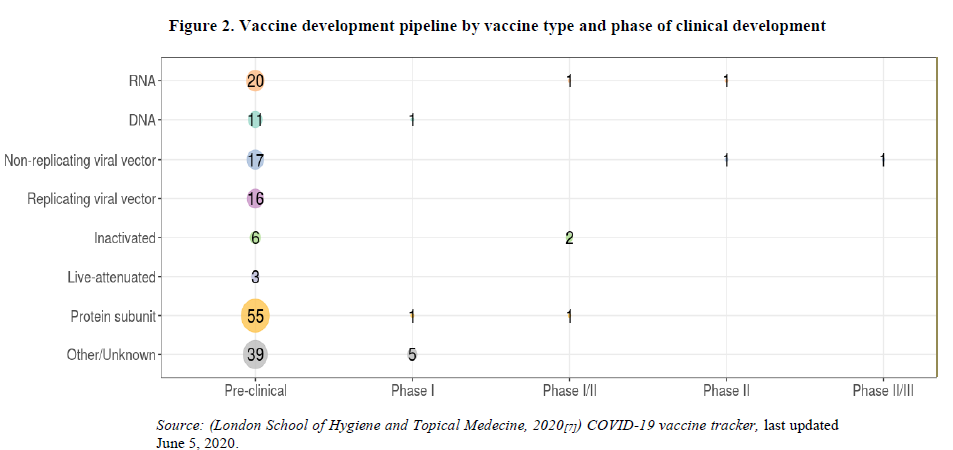
Effective vaccine development and deployment. A vaccine would be the best route to end the pandemic; currently, 181 candidates are in development (see Figure 2) (London School of Hygiene and Topical Medecine, 2020[7]). Because a vaccine will be most effective if it is available cheaply everywhere, cooperation – rather than competition and ‘vaccine nationalism’ – is necessary to expedite its development and distribution. Globally, governments will have to spend tens to hundreds of billions of USD to vaccinate every person on the planet. Although this cost pales in comparison to the number of lives the vaccine could save, the price tag can be reduced significantly and vaccination accelerated if governments cooperate to avoid a bidding war that could drive up prices. Multilateral fundraising efforts for a vaccine are already underway, such as the Coronavirus Global Response pledging event that raised EUR 7.4 billion for universal vaccine access (European Commission, 2020[8]), the International Finance Facility for Immunisation’s vaccine bonds, and advanced market commitments proposed by GAVI, the vaccine alliance (Schäferhoff and Yamey, 2020[9]); these should be supported and bolstered. In addition, manufacturing capacity has to be built while R&D is underway, meaning that countries should collaborate to project demand and plan the necessary capacity to produce sufficient quantities of the vaccine (OECD, 2020[10]). Governments also need to agree upfront on rules for international property rights and procurement (OECD, 2020[10]) and impose universal standards of evidence for vaccine approval (OECD, 2020[11]).  Finally, an international commitment to a fair allocation system to ensure that the vaccine will be widely available, and that the countries that need it most are not deprived, would be welcome. Such a system could rely on existing instruments and institutions – including global purchasing agents, advance purchase commitments, and financial instruments like concessional loans – and prioritise delivery of vaccines to health-care workers and high-risk populations (Yamey et al., 2020[12]). Simultaneous support to strengthen the delivery capacities of developing countries is also critical for vaccine access for vulnerable populations.  

Continued surveillance to detect re-emergence of the virus: There is also a need for a collaborative approach to virus reporting and surveillance, including of mutated viruses. Initial efforts to contain the virus were hampered by slow and incomplete reporting of the outbreak (Yuan, 2020[13]). Efforts to assess the progression of the pandemic will succeed only if the information is continuously, rapidly, widely and freely shared across borders, as reiterated by the World Health Organisation (Moorthy et al., 2020[14]). However, there are major roadblocks, such as ambiguous criteria for data sharing (Modjarrad et al., 2016[15]) and a lack of common measurement methodologies (e.g. cross-country differences in counting COVID-19 deaths) (Hirsch and Martuscelli, 2020[16]). Overcoming these obstacles requires clear guidance and harmonised standards for health data terminology and exchange (OECD, 2020[11]). Continuous cooperation is also pertinent as countries (e.g. Korea and Israel) start leveraging digital technologies, such as mobile and smartphone data, for disease surveillance and control. The potential of these technologies must be balanced with the concerns of privacy that they provoke, which entails developing appropriate health data governance frameworks, such as secure systems for data exchange (OECD, 2020[11]). Developing these frameworks would benefit from cross-country sharing of best practices, especially since disease surveillance is a multilateral exercise (OECD, 2020[11]).

Continuous and strong support for less developed countries: The virus has particularly profound implications for developing countries. Their health systems are vulnerable and underfunded, with about 90% of low-income countries facing health-worker shortages, and many continue to suffer from the lingering effects of previous health crises (e.g. Ebola, malaria, HIV) (OECD, 2020[17]). Mechanisms for knowledge sharing about protocols of screening and treatment could help, especially in countries with stretched health systems. Countries that had a head start in dealing with the pandemic could offer important lessons and share best practices; but, fiscal support will also be needed. In developing countries, containment measures (e.g. school closures, work reduction) are harder to implement, and they have high opportunity costs in terms of poverty and educational-attainment (OECD, 2020[17]).  These countries also have high levels of informal work, which limits governments’ ability to provide social protection for workers and fiscal support for businesses. Moreover, in  low  and  middle-income  countries,  this  crisis  comes  at  a  time  of  rising  concern  for  the sustainability of public debt (OECD, 2020[17]). Thus, sweeping international efforts are needed to help developing countries weather the storm. The G20 has already agreed on a “debt service standstill” until the end of 2020 from all official bilateral creditors, and called on private investors working through the International Institute for Finance to follow suit (G20, 2020[18]). The IMF is replenishing its Containment and Relief Trust and is prepared to use its entire USD 1 trillion lending capacity, and the World Bank has set up a fast track facility for emergency support and is ready to deploy up to USD 160 billion over the next 15 months (OECD, 2020[17]).

Co-operation for inclusive and sustainable recovery

Fiscal policy: To date, countries have individually implemented significant fiscal measures (OECD, 2020[19]). As the goal of these measures shifts to recovery, fiscal stimulus coordinated across countries will magnify the benefit for all economies. Stimulus packages have international spillovers through both the trade and investment channels, suggesting an important role for coordination to maximise benefits (OECD, 2019[20]). In fact, OECD simulations for G20 countries suggest clear gains from collective action, compared to singular country actions (Pain and Salins, Forthcoming[21]). Recovery from the 2008-2009 crisis has also elucidated the value of fiscal coordination (Kalinina, 2020[22]). Fiscal coordination can also involve sharing best practices on how to operationalise long-term projects (OECD, 2009[23]).

Monetary policy: Monetary and financial policy cooperation has been relatively strong. An important act of cooperation has been the activation and establishment of swap lines between major central banks. In theory, there are several avenues through which central banks can further enhance their cooperation. First, major central banks could set up liquidity facilities that allow foreign central banks to exchange sovereign assets for cash without disrupting the securities markets of issuing countries (Collins, Potter and Truman, 2020[24]). Central banks could also further expand their swap lines to more economies (Collins, Potter and Truman, 2020[24]).  However, in practice, given the fiscal risks associated with extending swap lines, they remain restricted and only certain emerging economies with deep currency markets are included as recipients (Levy-Yeyati, 2020[25]).

Trade policy and supply chains: Since the start of 2020, 89 jurisdictions have implemented a total of 154 export controls on medical supplies (Figure 1), and 28 jurisdictions have executed 40 export curbs on agricultural and food products (Global Trade Alert, 2020[6]). These actions have exacerbated pre-existing trade tensions and protectionist tendencies, heaping further pressure on global trade. If a second COVID-19 outbreak occurs triggering a return to lockdowns, world trade is forecasted to plummet by 11.4% this year; if a second wave of infections is avoided, global trade is expected to fall by 9.5% in 2020 (OECD, 2020[19]).  Experience with trade restrictions in the food sector shows they increase prices and threaten supply (Gillson and Fouad, 2015[26]). Supply chains have received particular attention during the COVID-19 crisis due to the perception that that complex and long supply chains have worsened the implications of the pandemic. However, risk management literature suggests that shorter supply chains and domestic self-sufficiency do not necessarily imply reduced vulnerabilities; rather, supplier diversification can help firms maintain production in times of crises (Miroudot, 2020[27]). Recovery from this crisis, thus, necessitates co-operation to reverse protectionist policies, resist implementing further barriers, and strengthen the robustness and resilience of supply chains.

Improved preparedness for future pandemics and risks: Between 1980 and 2010, the number of annual infectious disease outbreaks has more than tripled (Smith et al., 2014[28]), and the risk of future epidemics and pandemics is high, as well as those linked to environmental changes (World Economic Forum, 2019[29]). Better preparedness is crucial to mitigate these risks (Commission on a Global Health Risk Framework for the Future; National Academy of Medicine Secretariat, 2016[30]). This could include globally co-ordinated mechanisms, such as early warning systems and common protocols for temporary travel and border control restrictions (Derviş and Strauss, 2020[31]). The international community may also rethink and reinforce global frameworks for emergency preparedness and facilitate research agendas and technology development in domains where market forces are lagging or stagnant (e.g. vaccine research) (OECD, 2020[32]). An example of this is the Coalition for Epidemic Preparedness Innovations, a global network of public and private stakeholders created after the Ebola epidemic to fill critical gaps in the vaccine development pipeline, notably by advancing vaccines and keeping investigational stockpiles, funding vaccine development, and coordinating responses to epidemics (CEPI, 2019[33]). Enhanced efforts to address the global shortage of health workers through initiatives such as the ILO/OECD/WHO Working for Health programme would also be welcome.

COVID-19 is an existential threat that has upended global systems. Without international co-operation, both the exit from the crisis and the recovery is likely to be slow and weak. First, this is true for the health sector, as effective disease surveillance, swift vaccine development and deployment, and preparedness for future epidemics benefit from multilateral action. Second, preserving trade openness and increasing the robustness and resilience of supply chains can not only ensure countries’ access to vital medical goods, but also invigorate the post-pandemic economy. Finally, internationally coordinated fiscal and monetary policies, in tandem with support for developing countries, can help the global economy weather the current shock, while preparing it for a sustainable and inclusive recovery.

References

Baldwin, R. and S. Evenett (eds.) (2020), Resilience versus robustness in global value chains: Some policy implications, https://voxeu.org/content/covid-19-and-trade-policy-why-turning-inward-won-t-work. [27]
Bown, C. (2020), China should export more medical gear to battle COVID-19, Peterson Institute for International Economics, https://www.piie.com/blogs/trade-and-investment-policy-watch/china-should-export-more-medical-gear-battle-covid-19 (accessed on 12 May 2020). [4]
CEPI (2019), Creating a world in which epidemics are no longer a threat to humanity, https://www.who.int/immunization/sage/meetings/2019/april/1_CEPI_Summary_WHO_SAGE_Meeting_April.pdf?ua=1 (accessed on 4 June 2020). [33]
Collins, C., S. Potter and E. Truman (2020), “Enhancing central bank cooperation in the COVID-19 pandemic”, Peterson Institute for International Economics, https://www.piie.com/blogs/realtime-economic-issues-watch/enhancing-central-bank-cooperation-covid-19-pandemic. [24]
Commission on a Global Health Risk Framework for the Future; National Academy of Medicine Secretariat (2016), The Neglected Dimension of Global Security, National Academies Press, http://dx.doi.org/10.17226/21891. [30]
Derviş, K. and S. Strauss (2020), What COVID-19 means for international cooperation, https://www.brookings.edu/opinions/what-covid-19-means-for-international-cooperation/ (accessed on 13 May 2020). [31]
European Commission (2020), Coronavirus Global Response: €7.4 billion raised for universal access to vaccines, https://ec.europa.eu/commission/presscorner/detail/en/ip_20_797 (accessed on 3 June 2020). [8]
G20 (2020), Communiqué: G20 Finance Ministers and Central Bank Governors, April 15, 2020, http://www.g20.utoronto.ca/2020/2020-g20-finance-0415.html#a2 (accessed on 12 May 2020). [18]
G20 (2020), G20 Trade and Investment Ministerial Statement, http://www.g20.utoronto.ca/2020/2020-g20-trade-0330.html (accessed on 12 May 2020). [3]
Gillson, I. and A. Fouad (eds.) (2015), Trade Policy and Food Security: Improving Access to Food in Developing Countries in the Wake of High World Prices. [26]
Global Trade Alert (2020), 21st Century Tracking of Pandemic-Era Trade Policies in Food and Medical Products, https://www.globaltradealert.org/reports/54. [6]
Hirsch, C. and C. Martuscelli (2020), The challenge of counting COVID-19 deaths, https://www.politico.eu/article/coronavirus-the-challenge-of-counting-covid-19-deaths/. [16]
Kalinina, A. (2020), “What the world can learn from regional responses to COVID-19”, World Economic Forum, https://www.weforum.org/agenda/2020/05/covid-19-what-the-world-can-learn-from-regional-responses/ (accessed on 12 May 2020). [22]
Levy-Yeyati, E. (2020), “COVID, Fed swaps and the IMF as lender of last resort”, https://voxeu.org/article/covid-fed-swaps-and-imf-lender-last-resort. [25]
London School of Hygiene and Topical Medecine (2020), COVID-19 vaccine tracker, https://vac-lshtm.shinyapps.io/ncov_vaccine_landscape/. [7]
Modjarrad, K. et al. (2016), “Developing Global Norms for Sharing Data and Results during Public Health Emergencies”, PLoS Medicine, Vol. 13/1, http://dx.doi.org/10.1371/journal.pmed.1001935. [15]
Moorthy, V. et al. (2020), Data sharing for novel coronavirus (COVID-19), World Health Organization, http://dx.doi.org/10.2471/BLT.20.251561. [14]
OECD (2020), “A systemic resilience approach to dealing with Covid-19 and future shocks”, OECD Policy Responses to Coronavirus (COVID-19), No. 55, OECD Publishing, Paris, https://dx.doi.org/10.1787/36a5bdfb-en. [32]
OECD (2020), “Beyond containment: Health systems responses to COVID-19 in the OECD”, OECD Policy Responses to Coronavirus (Covid-19), No. 12, OECD Publishing, Paris, https://dx.doi.org/10.1787/6ab740c0-en. [11]
OECD (2020), “Contribution of migrant doctors and nurses to tackling COVID-19 crisis in OECD countries”, OECD Policy Responses to Coronavirus (COVID-19), No. 74, OECD Publishing, Paris, https://dx.doi.org/10.1787/2f7bace2-en. [5]
OECD (2020), “Developing countries and development co-operation: What is at stake?”, http://dx.doi.org/10.1787/2334182B-EN (accessed on 12 May 2020). [17]
OECD (2020), OECD Economic Outlook, Volume 2020 Issue 1, OECD Publishing, Paris, https://dx.doi.org/10.1787/0d1d1e2e-en. [19]
OECD (2020), “The face mask global value chain in the COVID-19 outbreak: Evidence and policy lessons”, OECD Policy Responses to Coronavirus (COVID-19), No. 62, OECD Publishing, Paris, https://dx.doi.org/10.1787/a4df866d-en. [1]
OECD (2020), “Trade interdependencies in Covid-19 goods”, OECD Policy Responses to Coronavirus (COVID-19), No. 67, OECD Publishing, Paris, https://dx.doi.org/10.1787/79aaa1d6-en. [2]
OECD (2020), “Treatments and a vaccine for COVID-19: The need for coordinating policies on R&D, manufacturing and access”, OECD Policy Responses to Coronavirus (COVID-19), No. 88, OECD Publishing, Paris, https://dx.doi.org/10.1787/6e7669a9-en. [10]
OECD (2019), OECD Economic Outlook, Volume 2019 Issue 2, OECD Publishing, Paris, https://dx.doi.org/10.1787/9b89401b-en. [20]
OECD (2009), Policy Responses to the Economic Crisis: Investing in Innovation for Long-Term Growth. [23]
Pain, N. and V. Salins (Forthcoming), “Dealing with a significant weakening of global growth”, ECOscope. [21]
Schäferhoff, M. and G. Yamey (2020), “Ending The COVID-19 Pandemic Requires Effective Multilateralism”, Health Affairs, https://www.healthaffairs.org/do/10.1377/hblog20200522.123995/full/. [9]
Smith, K. et al. (2014), “Global rise in human infectious disease outbreaks”, Journal of the Royal Society Interface, Vol. 11/101, http://dx.doi.org/10.1098/rsif.2014.0950. [28]
World Economic Forum (2019), Outbreak Readiness and Business Impact: Protecting Lives and Livelihoods across the Global Economy, http://www3.weforum.org/docs/WEF%20HGHI_Outbreak_Readiness_Business_Impact.pdf (accessed on 29 May 2020). [29]
Yamey, G. et al. (2020), Ensuring global access to COVID-19 vaccines, Lancet Publishing Group, http://dx.doi.org/10.1016/S0140-6736(20)30763-7. [12]
Yuan, L. (2020), Coronavirus Crisis Shows China’s Governance Failure, The New York Times, https://www.nytimes.com/2020/02/04/business/china-coronavirus-government.html (accessed on 29 May 2020). [13]


[1] To support information exchange and international cooperation, the OECD has launched a policy tracker that provides updates on fiscal, monetary, financial and macro prudential policy actions taken by countries around the world to minimise the economic and social costs of Covid-19 and to promote recovery

* We thank Laurence Boone, Federico Guanais, David Haugh, Mark Pearson, Nick Tomlinson and Martin Wenzl for their useful comments and feedback.


Policy responses to COVID-19 in Latin America: Big steps in a small space

by Jens Arnold, Paula Garda, Alberto Gonzalez-Pandiella, Robert Grundke, Nicolas Ruiz and Enes Sunel

Latin American economies are facing important challenges in the face of the COVID-19 pandemic. The outbreak will exacerbate the region’s deep inequalities along many dimensions, which calls for a strong policy reaction to protect vulnerable households and firms. Still, the need for big steps contrasts with the severely limited fiscal space that most economies in the region have. Squaring this circle is not trivial, but well-designed temporary policies can go a long way to save livelihoods and prevent permanent scars, especially for disadvantaged groups.

Fighting poverty and inequality is now more important than ever before. The epidemic risks inflicting greater health risks and greater economic costs on the economically disadvantaged. Distancing measures will imply income losses for those whose jobs do not allow teleworking, and these workers are on average less-educated, with limited access to health insurance, in unstable and low-wage jobs. Often without formal employment, many workers are not covered by social safety nets. Women may also bear a particularly high burden as additional childcare duties resulting from school closures may disproportionally fall on them. School closures have suspended meal provision to children, risking malnutrition with long-lasting adverse effects for some, and an increase in inequalities, as disadvantaged households have lower access to digital learning possibilities. Many low-income households will also be particularly hit by the fall in remittances, which can reach 20%, as economic activity shuts down in host countries . Even before the pandemic, the region has seen significant episodes of social unrest, with large-scale uprisings and demonstrations taking place in Chile and Colombia.

Fiscal space available for the policy response is severely limited across the region. Only few countries have been able to build up fiscal buffers, for example Chile. More commonly, countries in the region face challenges related to high public debt, including Argentina, Brazil and Costa Rica (Figure 1, Panel A). Rising sovereign spreads and exchange rate depreciations have reflected the volatility of investor confidence and in some cases raised the cost of servicing foreign-currency debt (Figure 1, Panel B). Countries in the region are potentially vulnerable to sudden stops in light of external debt and current account deficits, including those that have enjoyed easy access to external financing in the past.

Economic challenges associated with COVID-19 are enormous. Domestic activity has been hit hard by the necessary confinement measures imposed in almost all Latin American countries (Figure 2, Panel A). Relatively more open economies, like Mexico, Chile and Costa Rica, also suffer from deep recessions in their trading partners. The tourism sector, crucial for Mexico, Costa Rica and Chile, is facing a contraction with effects that are likely to persevere (Figure 2, Panel B). Remittance inflows, exceeding 2 and 3% of GDP in  Colombia and Mexico, respectively, are expected to fall significantly. The sharp decline in the oil price has eroded fiscal revenues in Colombia and Mexico.

Policy support is crucial to save livelihoods

Despite all these challenges, policies can provide significant relief for disadvantaged groups. Emergency relief need not be at odds with efforts to improve fiscal sustainability, provided that the fiscal responses to COVID-19 are temporary, just like the pandemic itself. Temporary income support payments or short-time work compensation schemes can go a long way to keep families from falling into poverty or mitigate possible permanent effects on jobs. By contrast, expenditure items that are typically hard to reverse, such as new public hiring or subsidies without explicit sunset clauses should be avoided.

Governments in Latin America have acted appropriately to alleviate the economic effects of the pandemic. Pandemic-related additional public spending ranges from around 1% of GDP to around 7% of GDP (Figure 3, Panel A). This is in addition to tax deferrals or anticipated benefit disbursements, most of which will not be visible in fiscal accounts. Spending measures have focused on strengthening health systems, but also include income support for formal and informal workers and support for SMEs, including for wage bills and loan instalments, and public credit guarantees (Figure 3, Panel B). In the short term, public deficits and debt will rise across Latin America.

Fiscal and monetary frameworks have been strengthened over time and now is the moment to put them to work. Fiscal rules should remain the main instrument to maintain sustainable debt paths over the medium-term, even if escape clauses may be used in the short-term. Beyond that, combining higher spending now with effective policy signals to bolster the credibility of fiscal adjustment in the future may be a good way to avoid a deterioration of financial conditions, especially as markets may become more demanding. Some countries have developed a culture of continuous policy evaluation, which should be rigorously applied to COVID-19 policy responses.

Identifying fiscal space is challenging but possible. Almost all countries in the region have room to focus spending more on those in need and to phase out tax loopholes that benefit more affluent taxpayers. Identifying this fiscal room may be more important now than ever, but often requires strong political leadership. Possible examples could include systematic evaluations of subsidies, tax exemptions, special tax regimes, public employment or the targeting of social transfers.

Preparing for the recovery

Now is also the time to think about policies for the post-pandemic recovery. After the storm has passed, legitimate demands will once again need to be balanced against limited means. Strengthening social safety nets and reducing income and opportunity inequalities are long-standing challenges for Latin America. Making tax and benefit systems more progressive and effective, raising spending efficiency, reducing informality, and providing workers with the skills needed for today and tomorrow’s labour market are further key structural policy recommendations that the OECD has made to a number of Latin American countries.


In Tax, Gender Blind is not Gender Neutral: why tax policy responses to COVID-19 must consider women

by Michelle Harding, Grace Perez-Navarro, and Hannah Simon, OECD Centre for Tax Policy and Administration (CTPA)

Women are at the core of the fight against the COVID-19 crisis: they make up the vast majority of healthcare workers and shoulder much of the childcare and home schooling burden during lockdowns. And while tax policy measures play a crucial role in supporting individuals and businesses as we navigate this crisis, the gender impact of taxation is often overlooked – with serious consequences for gender equality.

Gender equality is a fundamental human right, as laid out in the UN’s Sustainable Development Goal #5, and failing to achieve it costs us up to 16% of world income every year. Yet, in the context of government revenue collection, gender balance is often neglected as a policy rationale. Could it be that there simply is no need to assess the interaction of tax and gender, or have gender imbalances in tax systems so far been overlooked? And what does this mean for policy-makers in the face of Covid-19?

Gender blind or gender neutral?

The good news first: tax provisions that explicitly disadvantage women relative to men are rare, although they used to be more common. Historically, married men in the Netherlands for example, were granted a higher income tax-free allowance than married women (until 1984). Meanwhile, on the Island of Jersey, married women will continue to need their husbands’ permission to talk to tax authorities and to file taxes under their own name until a new law comes into force in 2021.

While examples of explicit bias are rare, this does not mean that our tax systems do not affect men and women differently. Tax systems that are gender-blind on paper can, in practice, exhibit a hidden, implicit bias and may even exacerbate gender inequalities, particularly in times of crises. As long as men and women face different socioeconomic realities, tax systems will affect them in different ways. Therefore, it is necessary to go beyond a cursory analysis of the tax law and to understand how it interacts with the different socioeconomic realities of men and women – such as persisting gender gaps in income levels, labour-force participation, consumption, entrepreneurship and wealth.

The hidden impacts of taxation are most visible in personal income taxation. Although men and women are typically taxed under the same rules, their different income levels and labour force participation characteristics mean that the impact of the tax system can be far from neutral.

In more than two-thirds of OECD countries, second-earners face a disproportionately high tax burden when entering the workforce. Compared to a single worker at the same level of income, second earners face higher average tax rates, meaning that, due to family-based taxation and reductions in dependent spouse credits, their household income increases less for every dollar earned. In the nine OECD countries with family-based taxation, the net personal average tax rate of second earners is 40%, meaning that they take home only 60% of their gross wage – seven percentage points less than a single individual at the same wage level.

This – alongside various other factors that influence the decision of individuals to enter (or re-enter) the workforce, such as educational level or the availability of childcare – reduces the incentives for second earners to work. And given that a large majority of second earners are female, it is mostly women that face this disincentive.

Add consumption taxes to the picture and this disincentive is exacerbated. Consumption taxes on services such as cleaning and childcare make it more attractive to produce these services at home rather than buying them on the market, especially for low-income households. This further decreases the (predominantly female) second-earner labour supply. Consumption taxes can also directly affect the distribution of income between men and women due to gendered differences in consumption patterns, but these are harder to infer.

COVID-19 amplifies these dynamics by increasing women’s unpaid work burdens and by destabilizing the labour market. Widespread closure of schools and childcare facilities and other confinement measures will increase the time that parents have to spend on childcare and home schooling as well as on routine housework such as shopping, cooking and cleaning – much of which is likely to fall on women. Fulfilling these demands will be difficult for many parents, especially for dual-earner households, which increases the risk of second-earner women to leave the workforce.

In addition, men and women typically exhibit differences in employment patterns: in OECD countries, men are overrepresented among the self-employed, while female employees are, on average, almost three times more likely to work part-time. These non-standard workers are among the most vulnerable during the current crisis, facing higher risks of job or income loss, and often fall outside of standard safety nets. This makes fair taxation of different employment forms as well as increased access to out-of-work benefits for non-standard workers – which some countries have temporarily introduced in response to the current crisis – a key dimension of gender balance.

In developing countries, the challenge is magnified by large degrees of informality and limited fiscal space. With the majority of female workers in informal employment, lockdown measures and the resulting economic hardship pose an acute threat to women’s livelihoods, and a focus on officially labeled taxes does not fully capture the complex linkages between gender and taxation. User fees and informal taxes, often used to finance basic goods such as education, healthcare and water, can impose a significant financial burden on households and can discourage low-income individuals from accessing healthcare, which is particularly problematic in the midst of a pandemic.

During the Ebola epidemic in West Africa, donor money shifted to the most urgent humanitarian and public health needs and away from financing local public goods and services, such as schools, teachers and water wells. A similar shift in donor money during the current crisis would increase the financial burden on individuals and communities in funding these goods and services, which is likely to reinforce unequal societal practices: if schooling is too costly, girls are the first to stay home, particularly during times of extreme economic hardship.

“This is not the last pandemic we’re going to have”, said Ngozi Okonjo-Iweala, who previously served as Nigeria’s minister for both finance and foreign affairs and is one of the governing board members of the OECD-UNDP TIWB programme. “We had better make sure that those at the bottom of the ladder are not pushed further back. That inequality is not exacerbated”, she added in a recent interview with TIMES.

How can governments address gender differences in their tax systems?

Government spending programmes and tax policy measures play a central role in supporting individuals and businesses as we navigate and exit this crisis. However, as the Finnish Prime Minister Sanna Marin said at the World Economic Forum in Davos earlier this year, gender equality “just doesn’t happen by itself”.

To ensure that the tax system does not inadvertently reinforce gender biases in society, governments need to include the impact of taxes on gender as a key policy dimension in their tax policy responses to COVID-19. Improving data on the impact of COVID-19 on women as well as on previously unexplored dimensions such as intra-household dynamics, asset ownership and corporate participation will be crucial to understand these impacts.

To address the complex interactions of tax and gender, governments will need to consider options to redesign key taxes to avoid exacerbating existing gender differences, or use tax or other instruments to compensate for differences in income levels as part of their long-term response to the crisis. When it comes to tax and gender, let’s #BuildBackBetter!

For more information, please see:

Milanez, A. and B. Bratta (2019), Taxation and the future of work: How tax systems influence choice of employment form, OECD Taxation Working Papers, No. 41, OECD Publishing, Paris.

OECD (2020a), Emergency tax policy responses to the Covid-19 pandemic, Updated 20 March, OECD, Paris.

OECD (2020b), Tax and Fiscal Policy in Response to the Coronavirus Crisis: Strengthening Confidence and Resilience, OECD, Paris.

OECD (2020c), Women at the core of the fight against COVID-19 crisis, OECD, Paris.

Saint-Amans, P. (2020), Tax in the time of COVID-19, 23 March 2020 on The Forum Network