Will risks and financial vulnerabilities derail the modest recovery?

By Catherine L. Mann, OECD Chief Economist and Head of Economics Department

Global growth is projected to pick up to around 3½ per cent in 2018, from just under 3% in 2016 in our latest Interim Economic Outlook. The forecast modest recovery is supported by fiscal initiatives in major economies and broadly unchanged from the November Economic Outlook. While the pick-up is welcome, it would still leave global growth below the historical average of around 4% for the two decades prior to the crisis.

This comes against the background of a five-year period where the global economy has been stuck in a low-growth trap. Consumption, investment, trade and productivity are far from strong and inequality is rising. Productivity gaps between frontier firms and laggard firms have widened, contributing to a growing income gap as wages have stagnated at less productive firms.

Moreover, financial vulnerabilities and policy risks could derail the modest recovery. There are apparent disconnects between the positive assessment reflected in financial market valuations and forecasts for the real economy. For example, equity prices have increased significantly over the past six months, despite the large rise in nominal interest rates and with long-term real GDP growth and inflation expectations barely changed.

The global interest-rate cycle turned in mid-2016. Some normalisation of interest rates as a result of rebalancing demand support from monetary to fiscal policy is welcome. However, the market response to higher rates, following a prolonged period of exceptional monetary stimulus and low yields, may not be smooth. Market expectations imply a rising divergence in short-term rates between the major advanced economies in the coming years. This creates risk of exchange rate volatility, which could lead to wider instability in financial markets.

Risks to emerging market economies are high, including from high and rapid growth in private credit, notably in China, and rising non-performing loans, particularly for India and Russia. Many emerging market economies are also vulnerable to external shocks and currency mismatches, particularly those with high levels of overseas borrowing or those with a mismatch between foreign currency denominated debts and export revenues.

IEO March 2017

Policy uncertainty and low trust in government cloud the policy environment. Global policy uncertainty increased significantly in 2016 according to news-based measures. Many countries have new governments, face elections this year, or rely on coalition or minority governments. More generally, falling public trust in governments makes it more difficult to pursue reforms needed to achieve strong and inclusive growth.

There is now significant uncertainty about the future direction of trade policy globally, in part because of falling public support for trade linked to disparities in outcomes across industries, workers and regions. But as I have written previously, trade matters for productivity, living standards and inclusive growth. More efforts are needed to strengthen domestic social protections, invest in human capital, promote skills and provide support for workers in transition which supports trade openness, and helps to maximise the gains from trade and ensure the benefits are shared. A roll-back of trade openness, on the other hand, would be costly for global GDP and the large number of jobs linked to global value chains.

Policy needs to manage these risks, strengthen growth and ensure it is more inclusive. Countries should use increased fiscal space to implement effective fiscal initiatives that boost demand and make government taxes and spending more supportive of long-term growth and equity. Most countries have room for additional fiscal initiatives to boost growth and employment and enhance inclusiveness without compromising debt sustainability.

A durable exit from the low-growth trap also requires greater political commitment to implement policy packages to boost inclusive growth. However, as shown in our forthcoming OECD Going for Growth 2017 (to be released on 17 March), the pace of reform has continued to decline in recent years. Reforms can be more effective and draw greater political support if implemented together, for example with actions to develop skills, remove barriers to competition and trade, and improve labour markets to raise incomes and share the gains widely.

References

OECD Interim Economic Outlook, March 2017.

See also: www.oecd.org/economy/growth/economic-resilience.htm


Australia’s economy, good track record but challenges ahead

by Philip Hemmings and Vassiliki Koutosgeorgopoulou

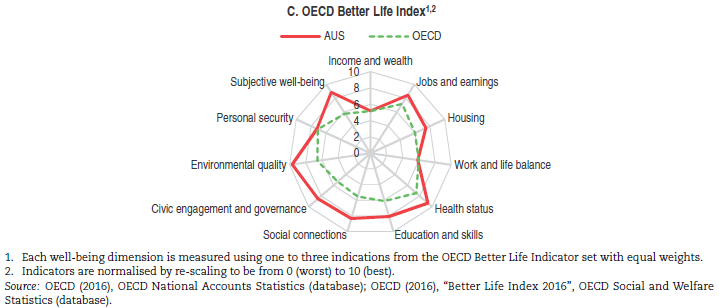
Australia’s economy has enjoyed considerable success in recent decades, gross domestic product per capita is high and the country generally ranks favourably in well-being. Despite the end of the global commodity super-cycle, the economy continues to perform well. The rebalancing of economic activity from commodity investment to other activities is well advanced, facilitated by monetary and fiscal policies, currency depreciation, and flexible labour and product markets.

blog-bli

However, Australia risks falling into a “low-growth trap”. Along with many OECD countries, productivity growth has slowed since its peak in the 1990s. The country’s future growth prospects depend on strong productivity growth which, in turn, requires greater capacity for absorbing and generating new innovations. This is the subject of this Survey’s in‑depth examination of innovation and related policies and the focus of a recent government initiative, the National Innovation and Science Agenda.

Furthermore, inclusiveness has been eroded. Households in upper income brackets have benefited more than others from Australia’s long period of economic growth. Real incomes for the top quintile of households grew by more than 40% between 2004 and 2014 while those for the lowest quintile only grew by about 25%. Strong growth has pulled the incomes of households with wage earners further ahead of households reliant on transfers or pensions. Also, scale effects have amplified returns to some already high-paid segments of the labour market ─ widening the income distribution. In addition, large socioeconomic gaps between Australia’s indigenous population  and the rest of the population remain and there is room to reduce gender imbalance.

The main messages of this Survey are:

  • Strong macroeconomic and financial-sector institutions and policies have supported strong economic growth and high living standards.
  • Merely maintaining long-run average productivity growth jeopardises this success; a renewed emphasis on structural reforms in particular those that help boost Australia’s capacity to absorb and generate innovation is required.
  • Widening income inequalities and longstanding issues of inclusion (notably Australia’s indigenous population) call for an ongoing emphasis on policies to ensure equitable opportunities for engaging in the labour market through skills acquisition and active labour market policies, especially policies that address these concerns while also enhancing productivity.

References

OECD (2017), OECD Economic Surveys: Australia 2017, OECD Publishing, Paris.


Efficient, Equitable and Enforceable: three “Es” for reforming India’s tax system and better finance public services

By Isabelle Joumard, Head of the India desk, OECD Economics Department

Promoting inclusive growth in India requires improving social and physical infrastructure. Public spending needs are large: only 40% of the population had access to sanitation facilities in 2015; public spending on health is just above 1% of GDP, compared to 7% on average in OECD countries and 3% in the other key emerging economies; only a small fraction of the population contributes to a retirement scheme. More than 20% of the population (almost 270 million persons) lived with less than USD 1.9 a day in 2011.

India needs to raise more tax revenue to finance access to better quality public services for all while putting the relatively high public debt-to-GDP ratio onto a declining path. Implementing the landmark Goods and Services Tax (GST) – a national value added tax – will promote the competitiveness and productivity of Indian companies. While the GST has been designed to be revenue-neutral, at least in the short- and medium-run, it should be complemented by a comprehensive reform of income and property taxes to raise additional revenue and make the overall tax system more efficient, equitable and enforceable.

Efficiency of taxes could be increased through lower rates and a broader base. Although the statutory tax rate on companies is high (Figure 1), various special rates, exemptions, deductions, rebates, deferrals and credits result in much lower effective tax rates and create a bias against labour-intensive activities. The government’s plan to reduce the corporate income tax rate from 30% to 25% while removing most exemptions is most welcome. That said, different tax regimes for small enterprises and social security contribution requirements – only companies with more than 20 permanent employees have to pay- continue to generate disincentives for firms to grow and create quality jobs.

blog-the-corporate-1

Equity is an issue. Less than 6% of the population pay the personal income tax, which is a very low share by international standards. An individual does not pay any income tax until income is around 2½ times the average wage in the organised/formal sector, a much high level than most other emerging economies and OECD countries (Figure 2). Personal income tax is also reduced by generous tax concessions (e.g. mortgage payments) which benefit the rich more. There is no tax on agricultural income of large-scale farmers. Estimates presented in the 2017 OECD Economic Survey of India suggest that bringing the personal income tax schedule in line with other emerging economies and scrapping tax concessions would increase personal income tax revenue by about 50%. Property taxes could also raise more revenue. Inheritance taxes are virtually absent, despite the extreme concentration of wealth in the hands of a few, while revenue from real estate taxes stands at about 0.2% of GDP which is well below the level in OECD and other BRIICS countries.

blog-personal-income-tax-india

Enforceability could be improved to enhance public perceptions of the tax system fairness. The government has taken several measures to reduce tax evasion, such as penalties for not filing returns or filing with inadequate asset and income disclosure. India has also taken steps to prevent base erosion and profit shifting. In particular, the treaty with Mauritius – more than 20% of FDI position – was renegotiated in 2016, giving India a right to tax capital gains channelled through Mauritius from April 2017. However, proliferation of tax concessions and lack of clarity of tax regulations raise compliance and collection costs. Ensuring clarity and certainty in tax legislation and employing more skilled tax officers would strengthen the tax administration and make the system fairer and more effective.

References:

OECD (2017), OECD Economic Surveys: India 2017, OECD Publishing, Paris.


Sweden is a champion of gender equality, but parity is not reached yet

by Christophe André, Swedish Desk, Country Studies Branch, OECD Economics Department

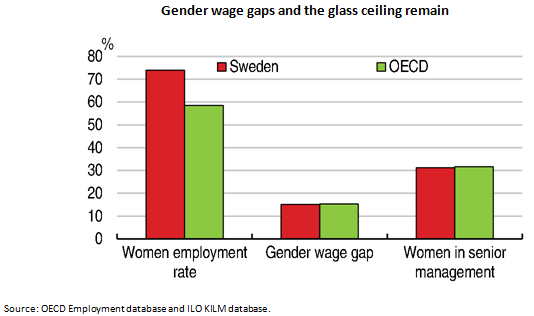
As shown in the Economic Survey, Sweden ranks among the OECD’s frontrunners in terms of gender equality. Women have a high employment rate, outperform men in education and are well represented in government and parliament. These achievements were made possible by policies which for decades have been promoting equality, notably through childcare and parental leave arrangements, individual taxation and mainstreaming gender issues.

Nevertheless, without further policy measures, achieving parity is still a distant prospect in several areas. Wage differences between genders persist, even though a large part of the gap results from differences in age, education, occupation, sector of employment and hours worked. Women are under-represented on private company boards, in senior management positions, in many well-paid and influential professions and among entrepreneurs.

blog-gender-wage-gaps

Hence, there is scope for further progress on gender equality. Paid parental leave has facilitated the rise in women’s employment rate, which is now close to that of men. However, 75% of the leave is still taken by women, which has a detrimental impact on their careers. Last year’s extension of the share of the parental leave reserved for each parent to three months is a move in the right direction, as it sends a signal which will contribute to shift social norms. Nevertheless, it would be desirable to move further in that direction to reduce the stigma associated with long leaves, even though there is a trade-off with the benefits of free choice.

The women’s share of board members of listed companies is still below one third. The recent government proposal to impose quotas, as Norway did more than a decade ago, has not received the necessary support from other parties. Notwithstanding, firms should continue to increase their share of female board members, and perhaps even more importantly, to increase the representation of women in senior management, which research shows to generally enhance economic performance. Gender inequalities can also be reduced through the fight against stereotypes in education and further promotion of women’s entrepreneurship.

Last but not least, special attention should also be paid to the integration of foreign-born women, whose employment rate is much lower than for their male counterparts. Helping foreign-born women to strengthen their contribution to the economy and society has to be a key ingredient of a more inclusive Sweden.

References:

OECD (2012), Closing the Gender Gap: Act Now, OECD Publishing. http://dx.doi.org/10.1787/9789264179370-en

OECD (2015), The ABC of Gender Equality in Education: Aptitude, Behaviour, Confidence, PISA, OECD Publishing. http://dx.doi.org/10.1787/9789264229945-en

OECD (2016), Working Together: Skills and Labour Market Integration of Immigrants and their Children in Sweden, OECD Publishing. http://dx.doi.org/10.1787/9789264257382-en

OECD (2017), OECD Economic Surveys: Sweden 2017, OECD Publishing, Paris.


The Swedish economic boom: can it last?

By Christophe Andre, Swedish Desk, Country Studies Branch, OECD Economics Department

The Swedish economy has been growing at over 3% over the past two years. Output is now more than 25% above its 2005 level, which dwarfs the achievements of the major advanced economies, including Germany and the United States, and its Nordic neighbours alike (see figure). As shown in the Economic Survey, Sweden’s out-performance is not just about GDP. The employment rate is the highest in the European Union, productivity is picking up, income inequality remains low and well-being indicators compare favourably.

blog-3-sweden

This begs the question of how a small open economy depending heavily on foreign trade is able to prosper in today’s sluggish global environment. Even though economic growth is always the result of a complex alchemy, we can point to two sets of explanations. First, the structural reforms which followed the crisis of the early 1990s have allowed a competitive and diversified business sector to flourish, while preserving the social safety net required to foster inclusive growth. Second, macroeconomic policies have been prudent and counter-cyclical. Prudent fiscal policy in the run-up to the global financial crisis created space allowing temporary deficits to dampen the impact of the subsequent recession, without putting the long-term sustainability of public finances at risk. Excessive optimism may have led to untimely monetary policy tightening in 2010-11, resulting in an extended period of low inflation. Nevertheless, the Riksbank reacted by reverting to an expansionary stance, bolstering the economy and pushing back inflation towards the 2% target.

How long will the current expansion last? Many clouds on the horizon, including geo-political tensions, financial instability and rising protectionism, hold the potential to harm Sweden, but on these the national authorities have little influence. The main domestic challenges will be to cool the housing market and to successfully integrate immigrants into the labour market and society. Macro-prudential and tax measures can dampen the rise in household debt. However, the structural causes of housing shortages need to be addressed to stabilise the housing market and provide adequate housing for all in locations where they see opportunities. Immigrants can make a significant long-term contribution to the economy provided integration and skills are enhanced. In sum, sticking to prudent macroeconomic policies, tackling housing market imbalances and investing in immigrants would pave the way for more years of inclusive growth in Sweden.

References:

OECD (2017), OECD Economic Surveys: Sweden 2017, OECD Publishing, Paris.
DOI: http://dx.doi.org/10.1787/eco_surveys-swe-2015-en.


Italy’s reforms are paying off but challenges remain

By Mauro Pisu, Head of Italy Desk, Country Studies Branch, OECD Economics Department

Italy is recovering after a deep and long recession. Structural reforms, accommodative monetary and fiscal conditions, and low commodity prices have spearheaded the ongoing economic recovery. The Jobs Act and social security contributions’ exemptions jolted the labour market, leading to rising employment and higher consumer spending. Additional reforms in different areas, such as the school system, public administration, budget making process, banking system have been passed and implemented or are in the course of implementation. Greater focus has also been put on past reforms, with a sharp reduction in the backlog of decrees needed to implement them. The rejection of the constitutional reform by referendum in December 2016 has heightened political uncertainty but as discussed in the recently released OECD Economic Survey of Italy, the structural reform process must continue if Italy is to build a more inclusive and prosperous society.

Despite the recent macroeconomic progress, the pace of the ongoing recovery remains modest (Figure 1). Productivity continues to decline and investment growth is weak. Public-administration inefficiencies, slow judicial processes, poorly designed regulation and weak competition still make it difficult to do business in Italy. Labour and capital resources are trapped in low-productivity firms, which hold down wages and well-being. Innovative start-ups and SMEs continue to suffer from difficult access to finance, especially through the corporate bond and equity markets. The Italian banking system features low profits and a large stock of non-performing loans, discouraging lending and investment.

italy-gdp-and-employment-1

Boosting investment is key to strengthening the recovery and increasing labour productivity.  Raising investment will hinge on enhancing business dynamism, improving insolvency procedures, strengthening the innovation system and targeting innovation incentives towards innovative SMEs and start-ups. Restructuring the banking sector to improve governance and raise efficiency, and inducing banks to dispose of their bad debts, is key to restarting lending to firms.

The long crisis has eroded social inclusion, requiring renewed efforts to raise employment, reduce poverty, especially among youths and children, and improve skills. Strengthening further job creation, by lowering social security contributions, is crucial to increasing the employment rate, which, which despite recent improvements is still one of the lowest among OECD countries. Further progress on combating tax evasion, introducing a real estate tax based on updated cadastral value and cutting the numerous tax expenditures devoid of any economic and social rationale could offset the revenue lost by reducing social security contributions.

The crisis has also lead to sharp increase in poverty, especially among the young and children, which the weak economic recovery has not yet enabled to reverse (Figure 2). For instance, the absolute poverty rate of families with 1 or 2 children rose from 1.1 and 2.3% in 2006 to 4.9 and 8.6% in 2015. Over the same period, the absolute poverty rate among old people remained broadly stable. Ample empirical evidence has shown the large negative effects poverty experienced at young age has on school results as well as adult income and health status. It is of the utmost importance to implement the recently launched National Plan against Poverty, whose main aim is to establish a new nation-wide antipoverty programme (Reddito di Inclusione, REI). The allocated funds are still limited but are an improvement compared with the currently available resources. The government should ensure that the new programme is sufficiently funded to substantially reduce poverty among young children.

italy-2-poverty

References:

OECD (2017), OECD Economic Surveys: Italy 2017, OECD Publishing, Paris.


Structural reforms to revive growth in Europe: necessary but not sufficient

By Aida Caldera Sánchez, European Union Desk, and Nicolas Ruiz, Structural Surveillance Division, OECD Economics Department

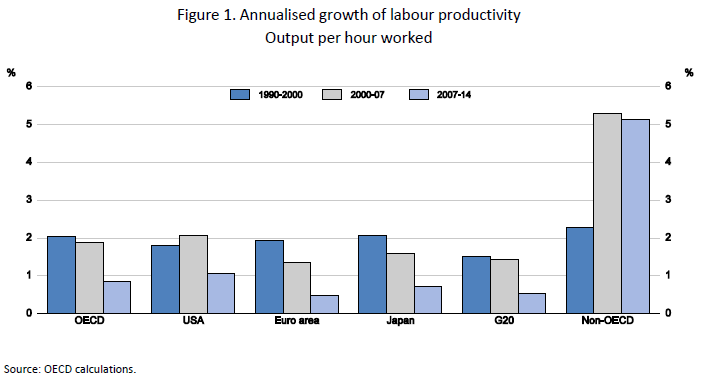
After many years characterised by output losses or quasi-stagnation, steadier growth appears to be setting in across European economies. Recent data point to an upturn in growth, the euro-area unemployment rate has finally fallen below 10%, and private-sector confidence has strengthened. Yet, there is still a need to address the consequences of the crisis, as unemployment remains high, and sizable non-performing loans continue to be a constraint in some countries. Moreover, one challenge that basically all governments face is the sharp slowdown in productivity.  Productivity – a central ingredient in the pursuit of growth and well-being – has been decelerating in most European economies. The slowdown has been particularly sharp since the crisis but was already noticeable before, suggesting that structural factors may lie behind the downward trend (Figure 1).

annualised-growth-of-labour-prod-blog

To address these challenges, structural reforms are necessary but not sufficient to restore robust growth in Europe. This is why the OECD advocates for a three-pronged approach (OECD, 2016a). First, existing exceptional monetary measures should continue in the euro area until inflation reaches target, albeit the scope to continue the stimulus or to move beyond existing plans is now very limited. Second, more active fiscal policy is needed to support aggregate demand and boost potential output. Third, these macro-policies should support an enhanced and efficient implementation of structural reforms.

Indeed, fiscal policy should take advantage of the increase in fiscal space provided by low interest rates to boost growth, equity, and productivity, including via enhanced hard and soft infrastructure investment and other tax, spending, and structural measures that support growth and potential output. Fiscal policy should do more to support growth, possibly by easing the application of the EU Stability and Growth Pact within existing rules, for example by making it easier to exclude net investment spending from fiscal rules (OECD, 2016a). Collective fiscal efforts would have greater impact than individual efforts. Combined with bold and coherent collective actions on structural reforms to strengthen Europe’s economic fabric, the gains from fiscal action would be magnified. In short, the gains would be more than the sum of the parts.

On the structural reforms front what needs to be done? The EU Single market remains far from completed, and the 2016 OECD Economic Survey of the European Union (OECD, 2016b) makes recommendations to reinvigorate it:

  • Capital markets are fragmented, and firms are over-dependent on bank financing. Improved securitisation, better collection and sharing of credit information on SMEs and harmonization of insolvency regimes would help expand and diversify sources of financing and help sustain the recovery.
  • Labour mobilitywould profit from reduced administrative and regulatory barriers, such as faster recognition of professional qualifications and better portability of social and pension rights.
  • Product market reforms would help to unlock investment. National regulations and technical specifications in network sectors, such as energy and transportation, should be harmonised further. Regulatory burdens could be alleviated by better impact assessment of legislative proposals and ex-post policy evaluation. Projects to improve trans-European transport and energy grids should be prioritised.

Structural reforms are needed but they also need to be designed coherently. A bigger bang for the buck will be ensured if reforms are implemented through articulated and coherent policy packages that maximise synergies across areas. A review of the evidence suggests that simultaneous reforms of labour and product markets are typically more growth enhancing than isolated reforms (Caldera Sánchez et al., 2016). Over the last two years, however, such reform packages have not been the norm. For example, reforms have been undertaken either in the labour market or product markets, but very rarely in both (Figure 2). An example is Greece, where much of the adjustment has been borne by workers, while monopoly power and barriers to entry have remained in place in many sectors (OECD, 2016c). Better coordination of reforms across different areas would ease implementation and maximise the favourable growth and job impact of structural reforms.

mixed-implementation

References

Caldera Sánchez, A., A. de Serres and N. Yashiro (2016), “Reforming in a difficult macroeconomic context: A review of the issues and recent literature”, OECD Economics Department Working Papers, No. 1297, OECD Publishing, Paris. http://dx.doi.org/10.1787/5jlzgj45b3q0-en

OECD (2016a), OECD Economic Outlook, Volume 2016 Issue 2, OECD Publishing, Paris.
http://dx.doi.org/10.1787/eco_outlook-v2016-2-en

OECD (2016b), Economic Surveys: European Union 2016, OECD Publishing, Paris. http://dx.doi.org/10.1787/eco_surveys-eur-2016-en

OECD (2016c), OECD Economic Surveys: Greece 2016, OECD Publishing, Paris. http://dx.doi.org/10.1787/eco_surveys-grc-2016-en


Conquering utopia anew – Income inequality in Sweden

by Jon Pareliussen, Swedish Desk, Country Studies Branch, OECD Economics Department

“Equality is a utopia (…) that must be constantly redefined and constantly conquered anew.”

-Olof Palme, 30 July 1965.

Equality, a long-standing hallmark of Swedish society, carries multiple benefits in terms of economic performance, trust, opportunity and well-being. Income inequality is relatively low in Sweden compared to the OECD average, but a rapid rise from the 1990s calls for new efforts to redefine and re-conquer equality once again. Chapter one in the new Economic Survey is dedicated to understanding and addressing the rise of inequality in Sweden (OECD, 2017).

Top incomes grew strongly from the 1990s, mainly as a result of increasing capital gains and dividends, but the collection of wealth statistics was discontinued from 2007, which makes analysing the underlying causes challenging. In the bottom end of the income distribution, working-age benefits were cut or frozen following the economic crisis of the early 1990s. Decades of slow uprating led to a gradual decline of benefits relative to earnings. Analysing the distributional consequences of different uprating scenarios annually would highlight the consequences of inaction, but leave actual increases at the heart of political debate and decision-making, where it firmly belongs.

blog-fig-1-stagnating-sweden

Significant demographic and structural changes, with ageing, more single and single parent households, higher educational attainment, a shift away from manufacturing, and higher, mostly non-labour, immigration, are behind more than 40% of the increase in the Gini coefficient from 1987 to 2013 (Robling and Pareliussen, 2017). These trends increase the importance of redistribution and labour market policies as countermeasures.

One such trend is the increasing number of humanitarian and family reunion migrants, who have lower incomes than natives and less adequate housing. Furthermore, residential segregation leads to school segregation. With low skills compared to natives, partly as a result of lower education attainment, partly due to difficulties with language and culture, many struggle finding employment (OECD, 2015; Bussi and Pareliussen, 2015).  Relatively well-developed integration policies can be further harnessed by learning from successful experiences at the local level, continuing to individually adapt upskilling activities, shortening the time it takes to get residence and work permits, simplifying and consolidating wage subsidy schemes.

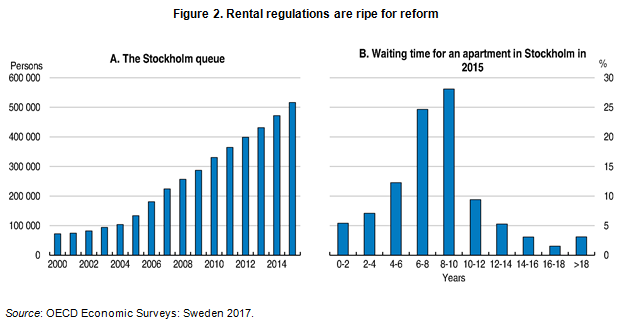
Finally, housing market inefficiencies hit the least well-off. The difference in housing conditions between the rich and the poor is high in Sweden. Tightening the generous tax treatment of owner-occupied housing would increase affordability. Easing strict rental regulations while maintaining tenant protection against abuse would increase mobility for those who cannot afford to buy, incentivise rental housing supply and lead to better utilisation of the housing stock. Some prioritisation to municipal housing with well-designed allocation rules could help low-income households and limit residential segregation.

blog-fig-2-rentals-in-sweden

References:

Bussi, M. and J. Pareliussen (2015), “Skills and labour market performance in Sweden”, OECD Economics Department Working Papers, No. 1233, OECD Publishing, Paris. http://dx.doi.org/10.1787/ 5js0cqvnzx9v-en.

OECD (2015), OECD Economic Surveys: Sweden 2015, OECD Publishing, Paris.
DOI: http://dx.doi.org/10.1787/eco_surveys-swe-2015-en.

OECD (2017), OECD Economic Surveys: Sweden 2017, OECD Publishing, Paris.
DOI: http://dx.doi.org/10.1787/eco_surveys-swe-2015-en.

Robling, P. and J. Pareliussen (2017), “Structural inequality – The case of Sweden”, OECD Economics Department Working Papers, forthcoming, OECD Publishing.


Portugal needs stronger investment to maintain growth and improve living standards

By Jens Arnold, Portugal Desk, OECD Economics Department

Portugal’s economy has successfully recovered from the strong recession that lasted until 2014. Nonetheless, the economy’s still low investment, which has declined far more than in other Euro area countries, remains a source of concern (Figure 1). Since 2012, investment has hardly exceeded the depreciation of the existing capital stock, meaning that growth of the productive capital stock has almost stalled. This is one reason behind the low potential growth of the Portuguese economy, which the OECD currently puts below 0.5%. Without stronger investment, growth performance is bound to decline to such low levels over the next years.

blog-portugal-1-total-invest

Raising investment also matters for wage and productivity developments. Low investment limits the growth of labour productivity, which represents the wage increases that Portuguese workers can pocket without deteriorating the competitiveness of their companies.

More investment is also needed to support the substantial structural change that the Portuguese economy is undergoing. After many years of credit-fuelled expansion of the non-tradable sector, there have been encouraging signs of a reversal towards tradable sectors in recent years, as illustrated by the significant increase in exports. But building on this progress will not be possible without stronger investment in tradable sectors.

Start-ups and young firms are playing a crucial role in this restructuring process. A remarkable 16% of goods exports originated from young exporters in 2014 (Bank of Portugal, 2016). Young firms are also important for productivity: firm level analysis from a census of Portuguese firms suggests that new market entrants have stronger productivity growth than more mature firms, both with respect to labour productivity and multi-factor productivity (Figure 2). They also create three times more jobs than other firms, accounting for almost half the jobs created (Criscuolo et al, 2014).

blog-portugal-2-young-firms

But for young firms to prosper, it is important that they get access to finance for their investment needs and that the overall framework conditions are conducive to their entry and growth. Indeed, there is some evidence that the rise of new firms among exporters is losing momentum (Bank of Portugal, 2016). This underlines the need for further improvements in policies.

For example, cleaning up large amounts of non-performing legacy loans on the balance sheets of Portuguese banks is crucial for freeing up funds that stronger firms require to finance investment. In a recent survey by the European Central Bank on SME financing, Portuguese respondents had the second highest incidence of mentioning access to finance as an obstacle, higher than the EU average. Dealing with non-performing loans will require much more decisive policy action than in the past, both with respect to bank supervision and the development of secondary markets for distressed debt.

Given that a large share of Portugal’s distressed assets are loans to corporate borrowers, well-working insolvency frameworks are crucial to restructure companies that are still viable and to allow a speedy recovery of non-viable companies’ assets before they lose value. Portugal has taken important steps to overhaul its corporate insolvency and restructuring framework. However, differences between the rules and their actual implementation persist.

Access to finance is not the only obstacle to higher investment. Even where firms could finance an investment project, they may prefer to hold off because the expected returns are not sufficiently attractive. Weak demand has been a drag on investment in recent years. That’s why it is important to pursue prudent macro-economic policies so as not to jeopardise the recovery of the economy. But further supply-side measures are also crucial. Structural reforms that reduce the cost of doing business in Portugal could make more potential investment projects worthwhile.

Reforms in areas such as regulation, the judicial system, services sectors including utilities and the labour market have led to impressive improvements in historical comparison. However, as discussed in the recently released OECD Economic Survey of Portugal, the reform momentum has slowed down visibly since the end of the external assistance programme, and reform implementation has fallen short of initial ambitions in several key areas. In some areas, much has changed, for example in labour markets, although more could be done. In other areas, such as product market reforms and the regulation of non-tradable sectors, there is scope for further progress, particularly with respect to implementation. Some of Portugal’s rules and institutional features can act as implicit barriers to firm entry and post-entry growth, and should be subjected to a critical review in light of the loss of momentum in the rise of new firms.

References

Bank of Portugal (2016), “Portuguese international traders: some facts about age, prices and markets”,  Economic Bulletin, October 2016, Lisbon.

Criscuolo, C, P N Gal, and C Menon (2014), “The dynamics of employment growth: new evidence from 18 countries”, OECD Science, Technology and Industry Policy Papers, OECD Publishing, Paris.

OECD (2017), OECD Economic Surveys: Portugal 2017, OECD Publishing, Paris. http://dx.doi.org/10.1787/eco_surveys-prt-2017-en


Strengthening economic resilience: What lessons to draw from the post-1970s record of severe recessions and financial crises

By Alain de Serres, Filippo Gori and Mikkel Hermansen, OECD Economics Department

Major global crises such as the 2008-09 episode are mercifully rare, but severe recessions have been quite frequent among OECD countries over the past four decades.  Even when they do not inflict long-lasting economic damages, they often entail significant costs in terms of foregone income and high unemployment. It is therefore important that measures be taken to minimise the risk and frequency of such episodes, but also to mitigate their impact once they occur. This raises the question of what can policy makers do to lastingly enhance resilience in the face of economic and financial risks. In looking for answers, they need to be mindful of the potential long-term growth impact of risk-mitigating measures.

More specifically, in considering measures to reduce risks, the benefits need to be balanced against the potential costs in terms of the lower average economic growth rate that some policies could entail. The objective is to reduce financial fragilities and minimise systemic risk, but without undermining entrepreneurial risk-taking, which is the essence of innovation-based economic growth. When risk-mitigating measures involve a trade-off between growth and crisis risk, the most cost-effective actions need to be identified, spanning both macro and structural policies.

Recent OECD research sheds light on possible growth-crisis trade-offs from two angles: i) looking at the extent to which pro-growth policies can make economies more vulnerable to severe recessions and ii) assessing the impact on growth of risk-mitigating (prudential) policies. These issues are explored using an empirical approach that provide insights on both the impact of various policy settings on average GDP growth on the one hand, and either financial crises (i.e. banking, currency and twin crises) or exceptionally low GDP growth rates (i.e. extreme negative tail risk), on the other (see references).

What are the main insights from this research? Considering first policies outside the financial sector, that is product and labour market policies as well as those related to the quality of institutions, there is no evidence that policymakers would face trade-offs between enhancing growth and reducing risks of crises (see figure).

  • The results indicate having in place a sound legal and judicial infrastructure – based on a high quality of institutions – is good for both growth and resilience. It may do so notably by facilitating a greater diversification of funding sources away from the banking sector and towards capital markets.
  • Regarding product and labour market policies, the findings indicate that policy settings conducive to higher productivity (g. through stronger product market competition) and employment generally have little impact on crises risks, i.e. they do not reduce the likelihood of severe recessions, but do not raise it either.

More significant trade-offs between growth and crisis risks arise in the case of financial market policies:

  • Financial market liberalisation often yields stronger growth, but also higher risks of banking crises and hence severe recessions. That said, in the cases where liberalisation essentially leads to the development of private credit – in particular bank credit – as opposed to equity-based financial instruments, the impact on growth diminishes.
  • Greater capital flow openness raises growth, but also increases the risk of banking and currency crises. However, the results indicate that among the different types of capital flows, only debt is associated with higher crisis risk.
  • The risk of crises can be mitigated through prudential policies. Indeed, greater use of prudential policies is associated with fewer occurrences of severe recessions. At the same time, the findings indicate that several of these measures may come at a cost in terms of lower average growth.

resilience-blog-ads

Note: Structural policies should be assessed on the basis of their effect on growth and economic fragility. In this chart, the effect of policies on economic fragility is plotted on the horizontal axis, the effect on growth is shown on the vertical axis. Fragility is defined as a higher likelihood of financial crises (banking, currency or twin crisis) or a higher GDP (negative) tail risk. Different risk-growth patterns emerge for each of policy area considered: pro-growth labour and product market policies improve economic performance without substantially affecting economic fragility. Better quality of institutions both increases growth and reduces economic fragility. However, macro-prudential and financial market polices entail a growth-risk trade-off: the former decrease economic risk to the detriment of a higher growth rate, the latter promote growth but also increase financial risk.
Source: Authors’ calculation based on Caldera Sánchez and Gori (2016) and by Caldera Sánchez and Röhn (2016).

What does this mean for policy? One of the main implications of the analysis is that taking measures in the financial sector to lower the risk of severe recessions is entirely appropriate, but focusing too narrowly on that sector is unlikely to be sufficient and could entail substantial costs in terms of foregone GDP growth.  Policymakers need to consider other potential sources of distortions that can contribute to the build-up of vulnerabilities.

OECD research also shows that among the factors creating an environment prone to severe recessions, the more prominent are rapid growth of private credit, imbalances in the housing market (as proxied by real house prices and the ratios of house prices to income and house prices to rent), and, to a lesser extent, large current account imbalances. This points to the need for looking at how domestic policy distortions – notably in the areas of housing market regulation as well as taxation – contribute to excess leverage, in particular through real estate markets and current account imbalances.

References:

Caldera Sánchez, A., A. de Serres, F. Gori, M. Hermansen and O. Röhn (2016) “Strengthening economic resilience: insights from the post-1970 record of severe recessions and financial crises economic policy paper”, OECD Economic Policy Papers, December 2016 No. 20.

Caldera-Sánchez, A. and O. Röhn (2016), “How Do Policies Influence GDP Tail Risks?”, OECD Economics Department Working Papers, No. 1339, OECD Publishing, Paris.

Caldera-Sánchez , A. and F. Gori (2016), “Can Reforms Promoting Growth Increase Financial Fragility? An Empirical Assessment”, OECD Economics Department Working Papers, No. 1340, OECD Publishing, Paris.