Luxembourg : Renouer avec une croissance forte et préserver le système de retraite pour les générations futures

Photo outside the European Convention Centre

Par Cyrille Schwellnus and Simone Romano

Read the blog in English

Malgré plusieurs chocs majeurs et le ralentissement récent, le Luxembourg a connu une croissance vigoureuse au cours des dernières décennies. Le niveau de vie y figure parmi les plus élevés de l’OCDE. Un cadre institutionnel stable, une réglementation réactive et un régime fiscal relativement favorable ont permis d’attirer les investissements étrangers ainsi qu’une main-d’œuvre internationale.

Toutefois, le modèle de croissance fondé sur une expansion rapide de la population active montre aujourd’hui ses limites. La productivité stagne depuis près de 15 ans, la congestion augmente et le logement devient de moins en moins abordable pour de nombreux résidents. Par ailleurs, les dépenses de retraite devraient croître rapidement dans les décennies à venir, avec un triplement du nombre de retraités entre 2024 et 2070.

Dans ce contexte, des politiques visant à favoriser une transition vers un modèle de croissance plus durable, axé sur les compétences et l’innovation, doivent être prioritaires, tout en assurant la soutenabilité du système de retraite et en répondant aux défis climatiques.

L’Enquête économique de l’OCDE 2025 sur le Luxembourg met en avant trois messages clés :

• Une réforme d’ampleur du système de retraite est nécessaire à court terme, combinant modération des dépenses et hausse des recettes, afin de garantir sa viabilité pour les générations futures et éviter des ajustements plus perturbateurs ultérieurement.

• Relancer la productivité suppose de renforcer les compétences via une offre de formation plus qualitative, de recentrer les aides publiques à l’innovation et d’intensifier la concurrence, notamment dans les services.

• Poursuivre le développement des transports publics et des solutions de mobilité alternatives, tout en rapprochant les prix des carburants de ceux des pays voisins et en rendant la fiscalité moins favorable aux véhicules thermiques, permettrait d’avancer vers les objectifs climatiques.

Assurer l’équilibre du système de retraite tout en préservant l’équité intergénérationnelle et la compétitivité requiert une approche globale et une mise en œuvre rapide. L’horizon d’évaluation de l’équilibre du système devrait être étendu de 10 à 50 ans. Fixer un taux de cotisation stabilisateur à long terme et le mettre progressivement en place permettrait de répartir plus équitablement la charge entre générations et de laisser au fonds de réserve de retraite le temps de croître grâce aux rendements financiers.

Relever l’âge effectif de départ à la retraite, actuellement le plus bas de l’OCDE, renforcerait également la viabilité du système. L’accès à la retraite anticipée devrait être restreint en excluant les années d’études du calcul des années contributives et en alignant les prestations sur les carrières réelles. Parallèlement, les âges de départ anticipé et légal devraient évoluer avec l’espérance de vie.

Les niveaux de pension devraient être rapprochés de ceux des autres pays de l’OCDE, car le revenu relatif des personnes âgées au Luxembourg est le plus élevé de la zone. Accélérer la transition vers les taux de remplacement plus faibles prévus par la réforme de 2012 – en passant de 40 à 25 ans – contribuerait à ralentir l’épuisement du fonds de réserve. Remplacer l’indexation des pensions sur les salaires nominaux par une indexation sur l’inflation, comme c’est l’usage dans la majorité des pays de l’OCDE, permettrait aux retraités actuels de participer à l’effort d’ajustement.

La transition vers un modèle de croissance reposant sur les compétences et l’innovation passe par des réformes de la politique d’innovation, de formation et de concurrence. Mettre en place un mécanisme de coordination entre les principaux acteurs du soutien public à l’innovation, privilégier les aides orientées vers des projets plutôt que vers les institutions, et renforcer les partenariats public-privé favoriserait l’investissement privé en R&D.

La qualité de la formation pourrait être renforcée via la création d’un organisme national d’accréditation et un contrôle plus strict des prestataires. Mieux cibler les incitations financières à la formation continue et proposer un accompagnement plus actif encouragerait la participation des travailleurs peu qualifiés et des seniors. L’obligation de divulguer l’identité des groupes d’intérêts et des responsables publics impliqués dans les activités de lobbying, ainsi que l’instauration de sanctions pour les lobbyistes non enregistrés, permettraient de limiter l’influence disproportionnée des acteurs dominants sur la réglementation, au détriment des PME. La qualité de la réglementation pourrait aussi être améliorée par la généralisation des évaluations d’impact ex-ante et ex-post sur la concurrence, et par l’usage d’un langage clair dans la rédaction des lois.

Le Luxembourg a fait d’importants progrès dans la réduction des émissions, mais des efforts supplémentaires sont requis pour réduire de 55 % d’ici 2030 les émissions hors Système d’échange de quotas d’émission de l’Union Européenne et atteindre la neutralité carbone à l’horizon 2050. L’expansion des infrastructures de transport public, l’augmentation de la fréquence et de la capacité des trains contribueraient à réduire la congestion et à accroître la capacité globale du système. D’autres mesures sont nécessaires pour fluidifier les déplacements aux heures de pointe, notamment un meilleur lien entre aménagement du territoire et développement du transport public.

La dépendance élevée aux véhicules thermiques est soutenue par une fiscalité avantageuse sur les carburants et les voitures. Définir une trajectoire claire et ambitieuse pour la fiscalité des carburants au-delà de 2027, afin de rapprocher le prix final de celui des pays voisins, réduirait le tourisme à la pompe et l’usage de la voiture individuelle. Relever la taxe d’immatriculation des véhicules neufs en fonction des émissions, introduire des péages routiers et réserver certaines voies aux bus et au covoiturage contribueraient à un basculement vers des modes de transport plus durables.

Pour plus d’informations, visitez la page de l’ économie du Luxembourg en un coup d’œil.

References

OECD (2025), OECD Economic Surveys: Luxembourg 2025, OECD Publishing, Paris,
https://doi.org/10.1787/d01c660f-en.


Restoring high growth and securing the pension system for future generations in Luxembourg

Photo outside the European Convention Centre

Read the blog in French l Lire le blog en français

By Cyrille Schwellnus and Simone Romano

Despite several major shocks and the recent slowdown, Luxembourg has grown vigorously over recent decades. Living standards are among the highest in the OECD. The stable institutional framework, responsive regulation and a relatively favourable tax regime have attracted foreign investment and foreign workers.

Yet, the growth model based on rapid labour force expansion has reached its limits. Productivity has stagnated over the past 15 years, congestion has increased and housing has become less affordable for many residents. Moreover, Luxembourg faces rapidly rising pension expenditure over the next decades, as the number of pensioners will more than triple over 2024-2070.

Policies fostering the transition to a more sustainable growth model based on skills and innovation need to be prioritised, while ensuring the sustainability of the pension system and addressing climate change.

In this context, the new 2025 OECD Economic Survey of Luxembourg contains three main messages:

•             A comprehensive reform to curb pension expenditure and raise revenue is needed in the near term to secure the system for future generations and prevent more disruptive changes at a later stage.

•             Boosting skills by upgrading training, refocusing public support for innovation and strengthening competition, especially in services, would help to reinvigorate stagnating productivity.

•             Continuing to develop public transport and alternative mobility options, while bringing fuel prices more in line with neighbouring countries and making the tax regime less advantageous for cars with internal combustion engines, would help Luxembourg reach its climate targets.

Balancing the pension system in the long term while safeguarding inter-generational fairness and competitiveness requires a multipronged approach and fast implementation. The horizon over which periodic reviews assess the balance of the system needs to be extended from 10 to 50 years. Setting a steady-state contribution rate that balances the system over 50 years and phasing it in early would ease the burden on future generations by allowing larger working-age cohorts to contribute more, while the pension reserve fund would grow through financial returns.

Raising the effective retirement age, which is the lowest in the OECD, would further help to put the system on a sustainable footing. Eligibility for early retirement should be tightened by removing educational years from the calculation of contributory years, aligning benefits with actual work history. At the same time, early and statutory retirement ages should be raised to match gains in life expectancy.

Pension benefits need to be brought more in line with other OECD countries, as the relative income of older people is the highest in the OECD. Shortening the transition to the lower replacement rates of the 2012 reform from 40 to 25 years would contribute to a slower depletion of assets in the pension reserve fund. Switching from nominal wage indexation of pensions in payment to inflation indexation – as is common in OECD countries – would ensure that current pensioners contribute to the reform effort.

Transitioning from a growth model based on rapid labour force growth to a model based on skills and innovation requires reforms to innovation, skills and competition policies. Establishing a coordination mechanism between the main actors providing public innovation support, shifting more from institution to project-oriented support and strengthening the role of public-private partnerships would crowd-in more business R&D investment.

Quality standards for training providers could be strengthened through the creation of a national accreditation agency, as well as the tightening of quality control on training providers. Enhancing the targeting of financial incentives for adult learning and more proactive guidance would increase the participation of low skilled and older workers. Requiring full disclosure of the identity of interest groups and public officials that were involved in lobbying activities and introducing sanctions for lobbyists who do not enrol in the dedicated public register would limit the scope for incumbents and larger firms to shape regulation in their favour at the expense of smaller firms. The quality of regulation could be further improved by introducing ex-ante and ex-post evaluations of the impact of regulation on competition and requiring the use of plain language in drafting new laws.

Luxembourg has made substantial progress in reducing emissions, but further efforts are needed to reduce emissions in sectors not covered by the EU Emissions Trading System by 55% by 2030 and to reach net zero emissions by 2050. Continuing to expand the public transport infrastructure and increasing the frequency and capacity of trains would help to ease congestion and boost overall system capacity. Measures are also needed to limit congestion during peak hours, including by better linking land planning and public transport development.

The reliance on combustion engine cars is high, supported by low taxes on cars and fuel. Setting a clear, forward-looking trajectory for the taxes on motor fuels that goes well beyond 2027 and brings the final fuel price more in line with that of neighbouring countries would reduce fuel tourism and the use of private cars. Increasing the registration tax on new cars and making it dependent on emissions, while introducing road tolls and reserving road lanes for buses and carpooling would encourage the transition to more sustainable commuting options.

For more information, visit the Luxembourg snapshot page.

References

OECD (2025), OECD Economic Surveys: Luxembourg 2025, OECD Publishing, Paris,
https://doi.org/10.1787/d01c660f-en.


Ensuring high but sustainable growth in Türkiye

A tower in the historic part of Istanbul

By Sébastien Turban, Economist, OECD

Türkiye has been one of the fastest-growing economies in the OECD over the past decade, leading to a significant improvement of labour market and social outcomes. However, the income gap with OECD countries remains large. In addition, growth had become unsustainable in the years following the Covid crisis since it relied excessively on domestic demand, which lead to large internal and external imbalances in 2022, notably very high inflation and a sizeable current account deficit.

In this context, the new 2025 OECD Economic Survey of Türkiye (OECD, 2025a) contains four main messages:

  1. Prudent macroeconomic policies are a pre-requisite for sustainable growth.
  2. Higher productivity gains are needed to speed up convergence towards other OECD economies.
  3. The economy would hugely benefit from a higher labour force participation of women.
  4. A greener economy requires more ambitious policies, notably transitioning away from coal.

Following the May 2023 elections, a more prudent macro-economic policy mix has been implemented. The Central Bank has gradually raised interest rates, and the government is planning a fiscal consolidation for the coming years. This policy has started to bear fruits, with a reduction of imbalances, including a gradual fall in inflation (Figure 1). Maintaining tight monetary policy and fiscal discipline will be essential until inflation is firmly under control. Over the long term, improving public finances will require structural reforms. This includes reducing the scope of reduced VAT rates, a broader income tax base (in particular by tackling informality), and targeting better social assistance to help reduce the high level of inequalities.

Productivity has increased faster in Türkiye than other OECD countries in the last decades, but potential GDP per worker remains relatively low. Higher productivity gains, in particular in services sectors, require supporting innovation, upskilling the labour force, and reducing barriers to the conduct of business activity. The Economic Survey discusses three important steps in this respect.

  • Firstly, Türkiye could boost homegrown innovation by supporting collaborations between businesses and research to promote broader technology adoption.
  • Secondly, the skills of the labour force could be improved to adapt to future challenges. Important skills mismatches remain and incentives for tertiary education institutions to offer courses more aligned with labour market needs could be further enhanced.
  • Finally, business dynamism in Türkiye remains hampered by tighter regulations relative to other OECD countries (Figure 2). In particular, barriers in professional services could be lowered.

Boosting the participation of women in the labour force would hugely benefit the economy. This would increase the pool of talents the economy needs, especially as population is ageing, with a contribution to growth of working-age population set to decline. The labour force participation of women aged between 15 and 64 years old, at 40.9% in 2023, remains significantly below the OECD average of 66.7% (Figure 3). A combination of policies would help closing the gap between women and men on labour markets, such as expanding public investment in early childhood education and care (ECEC), introducing shareable paid parental leave, and increasing child-related benefits.

Finally, achieving the ambitious target of zero net emissions of carbon by 2053 will require more ambitious policies since greenhouse gas emissions are still growing. Türkiye has made recent progress in its climate change strategy by ratifying the Paris Agreement in 2021, updating its Nationally Determined Contribution in 2023 and documenting strategies and action plans thoroughly. However, current policies are likely to be insufficient to achieve the ambitious objectives. In particular, two important steps can be taken to bring the reduction in emissions forward. First, the effective carbon tax should be higher. Today, the effective price of carbon in Türkiye is EUR 8 per ton of CO2 equivalent, against EUR 62 in the OECD (OECD, 2023). Second, Türkiye will need to transition away from coal for energy supply as this polluting energy source still represents 26% of energy supply (against 12% in the OECD) and contributes to emissions of fine particulates with significant adverse health effects (OECD, 2025b).

References

OECD (2025a), OECD Economic Surveys: Türkiye 2025, OECD Publishing, Paris,
https://doi.org/10.1787/d01c660f-en.
OECD (2025b), Environment at a Glance Indicators, OECD Publishing, Paris,
https://doi.org/10.1787/ac4b8b89-en.

OECD (2023), Effective Carbon Rates 2023: Pricing Greenhouse Gas Emissions through Taxes and Emissions Trading, OECD Series on Carbon Pricing and Energy Taxation, OECD Publishing, Paris, https://doi.org/10.1787/b84d5b36-en.


Living longer and living better: an OECD perspective on Polish healthcare

By Srdan Tatomir

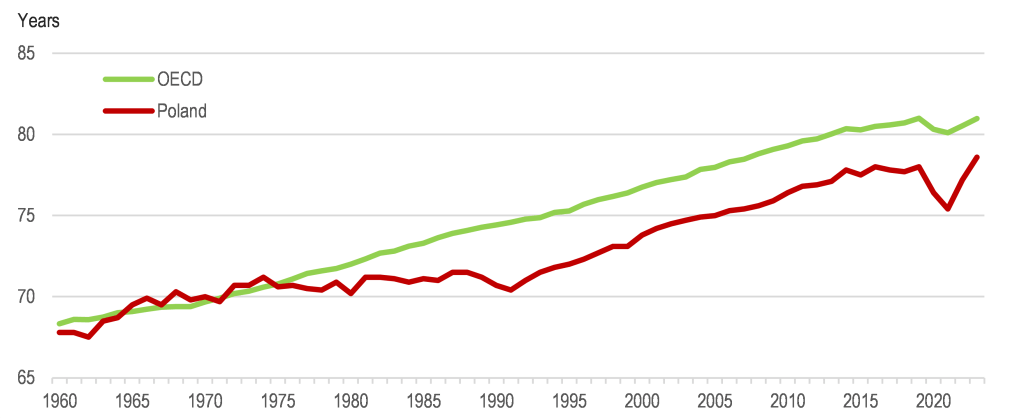
On today’s World Health Day Poland can celebrate the highest level of life expectancy in its history, after it bounced back from the COVID-19 pandemic (Figure 1). It is now 74.8 years for men and 82.4 years for women, longer than in many Central and Eastern European and Baltic countries. But Poland still lags behind the majority of OECD countries. Circulatory system diseases, such as heart disease, hypertension and stroke, account for nearly half of all deaths, while cancer contributes to around a further fifth. As our latest Economic Survey discusses, Poland can do more to boost healthcare.

Figure 1 – Life expectancy in Poland is historically high but there is room to catch up with average OECD life expectancy
Note: The data shown is for average life expectancy at birth. The OECD average is weighted. The latest data point is 2023.
Source: OECD Health Statistics.

Poland has historically been among the lowest spenders on healthcare in the OECD. Before the pandemic, overall health spending accounted for 6.5% of GDP. Successive governments have recognised the need to improve healthcare and are implementing reforms. Current plans are to bring overall health spending closer to the OECD average of around 9% by 2027. Policy efforts should focus on key priorities to maximise the positive impact of additional spending on health outcomes. 

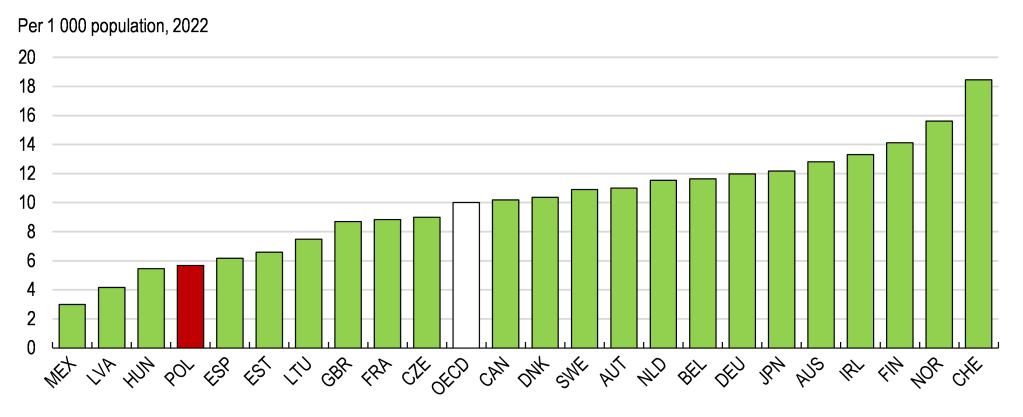
To deliver quality healthcare services an adequate healthcare workforce is essential. While the relative number of doctors in Poland is around the OECD average, the number of nurses is comparatively low (Figure 2). The number of training places for nurses has risen, but more are needed especially because many nurses are close to or over retirement age. Recent increases in salaries should help: in 2022 (the latest year for which the OECD has data), nurses’ salaries stood at 1.6 the national average wage, among the highest in the OECD in relative terms. When adjusted for purchasing power, salaries are now higher in Poland than in countries Polish nurses traditionally emigrated to, such as the UK and Ireland. However, working conditions matter as well. More explicit guidance on working practices, such as setting limits on the number of patient consultations and overtime hours, could improve working conditions and help attract more people to healthcare.

Figure 2 – The number nurses is relatively low compared to other OECD countries

2022, or latest available

The number of nurses in Poland is realtively low compared to other OECD countries.
Note: The OECD average is unweighted.
Source: OECD Health Statistics.

Improving health requires faster treatment. Poland has given cancer patients priority in the health system and there is no cap on treatment costs. Yet cancer is often detected too late. Despite free nationwide screening programmes available since the early 2000s, participation rates are below the EU average, particularly among less educated people. Targeted outreach would help raise participation.

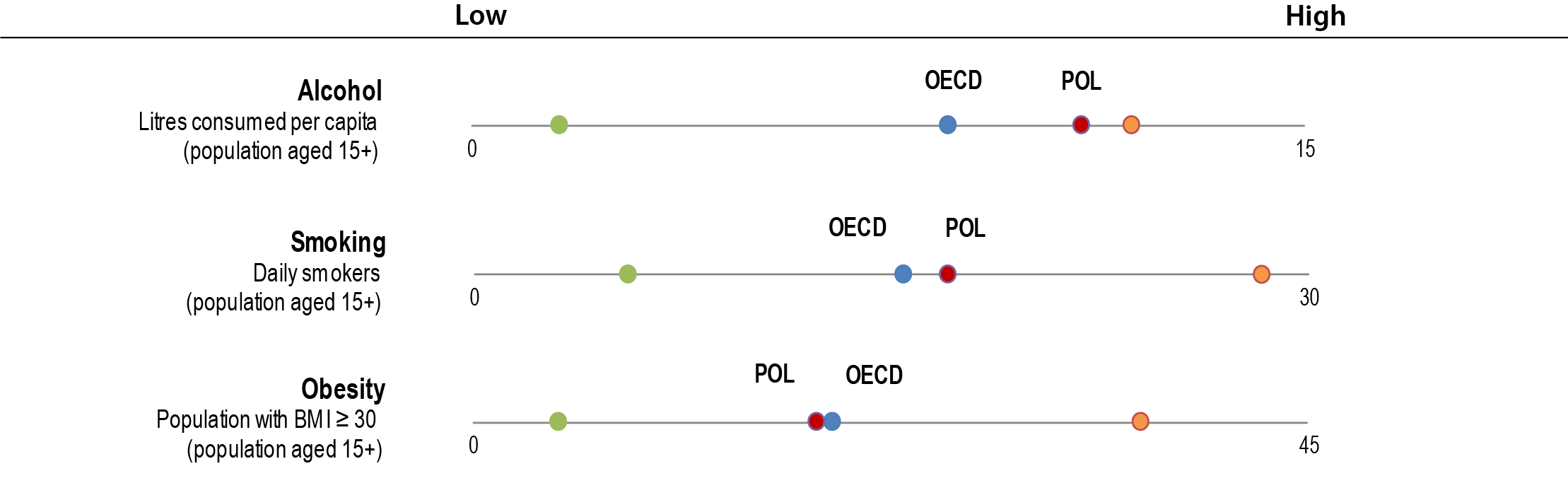
In the medium to long term, better prevention of key risky health behaviours could lead to better health. Alcohol consumption is among the highest in the OECD and smoking rates should be lowered further (Figure 3). Excise duties to make alcohol and tobacco less affordable are rising, and this could be complemented by restricting their availability to maximise the impact on consumption. Introducing taxes on unhealthy foods with high content of salt, sugar and fat could steer people towards healthier eating as has been done in Mexico and Hungary.

Figure 3 – Reducing alcohol and tobacco consumption would improve health outcomes

2022, or latest available

Note: The green circles represent the minimum and the orange circles the maximum observation in the OECD for each variable. Data for alcohol, smoking and obesity is for 2022.
Source: OECD Health Statistics 2023, OECD Environment Statistics 2020, WHO Global Health Observatory. 

Higher efficiency of the healthcare system can free up resources to fund better healthcare. Poland has made great progress in digitalising its healthcare services and the maturity of its e-health system has been ranked the fifth highest in the EU in 2022. User charges, with exemptions for children and those on low incomes, could be introduced to reduce the number of unnecessary consultations and improve the use of scarce resources. Consolidating the hospital network to reduce capacity, while better reflecting local health needs and improving hospital management quality, could reduce costs without compromising quality or access to care.

Learn more by visiting the OECD’s Poland Economic Snapshot page.

References:
OECD (2025), OECD Economic Surveys: Poland 2025, OECD Publishing, Paris, https://doi.org/10.1787/a35a56b6-en


Why is life so expensive in Israel?

By Erik Frohm

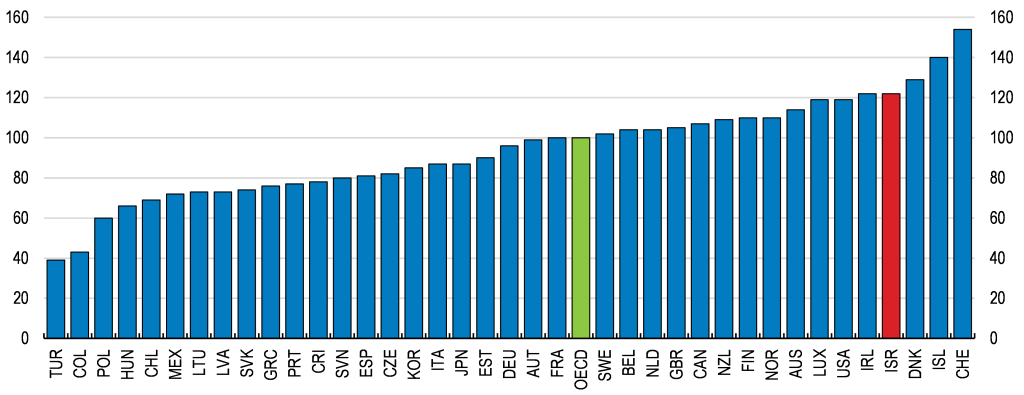
When the price of pasta sparks a protest, you know the cost of living is hitting home. In 2022, some Israelis took to social media – and the streets – to protest the rising cost of everyday essentials. This comparatively small protest wasn’t the first. For more than a decade, consumer protests have become a recurring feature in Israel, with citizens demanding action to make basic goods and housing more affordable.

Already in 2011, several social movements arose against the high cost of living. Frustrated by soaring housing prices and the high cost of staple foods, Israelis organised through social media and in person to make their voices heard, notably in the so-called tent protest and the cottage cheese boycott. The movements captured national attention, forcing companies and policymakers to respond. In 2014, the “Milky protest” reignited public frustration when a viral post compared the price of a chocolate pudding to its much cheaper counterpart in Germany.

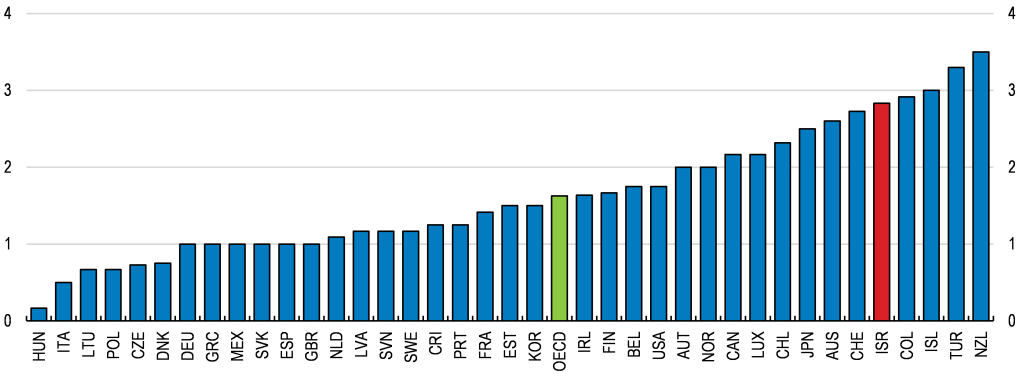
Figure 1. Israel has one of the highest price levels in the OECD

Comparative price levels, index OECD = 100, 2023

Note: Comparative Price Levels (CPLs) are defined as the ratios of PPPs for private final consumption expenditure to USD exchange rates. They provide measures of differences in price levels among countries.
Source: OECD Annual Purchasing Power Parities and exchange rates database; and OECD calculations.

So, why is life in Israel so expensive? Several structural factors drive up prices. Geographic challenges play a major role. Israel’s distance from key trading partners and tense relations with some neighbouring countries limit trade opportunities and reduce integration in supply chains. Trade barriers, driven by difficult border procedures, complex regulatory standards and tariffs on agricultural products have also raised the price of imports. Limited competition and strict product market regulations keep prices high by slowing productivity growth and preventing the cost savings from reaching consumers. In the housing sector, administrative red tape and planning obstacles restrict supply, making homes unaffordable for many families. Meanwhile, a world-leading high-tech sector coexists with low-productivity industries where most Israelis work. This split implies large wage disparities with reduced purchasing power for workers outside high tech.

Figure 2. The administrative burden can be lowered

Product Market Regulation indicator scores, communication and simplification of administrative and regulatory burden, from 0 to 6 (most restrictive), 2023

Notes: The Product Market Regulation (PMR) indicator is a composite index that encompasses a set of indicators that measure the degree to which policies promote or inhibit competition in areas of the product market where competition is viable.
Sources: OECD 2023-2024 Product Market Regulation database.

Addressing these challenges requires bold and sustained reforms. The 2025 OECD Economic Survey of Israel outlines key policy measures to increase competition and ease the cost of living. They include removing barriers to entry, improving administrative procedures, continuing to lower trade barriers and streamlining permitting processes.  

Specifically, to strengthen competition, Israel could establish a one-stop shop for starting a business, alongside adopting a silence is consent principle for issuing permits and licenses, as well as reducing bureaucratic hurdles and fostering a more competitive business environment. Lowering entry barriers in services sectors and simplifying import licensing would also help cut costs and improve efficiency. Less state involvement in the economy, including the removal of price and quantity controls for foodstuff, can help alleviate recurring shortages and allow market prices to influence consumer behaviour.

Ongoing import reforms will make it easier and cheaper to bring goods into the country. Expanding and deepening trade agreements will further diversify import sources and open new export opportunities. Lowering tariffs on agricultural imports – such as vegetables, fruit, and dairy – will boost competition, drive innovation, and make food more affordable.

The housing market continues to face challenges. Restrictive planning regulations and slow urban development have driven up home prices, making it increasingly difficult for many Israelis to find affordable housing. Easing these constraints by accelerating urban renewal projects, and investing in better transport infrastructure – including public transit to urban centres – would expand supply and help lower costs.

Raising productivity and lowering costs on essentials like food and housing can ease the economic burden on households, create a more competitive business environment and drive economic growth.

Reference:

OECD (2025), OECD Economic Surveys: Israel 2025, OECD Publishing, Paris, https://doi.org/10.1787/d6dd02bc-en.

More information:

Israel economic snapshot: https://www.oecd.org/en/topics/sub-issues/economic-surveys/israel-economic-snapshot.html.


Lithuania: Addressing demographic challenges 

Vilnius, Lithuania overview

By Pierre-Alain Pionnier

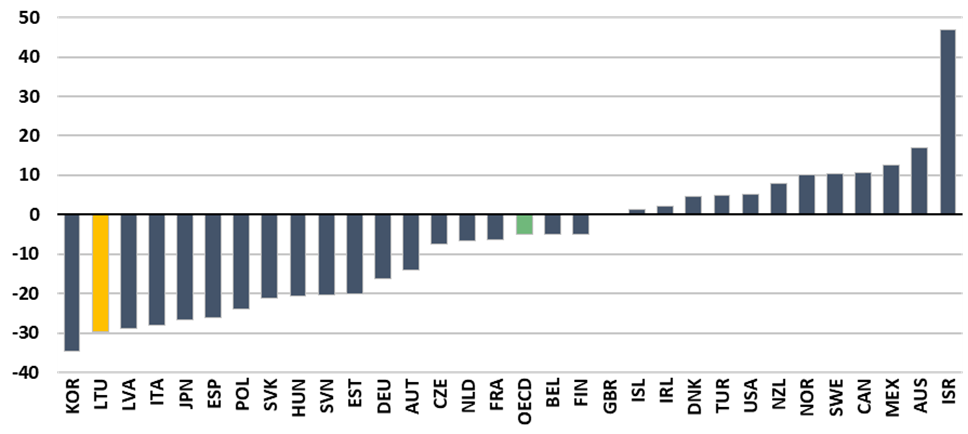
Lithuania’s population is expected to decline by 20% and its working-age population by 30% over the next 25 years (Figure 1). Few countries will face such a large demographic shock. This calls for policy responses across different areas, including fiscal and labour market policies, as explained in the 2025 Economic Survey of Lithuania

Figure 1. Lithuania will face a large demographic shock

Change in the working-age population (20-64 years old), %, 2022-2050

Figure showing Lithuania will face a large demographic shock
Source: UN World Population Prospects 2022 (Medium scenario)

Ageing-related expenditure is set to increase by 3.6% of GDP by 2045, most of it related to the financing of public pensions. At 37% of GDP in 2023 Lithuania’s public debt is one of the lowest in the OECD, but simulations show that it could increase rapidly due to ageing-related costs.

Unfortunately, there is not much that Lithuania can do to contain the expected increase in pension spending, at least in the short term.

The statutory retirement age is currently around 64, similar to the OECD average, and will increase to 65 in 2026 for both men and women. Significant disparities in life expectancy between men and women and across socio-economic groups make further increases in the retirement age difficult. Lithuanian men have one of the lowest life expectancies in the OECD and enjoy relatively short retirement periods. Even in an optimistic scenario, fiscal savings that could be obtained from linking the retirement age to life expectancy would be limited in Lithuania.

Adjusting pension benefits could in principle provide a way to improve the financial sustainability of the pension system. But pension replacement rates, which measure pension benefits relative to pre-retirement wages, are already the lowest in the OECD and old-age poverty is high (25%). This severely limits the scope for savings through benefit adjustments.

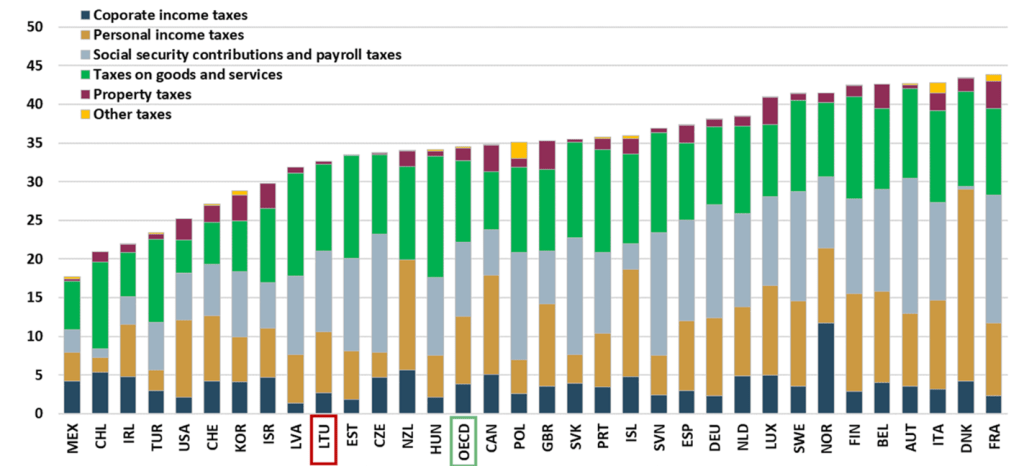
Ensuring fiscal sustainability will therefore require creating additional fiscal space outside of the pension system. Better spending efficiency can help to improve fiscal outcomes. For example, Lithuania has a larger public sector than other OECD countries and available estimates suggest that wages in the public sector are around 10% higher than in the private sector. Moreover, Lithuania’s fiscal revenues are comparatively low (Figure 2). This provides scope to increase taxes to contribute to the financing of ageing-related expenditure. One case in point is property taxes, which are among the taxes that are least detrimental to economic growth but also largely underused in Lithuania. A large shadow economy is another unexploited source of fiscal revenues. This shadow economy reduces revenues from value-added taxes. Further reducing the use of cash in the economy and reducing the tax wedge for low-income earners to make formal work more attractive could help, and the resulting revenue losses could be compensated by increasing income taxes for higher incomes.

Figure 2. Property tax revenues could be increased to strengthen fiscal sustainability

Structure of tax revenues, % of GDP, 2023

Increasing property tax revenues for fiscal sustainability in Lithuania
Note: OECD is an unweighted cross-country average
Source: OECD Revenue statistics

Bringing more people into the labour force would attenuate the impact of the demographic shock on the labour market.

Despite existing labour shortages in many sectors, the employment gap between higher- and lower-skilled workers is high in Lithuania. The creation of learning accounts for training courses in 2024 is a step in the right direction. If it turned out that current funding is insufficient to make a significant difference, targeting could be increased towards the groups that are most in need of training.

Increasing the employment prospects of older-age workers will also require improving their health. Poor health conditions are partly related to preventable diseases and behavioural factors such as poor diets, high alcohol consumption and low physical activity. Regulations and taxes have a key role to play by limiting the affordability of harmful substances.

Immigration is another way to mitigate labour shortages. Simulations presented in this Survey show that extending the positive net migration inflows that were observed just before the outbreak of the war in Ukraine would halve the impact of the demographic shock on the Lithuanian economy. Residence permits for non-EU workers could be made more attractive. With 1.3 million persons of Lithuanian descent living abroad, return migration also has a significant potential. Since migrants of Lithuanian origin may be easier to integrate, outreach towards the diaspora could be strengthened.

Visit the OECD’s Lithuania Economic Snapshot page for further information.

References:

OECD (2025), OECD Economic Surveys: Lithuania 2025, https://doi.org/10.1787/4abf1ea5-en, OECD Publishing, Paris.


Unlocking Chile’s productivity growth

By Claudia Ramirez Bulos and Adolfo Rodriguez-Vargas

Thanks to its strong macroeconomic framework, the Chilean economy has weathered significant challenges in recent years showing resilient growth. The economy recovered in 2024 from weak growth compared to 2023, and the economy is projected to grow around 2.2% on average in 2025 and 2026, as detailed in the recently published 2025 Economic Survey of Chile.  However, the Chilean economy is about 50% less productive than the average OECD country, and productivity has failed to catch up over the last decade. Chile can reverse this trend and accelerate productivity growth to allow more sustainable increases in living standards by encouraging efficient resource allocation and taking advantage of its digital connectivity and vast natural resources. To address productivity challenges and leverage the opportunities created by the digital and green transitions, including the development of the lithium and hydrogen industries, it will be necessary to foster women’s participation in the labour market, enhance skills development, promote investment and a more dynamic innovation environment, while improving business and environmental regulations, as described in the 2025 Economic Survey of Chile.

Fully unlocking the labour market potential

Fostering women’s participation in the labour market can lead to a better allocation of talent, increasing the country’s potential growth. OECD estimates suggest that fully closing gender gaps in labour market participation and hours worked by 2060 could lift Chile’s potential GDP per capita by over 0.25 percentage points per year—a bigger boost than the OECD average. Yet, women’s participation still lags 16 percentage points behind men at 77.6%, remaining below the OECD benchmark (Figure 1, Panel A). Unlocking women’s full economic potential requires addressing unpaid work imbalances and closing education gaps in high-skill fields. Policies that expand access to high-quality childcare and elderly care, improved parental polices, alongside efforts to encourage more women into STEM careers by addressing gender stereotypes from a young age, will be key to closing gender gaps.

Enhancing skills development

Chile’s workforce needs a skills upgrade to fully seize the opportunities of the digital and green transitions. As industries evolve, workers will need to adapt—but many currently lack the necessary capabilities. In 2023, only 11.7% of Chilean adults were proficient in problem-solving in technology-rich environments, far below the OECD average of 32.3%. Additionally, 41% of employed adults felt underqualified for their jobs, citing inadequate computer or software skills, close to the OECD average of 42%. The green transition adds another layer of complexity. Chile’s green transition plans require sufficiently skilled workers to set up, operate, and improve equipment based on novel technologies, some of them still in development. Strengthening education and training systems will be crucial. Raising teaching quality, integrating more digital skills into the national curriculum, and expanding access to tailored digital training for workers can help ensure that Chile’s workforce is prepared for the jobs of the future.

Promoting investment and innovation while improving business and environmental regulations

Promoting the diffusion of knowledge across firms is key to taking advantage of Chile’s good digital connectivity and vast natural resources. Encouraging the adoption of advanced technologies can stimulate innovation and yield significant productivity gains. However, Chile invests relatively little in R&D, at 0.3% of GDP, well below the OECD average of 2.1% in 2022, with most resources coming from the public sector (Figure 1, Panel B). Furthermore, the percentage of companies that introduced technological innovations was 16.7% in 2019-2020, compared to 35% in the rest of the OECD. Simplifying access to public research and development support can help boost innovation, while strengthening the collaboration between businesses and universities, that in Chile remains low, would also help. In the medium-term, increasing R&D spending based on cost-benefit analysis would be advisable.

Figure 1. A more efficient resource allocation is needed to accelerate productivity growth

Note: LAC is a simple average of Argentina, Colombia, Costa Rica, and Mexico. Panel B: Data for Chile refer to the year 2020.
Source: OECD Labour force statistics; OECD Main Science and Technology indicators database.

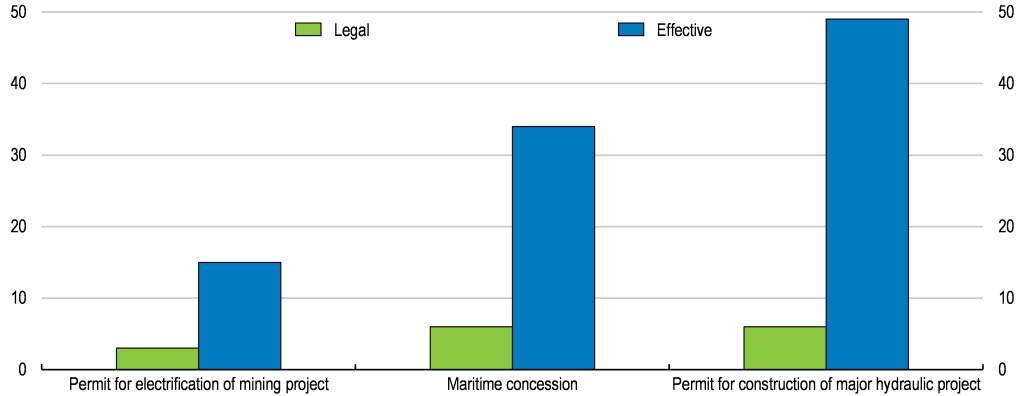
Chile is well positioned to benefit from increased world demand for lithium, as it has the largest share of known lithium reserves and produces around a quarter of world lithium. The country has a unique opportunity to create jobs, attract investment, and move up the lithium value chain. At the same time, the government envisions a strong state role in lithium development alongside the private sector. However, committing to multiple high-profile initiatives risks diluting efforts. A more focused approach would yield better results. Prioritizing key areas—such as strengthening state mining companies’ lithium expertise, establishing the planned National Lithium and Salt Flats Technological and Research Institute, and ensuring sustainable extraction practices—should be a priority. Strategic partnerships with private firms can also help bridge the knowledge gap and accelerate development.  Additionally, regulatory and administrative burdens remain comparatively high in Chile, with complex sectoral permitting processes that lack systematised and readily available supporting information, with long durations (Figure 2). Reducing administrative burdens on businesses and strengthening competition can create a more dynamic economic landscape conducive to growth.

Figure 2. The review of permits often exceeds legal times

Permit reviewing times, months, 2018-2022 average

Source: Consejo Nacional de Evaluación y Productividad, 2023, Análisis de los permisos sectoriales prioritarios para la inversión en Chile.

Read more:

OECD Chile Economic Snapshot – https://www.oecd.org/en/topics/sub-issues/economic-surveys/chile-economic-snapshot.html


Accelerating climate adaptation: A framework for resilient economies

By Mauro Pisu, Hélia Costa, Filippo Maria D’Arcangelo, Yannick Hemmerlé, Tobias Kruse and Luisa Lutz

The physical risks posed by global warming keeps rising. This is despite the progress of many countries in ramping up climate-change mitigation policies over the past decades. The risks threaten public finances, household incomes, investment and economic growth. As such, they call for urgent action in adopting effective climate change adaptation without relinquishing robust efforts to reduce greenhouse gas emissions. One of the main challenges is to steer private capital towards adaptation as its large financing needs far exceed the capacity of the public sector alone.

The recent OECD paper, “Accelerating Climate Adaptation: A Framework for Assessing and Addressing Adaptation Needs and Priorities” (OECD, 2024a), offers guidance for designing and implementing effective climate change adaptation policies and strategies.

A multi-step framework for adaptation

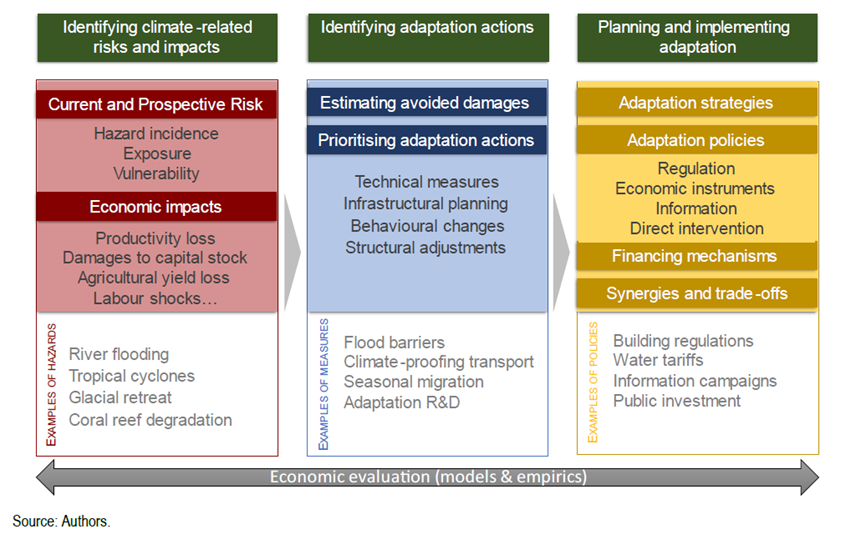
By building on recent and ongoing OECD work, this paper develops a multi-step framework to integrating adaptation into broader economic policy making. It consists of three key steps (Figure 1):

  1. Identifying climate-related risks and impacts: This involves assessing the incidence of climate hazards as well as the exposure and vulnerability of populations and assets to these hazards. Assessing these components and their evolution over time allows for estimating the economic costs of climate change. Costs can affect public finances and private-sector incomes, and lead– through demand and supply channels – to lower growth and other adverse macroeconomic impacts.
  2. Identifying adaptation actions: Adaptation actions aim at reducing exposure and vulnerability of populations and assets to climate risks, thus limiting the costs incurred when risks materialize. Mitigation efforts, however, remain vital to diminish the incidence of climate hazards. Adaptation actions fall into different categories: technical measures (like barriers or green roofs); infrastructure planning (including upgrading building standards or changing urban structure); behavioral or organizational changes (e.g. changing working hours to avoid peak temperature); and structural economic adjustments (e.g. systematic shifts in economic activity). They need to be prioritized based on estimates of economic benefits (i.e. avoided losses) while taking into account implementation costs.
  3. Planning and implementing adaptation: This step involves identifying and implementing the most suitable policy tools to drive adaptation actions, securing adequate financing, as well as exploiting synergies between adaptation and mitigation efforts. National Adaptation Plans (NAPs) play a critical role in allocating responsibilities, monitoring and evaluating adaptation objectives, and ensuring that policies are tailored to country-specific risks and contexts (OECD 2023a).

Figure 1. A multi-step framework for adaptation

Policy instruments for driving adaptation

Policymakers have a range of policy tools at their disposal to promote and accelerate adaptation actions. The need for different tools and their effective combinations depend on the obstacles hindering private adaptation. These policy tools include:

  • Economic instruments: These rely on market incentives to encourage private sector’s consumption and investment choices to be aligned with adaptation objectives while allocating resource efficiently. This will lower the cost of adaptation. The instruments include tax breaks or subsidies for climate-resilient infrastructure and incentives to promote insurance mechanisms against climate-related risks, tax breaks or grants to developers and homeowners to encourage the adoption of stricter building practices and the construction of buildings that can withstand extreme weather events.

  • Regulations: These constrain the behaviour of individuals, businesses, and governments by mandating production and work practices that are aligned with adaptation objectives. Regulations can be effective when firms and individuals are unresponsive to price signals, and when economic instruments are politically difficult to implement or fail to overcome coordination failures. For instance, well designed building codes, zoning laws, and land-use regulations help reduce exposure to climate hazards. For example, in Portugal, land-use regulations forbid construction in areas with high wildfire risk. In some countries, the absence of regulations informed by wildfire risk assessments has contributed to large damages in recent years (OECD, 2023b).

  • Information provision: The provision of information on climate risks help to overcome information gaps, thus encouraging private adaptation actions, mobilising private finance and bolstering the contribution of the insurance sector to adaptation actions. Information provision thus complements and enhances the effectiveness of economic instruments. Early warning systems and climate risk assessments can enhance awareness to and preparedness for climate risks. For example, the Japanese Emergency Alert System (J-Alert) enables authorities to broadcast rapid warnings of heavy rainfall, storm surges, and tsunamis in affected areas (Japan Meteorogical Agency, 2024). Germany has implemented a “flood passport” that includes a risk assessment and recommendations for additional precautionary measures (OECD, 2024b).

  • Direct government provision: In some cases, direct government provision of public goods is necessary to protect communities from climate risks. For instance, in regions vulnerable to sea-level rise and storm surges, governments may be better placed to invest directly in coastal protection infrastructure – such as seawalls, dykes, and other coastal defenses – than the private sector. Examples include the Dutch Delta Works (a series of protective infrastructure against flooding in the Rhine-Meuse-Scheldt Delta), and the London Thames Barrier (which protects London from storm surges). The long pay-off time, large initial financing needs and the absence of clear revenue streams of this type of projects pose significant barriers to their implementation by the private sector, thus justifying direct government provision.

Financing Adaptation

Meeting adaptation needs requires large financial resources, particularly in developing countries (UNEP, 2023). Mobilizing private finance is essential, but market failures and information gaps hinder private investment. Governments can play a pivotal role by providing guarantees, equity stakes, and public-private partnerships to de-risk private investment (OECD, 2024c). Additionally, integrating adaptation into national budgets and fiscal planning can ensure that resources and responsibilities are allocated efficiently across national and local governments (OECD, 2023c).

Looking ahead

The OECD’s framework on adaptation provides a robust foundation for integrating climate adaptation into economic policy. By identifying climate risks, prioritizing adaptation actions, and leveraging a mix of policy instruments, countries can build resilience to climate change.

This work also points to existing gaps in terms of assessing the macroeconomic and fiscal costs of climate change, as well as the costs and benefits of adaptation actions and policies. Current work at the OECD focuses on advancing this knowledge, using a combination of econometric analysis and modelling approaches, contributing to bridge the gap between micro-level estimates – such as the firm-level impacts of heat stress and other weather related events– and macro-economic assessments.

References

Japan Meteorogical Agency (2024), Emergency Warning System, https://www.jma.go.jp/jma/en/Emergency_Warning/ew_index.html

OECD (2023a), Measuring progress in the implementation of national adaptation policies, https://www.oecd.org/climate-change/adaptation-measurement.

OECD (2023b), OECD Economic Surveys: Australia 2023, OECD Publishing, Paris, https://doi.org/10.1787/1794a7c9-en.

OECD (2023c), “Climate adaptation: Why local governments cannot do it alone”, OECD Environment Policy Papers, No. 38, OECD Publishing, Paris, https://doi.org/10.1787/be90ac30-en.

OECD (2024a), “Accelerating climate adaptation: A framework for assessing and addressing adaptation needs and priorities”, OECD Economic Policy Papers, No. 35, OECD Publishing, Paris. http://dx.doi.org/10.1787/8afaaeb8-en

OECD (2024b), OECD Economic Surveys: Austria 2024, OECD Publishing, Paris, https://doi.org/10.1787/60ea1561-en.

OECD (2024c), “Unlocking finance for climate-resilient infrastructure”, Chapter 3 in: Infrastructure for a Climate-Resilient Future, OECD Publishing, Paris, https://doi.org/10.1787/a74a45b0-en.

UNEP (2023), Adaptation Gap Report 2023: Undefinanced. Underprepared. Inadequate investment and planning on climate adaptation leaves world exposed, Nairobi, https://www.unep.org/resources/adaptation-gap-report-2023.


Extending trade benefits to more firms and workers

By Aida Caldera, Alberto Gonzalez Pandiella and Alessandro Maravalle

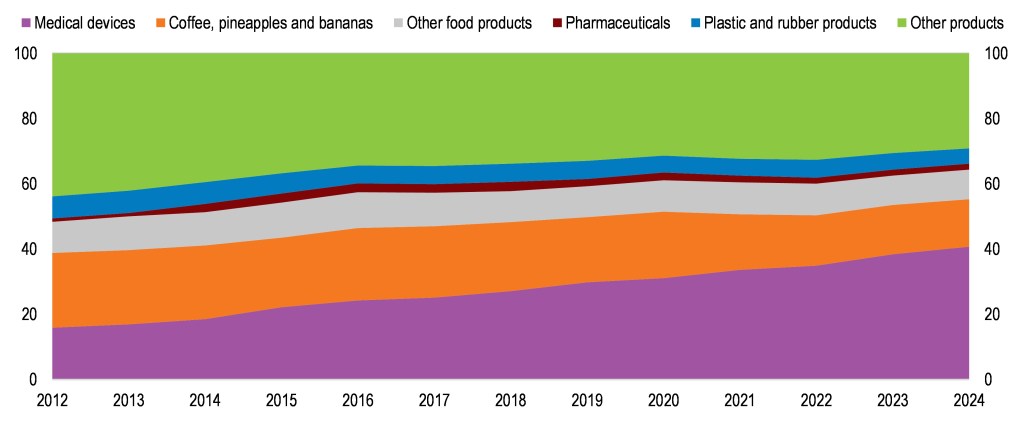
At the beginning of the 1990s, Costa Rica was primarily known for exporting agricultural products like bananas and coffee, along with its thriving tourism sector. Today, places like Alajuela have become global hubs for advanced manufacturing, particularly in the medical devices sector. A strong and sustained commitment with open trade explains this remarkable transformation.  Thanks to a more diversified export basket and a shift towards higher value-added goods and services (Figure 1), Costa Rica’s economy has grown more than other OECD countries and regional peers over the last three years and was more resilient to recent shocks. This success story is not without clouds or challenges, as detailed in the 2025 OECD Economic Survey. A long-standing challenge is that not all workers, companies and regions have so far benefited from trade.

Figure 1. High-tech products are a growing share of Costa Rica’s exports

Exports by type of product, % of total good exports

Source: Banco Central de Costa Rica.

Maximising trade benefits

There remain ample opportunities for Costa Rica to capitalize on its trade openness and FDI attractiveness. With Costa Rica’s exports remaining concentrated in a few destinations ongoing efforts to diversity trade agreements and enhance trade facilitation, which have regained considerable impetus since 2022, will facilitate stronger integration into global and regional value chains. Nearshoring offers new opportunities for Costa Rica to extend trade benefits to more workers, firms and regions. However, several barriers might prevent these opportunities from materializing. Continuing the path of reform to enhance education, foster innovation, improve infrastructure and promote stronger competition would help Costa Rica seize maximise trade benefits.

Costa Rica’s well-educated workforce has been traditionally key to attract FDI and develop value added exports. However, now large skills shortages pose a critical threat to Costa Rica’s FDI attractiveness. A comprehensive education reform is underway, but key timelines and milestones are still unclear. The ongoing efforts to reform education should prioritise the increase in the number of technicians and graduates in STEM areas and ensure that university education is better aligned with labour market demands.

Boosting innovation is crucial for Costa Rican firms to access international markets. However, interactions between public universities and businesses are weak, and most innovation funding goes directly to universities without impact evaluations. Competitive performance-based funding is limited, compared to other OECD countries. Strengthening interaction between public universities and businesses, and introducing  impact evaluations to innovation funding, would help boost firms’ innovation.

Infrastructure bottlenecks are large, driving up trade costs and limiting the participation of remote regions and SMEs in international trade. Key issues include poor-quality roads and overcrowded ports. The low quality of transport infrastructure can be attributed to underspending, deficient strategic planning and inefficient capital project execution, with only 30% of budgeted capital spending getting executed. Strengthening planning and design of transport projects and enhancing budget management  would reduce delays and cost overruns and contribute solve Costa Rica’s large infrastructure gaps.

Finally, boosting competition in domestic markets would help Costa Rican firms access better inputs at lower costs. Despite ongoing efforts to improve competition in some areas, , such as removing anticompetitive practices in professional services and reducing the large and complex stock of regulations, Costa Rica still has some of the strictest regulations in the OECD. Continuing to increase the Competition Authority’s budget is crucial for identifying and addressing anticompetitive practices.

References

OECD (2025), OECD Economic Surveys: Costa Rica 2025, OECD Publishing, Paris, https://doi.org/10.1787/048cf07b-en


Ireland: Boosting housing supply to raise living standards and preserve competitiveness

By Patrizio Sicari and Müge Adalet McGowan.

Over recent decades, Ireland has seen significant gains in living standards, alongside a gradual decline in income inequality. These improvements are largely driven by economic growth stemming from substantial foreign investment inflows, attracted by Ireland’s favourable corporate tax regime, stable political environment, business-friendly regulations, and a skilled workforce. As a result, high-productivity sectors dominated by foreign-owned multinationals now account for nearly half of total value added, contributing significantly to domestic employment and tax revenues, which are at historical highs.

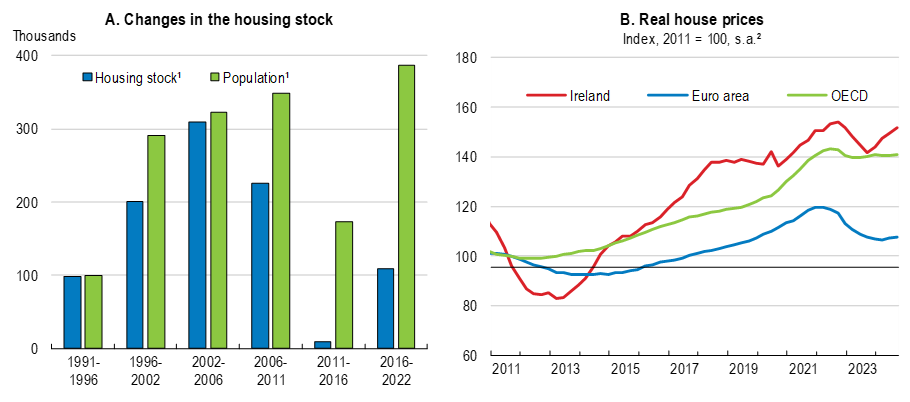
Against this background, however, Ireland’s infrastructure bottlenecks, resulting from a long spell of under-investment in the wake of the global financial crisis, are a growing drag on its competitiveness. As highlighted in the 2025 OECD Economic Survey of Ireland, these challenges are particularly pronounced in the housing sector. Since the 2010s, population growth, fuelled by strong net inward migration, has consistently outpaced forecasts and significantly exceeded the increase in the housing stock (Figure 1). Amid the economy’s continued strength, pent-up demand for housing collided with supply rigidities, resulting in a sharp rise in house prices, to which an underdeveloped private rental market could offer little relief. The resulting housing availability and affordability challenges have societal and distributional implications for individuals. There are also aggregate consequences on the competitiveness of the Irish economy, as the lack of sufficient housing, at affordable prices and in locations close to economic activity, is affecting employers’ ability to attract labour and their decision on where to grow and invest.

Figure 1. Housing supply and demand imbalances have pushed prices up

Note: 1. Changes relative to previous census. 2. Nominal house prices deflated by the private consumption deflator.
Source: Central Statistics Office; OECD, Analytical House Price Indicators.

Strong state support, in line with the comprehensive 2021 Housing for All plan, will be paramount to boosting housing supply, particularly affordable purchase and cost-rental units. The government recently raised the target for the average annual number of new houses to 50 500 – considerably higher than around 30 000 completions achieved in 2024. Effectively meeting these national targets, though, will hinge on having local sub-targets well-aligned with local conditions, as the regional distribution of residential zoned land and demand are mismatched. On-going reviews of the framework for determining local targets are thus warranted and should prevent local authorities from interpreting them as ceilings.

More efficient planning services are critical to reviving housing supply. The Planning and Development Act 2024 aims to ease barriers to new housing by streamlining planning processes and better qualifying the standing rights for initiating judicial review proceedings against administrative planning decisions. The Act also fosters consistency in planning decisions across all tiers of administration and restructures the national planning body. Alongside ongoing efforts to address staff shortages in local planning authorities, these measures are expected to improve planning efficiency. However, given the Act’s complexity, its full impact may take time to emerge, and will depend on the speed with which needed secondary legislation will be deployed. Meanwhile, faster adoption of e-planning and enhanced data collection frameworks should be prioritised to drive rapid improvements in planning authorities’ case management.

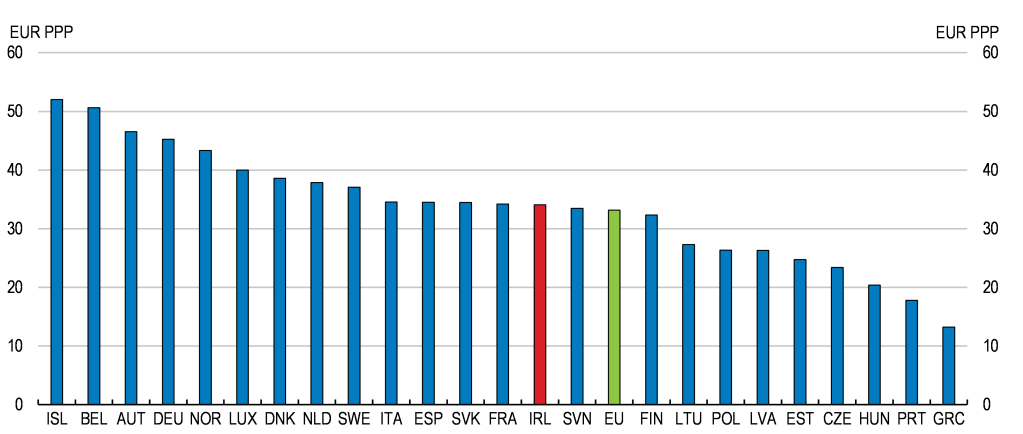
High costs and low productivity in the construction sector (Figure 2) are another barrier to meeting housing targets cost-effectively. This reflects a fragmented market, in which over-reliance on subcontracting and lack of standardisation hinder economies of scale. Reforming unit specifications and sizes, particularly for apartments, alongside better-defined housing types and improved designs, would improve cost efficiency and housing affordability. Regular updates to the technical guidance that accompanies building regulations would also facilitate the adoption of standardised construction methods. The government could leverage its purchasing power in the housing market by setting mandated targets for standardisation for the provision of new social housing.

Figure 2. Increased standardisation would lower costs and boost productivity in the construction sector

Gross value added per hour worked, construction sector, 2023

Source: Eurostat, National Accounts.

National land-use data are scattered and not standardised, and a land-use classification system is lacking, hampering planning. Enhanced efforts to adopt a national land-use map could significantly improve resource allocation and decision-making, supporting the government’s objective to prioritise compact urban growth in high-demand areas by identifying viable brownfield sites more effectively. Brownfield development, typically requiring less infrastructure investment than greenfield alternatives, would decrease fiscal costs. Greenfield options could be reserved for urban areas in which brownfield development proves unsustainable, provided they are well-connected to strategic transport networks. This would help reduce urban sprawl and minimise the environmental footprint of new developments.     

In addition, the 2025 OECD Economic Survey of Ireland provides an assessment of housing taxation, rental markets and social housing, and highlights the need for a coordinated and forward-looking approach to housing policies to create investment certainty and boost housing supply.

References

OECD (2025), OECD Economic Surveys: Ireland 2025, OECD Publishing, Paris, https://doi.org/10.1787/9a368560-en.